
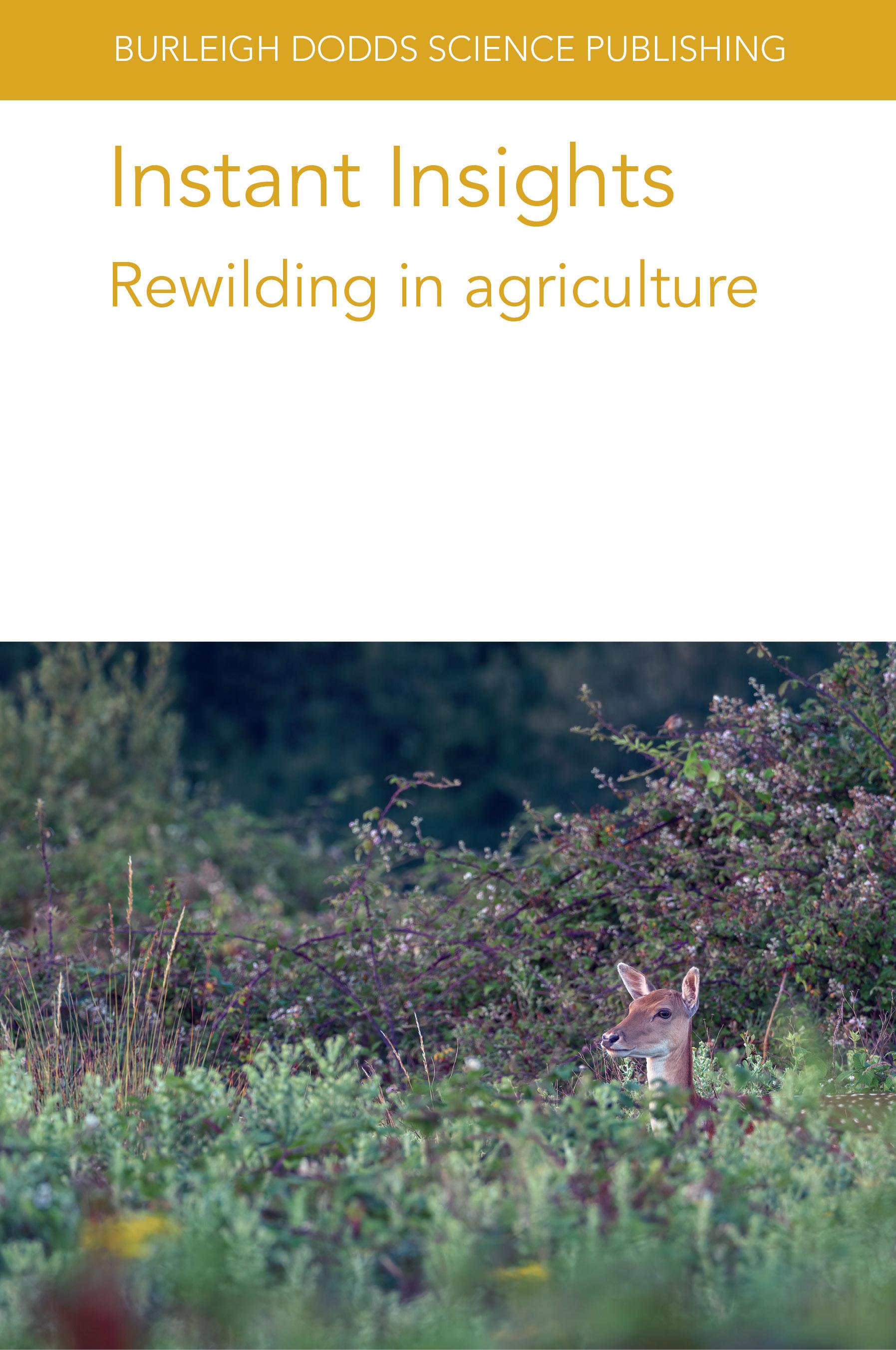
Instant Insights: Rewilding in agriculture
This book features three peer-reviewed reviews on rewilding in agriculture.
The first chapter highlights the diversity of best practices used to rewild grasslands and rangelands, including those used to restore biological soil crusts, apply prescribed fire, increase stand establishment and persistence, overcome soil limitations, rectify nutrient pollution, and sequester soil carbon. The chapter also provides a case study on the restoration of sagebrush-steppe rangelands in the state of Utah, USA.
The second chapter provides an overview of the trade-offs related to animal rewilding in agroecosystems (e.g. ecosystem services versus disservices). The chapter also discusses three key management trends the authors foresee will facilitate net positive outcomes in animal rewilding: capturing wild provisioning services, coordinating broad spatial heterogeneity in land use and employing coexistence conservation tactics.
The final chapter outlines the benefits and challenges of rewilding in Australia and New Zealand and references four case studies to study this. The first two describe rewildings on formerly degraded agricultural land (Tiritiri Matangi Island, Scotia Sanctuary), while the third posits a conceptual rewilding program using a continental top predator, the dingo. The fourth case study describes a digitally-enabled survey and monitoring system on a mixed-agriculture farm that provides a step towards rewilding such landscapes in future.
Pay easily by card, Klarna, Apple Pay or Google Pay. Not happy? You always have a 14-day money-back guarantee. Read more in our terms. If you have any questions, email us at hello@memmo.org.
Memmo makes studying easier – wherever you are in the world. We bring your course books and smart study tools together in one place: summaries, quizzes, podcasts and flashcards. Plus Ted, your study buddy who answers anything you wonder. Over 50,000 students already study here – built to help you learn faster and stress less.