
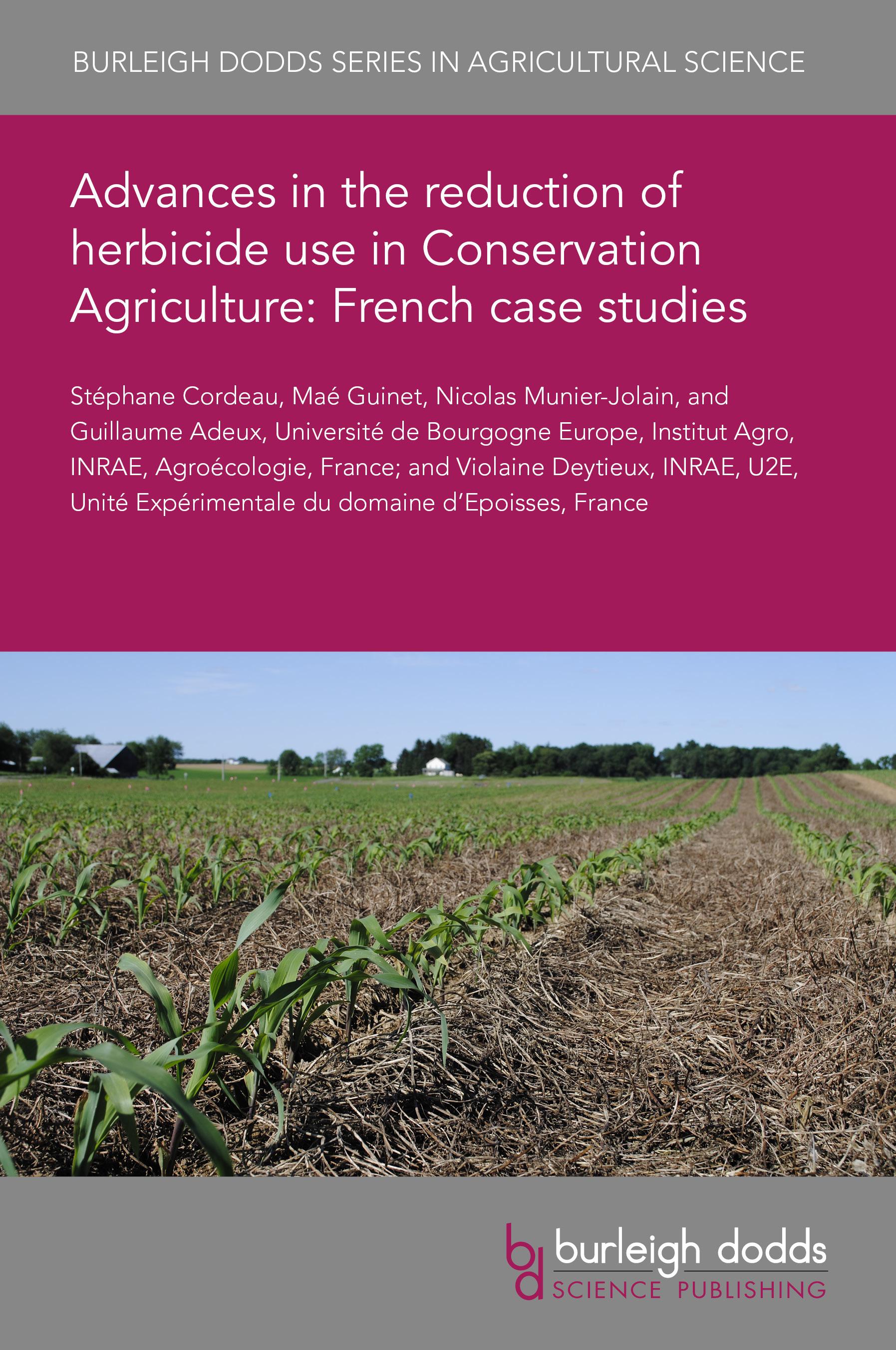
Conservation agriculture (CA) appears as a promising agricultural pathway to achieve multiperformance but is currently questioned due to its reliance on herbicides for weed management, especially glyphosate. One limit in the development of CA-based agroecological cropping system less reliant on herbicide use is the strict definition of CA based on technical means (i.e. the three principles) rather than targeted objectives. In this chapter, the authors mobilize research carried out on experimental stations (e.g. CA-SYS platform) and farmer networks (e.g. French DEPHY-farm network) to synthesize knowledge on how herbicide-free no-till agriculture could be achieved. They provide insights on the multiperformance of herbicide-free and nature-based CA systems compared to reference CA systems. Designing cover crops to ensure growth in a context of unpredictable weather conditions and facilitate mechanical termination, and ensuring crop establishment in absence of tillage and herbicides represent major research avenues for the development of pesticide-free CA systems.
Pay easily by card, Klarna, Apple Pay or Google Pay. Not happy? You always have a 14-day money-back guarantee. Read more in our terms. If you have any questions, email us at hello@memmo.org.
Memmo makes studying easier – wherever you are in the world. We bring your course books and smart study tools together in one place: summaries, quizzes, podcasts and flashcards. Plus Ted, your study buddy who answers anything you wonder. Over 50,000 students already study here – built to help you learn faster and stress less.