
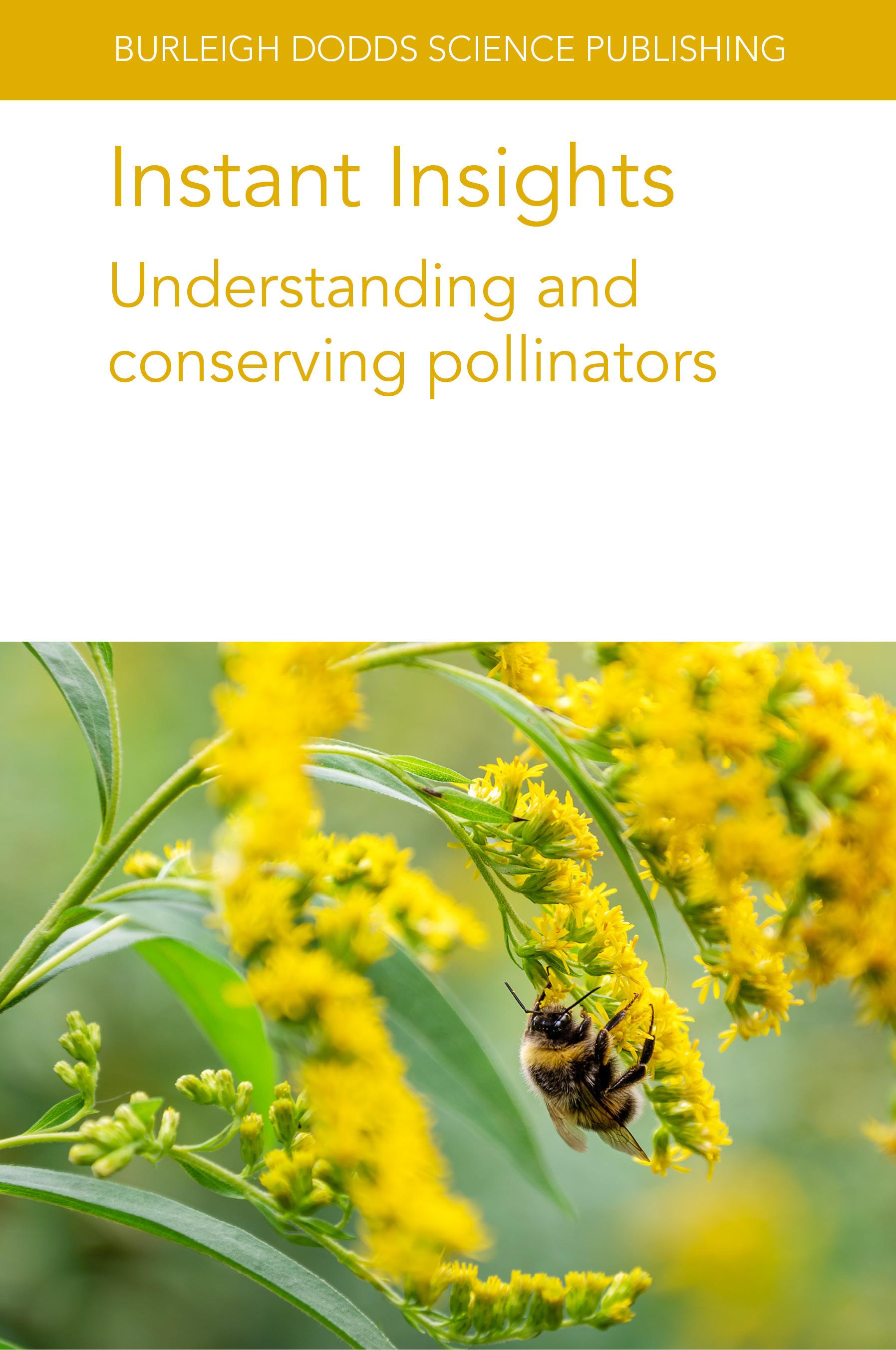
This book features four peer-reviewed reviews on understanding and conserving pollinators.
The first chapter provides a brief overview on pollinators and the ecosystem services they offer, as well as the role of data collection and sharing in achieving more sustainable farming and beekeeping practices. The chapter also considers how existing data collected by farm management systems can be used to ascertain the impact of particular agricultural practices on pollinators and key pollinator services.
The second chapter summarises the variety of ways in which bee species are managed for optimal pollination of crops and harvest of honey, beeswax and other products. The chapter also reviews methods to encourage biodiversity and populations of indigenous pollinating insects.
The third chapter considers using network ecology to understand, support and enhance pollination services through farm management and integrated decision-making. The chapter also addresses how these networks can be assessed from field to national scales.
The final chapter reviews the role of habitat conservation and restoration for solitary bee species. The chapter addresses key challenges facing habitat restoration, such as changes in global temperature and precipitation, as well as the effectiveness of existing restoration projects in the European Union and North America.
Pay easily by card, Klarna, Apple Pay or Google Pay. Not happy? You always have a 14-day money-back guarantee. Read more in our terms. If you have any questions, email us at hello@memmo.org.
Memmo makes studying easier – wherever you are in the world. We bring your course books and smart study tools together in one place: summaries, quizzes, podcasts and flashcards. Plus Ted, your study buddy who answers anything you wonder. Over 50,000 students already study here – built to help you learn faster and stress less.