
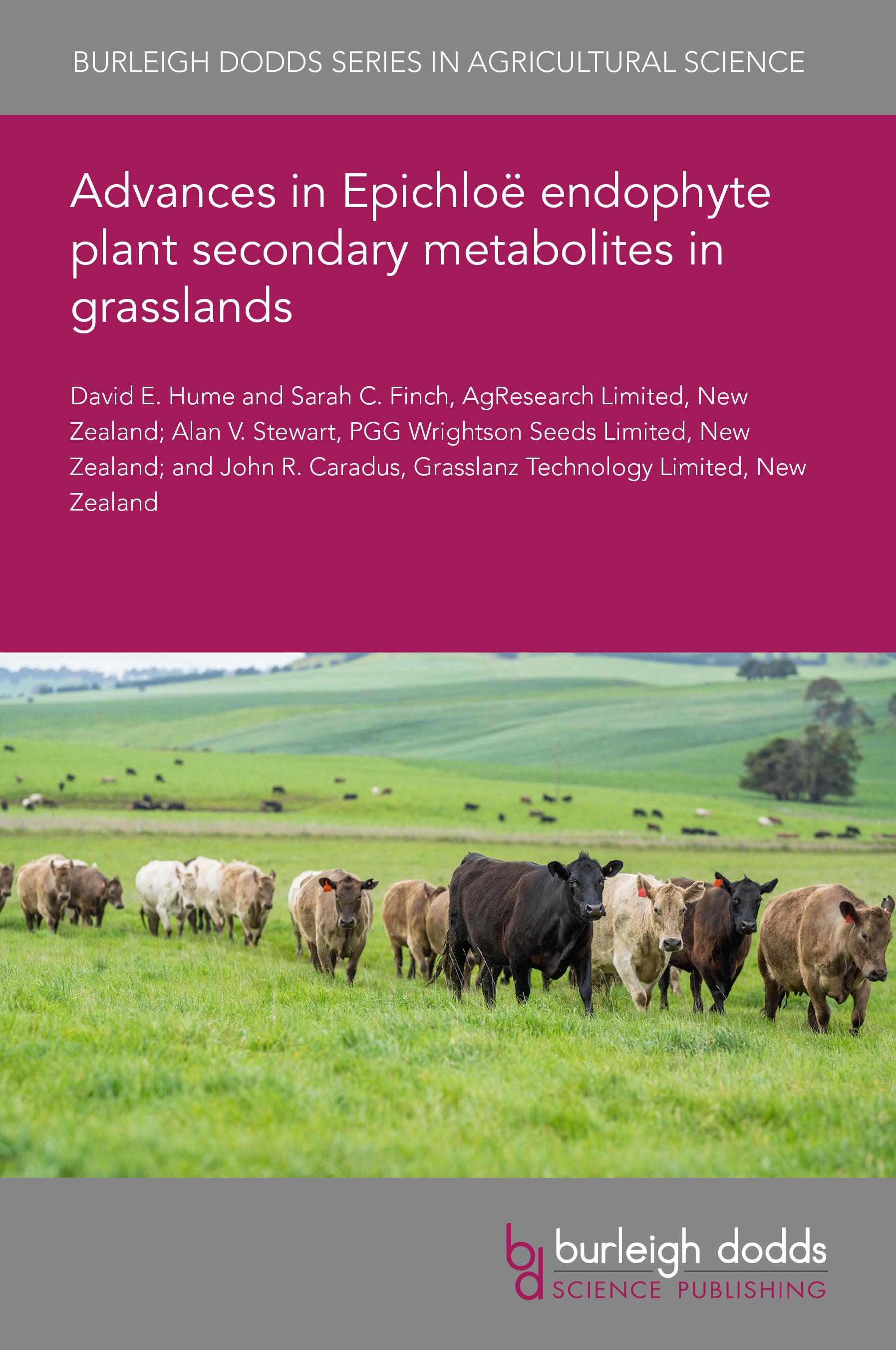
In this chapter, the authors describe the biology of the Epichloë-grass association, the secondary metabolites that are linked to the bioactivity, control of invertebrate pests, occurrence of mammalian toxicity globally, toxic responses in terms of animal productivity, health and welfare, utilisation of Epichloë strain variation in commerce, along with flow-on effects to animal product quality and food safety. There is a particular focus on the most well-studied, mutualistic tall fescue and perennial ryegrass endophyte associations due to their significant economic impacts and prospects to advance future sustainable grassland farming.
Pay easily by card, Klarna, Apple Pay or Google Pay. Not happy? You always have a 14-day money-back guarantee. Read more in our terms. If you have any questions, email us at hello@memmo.org.
Memmo makes studying easier – wherever you are in the world. We bring your course books and smart study tools together in one place: summaries, quizzes, podcasts and flashcards. Plus Ted, your study buddy who answers anything you wonder. Over 50,000 students already study here – built to help you learn faster and stress less.