
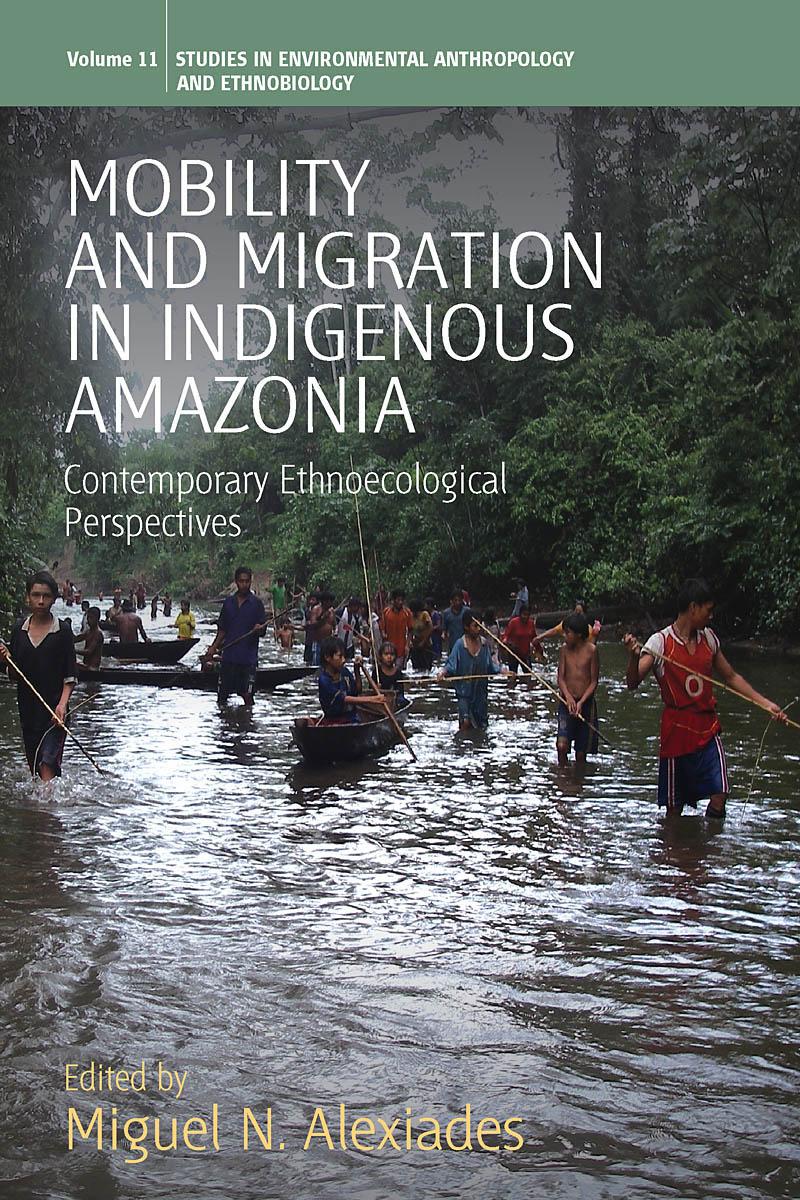
Contrary to ingrained academic and public assumptions, wherein indigenous lowland South American societies are viewed as the product of historical emplacement and spatial stasis, there is widespread evidence to suggest that migration and displacement have been the norm, and not the exception. This original and thought-provoking collection of case studies examines some of the ways in which migration, and the concomitant processes of ecological and social change, have shaped and continue to shape human-environment relations in Amazonia. Drawing on a wide range of historical time frames (from pre-conquest times to the present) and ethnographic contexts, different chapters examine the complex and important links between migration and the classification, management, and domestication of plants and landscapes, as well as the incorporation and transformation of environmental knowledge, practices, ideologies and identities.
Pay easily by card, Klarna, Apple Pay or Google Pay. Not happy? You always have a 14-day money-back guarantee. Read more in our terms. If you have any questions, email us at hello@memmo.org.
Memmo makes studying easier – wherever you are in the world. We bring your course books and smart study tools together in one place: summaries, quizzes, podcasts and flashcards. Plus Ted, your study buddy who answers anything you wonder. Over 50,000 students already study here – built to help you learn faster and stress less.