
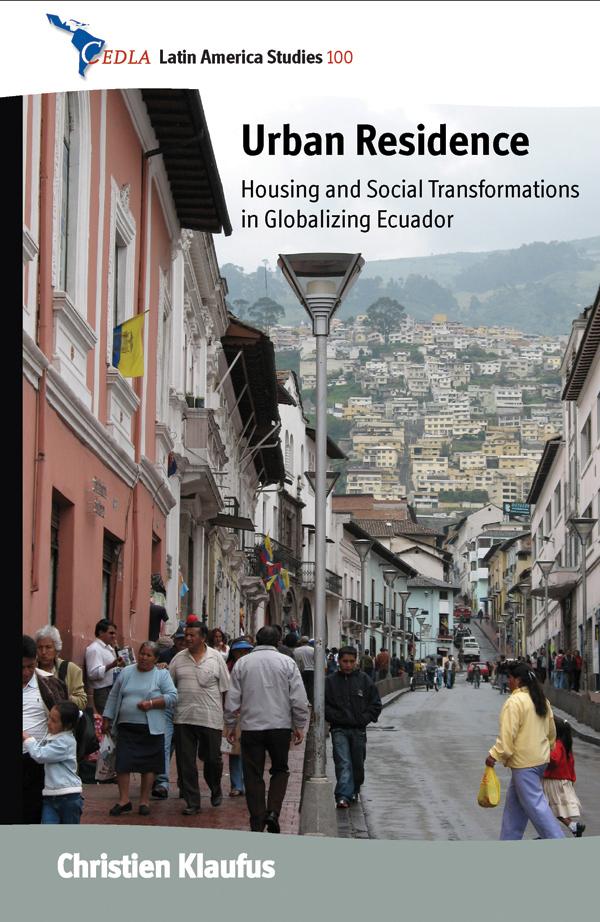
Riobamba and Cuenca, two intermediate cities in Ecuador, have become part of global networks through transnational migration, incoming remittances, tourism, and global economic connections. Their landscape is changing in several significant ways, a reflection of the social and urban transformations occurring in contemporary Ecuadorian society. Exploring the discourses and actions of two contrasting population groups, rarely studied in tandem, within these cities—popular-settlement residents and professionals in the planning and construction sector—this study analyzes how each is involved in house designs and neighborhood consolidation. Ideas, ambitions, and power relations come into play at every stage of the production and use of urban space, and as a result individual decisions about both house designs and the urban layout influence the development of the urban fabric. Knowledge about intermediate cities is crucial in order to understand current trends in the predominantly urban societies of Latin America, and this study is an example of needed interdisciplinary scholarship that contributes to the fields of urban studies, urban anthropology, sociology, and architecture.
Pay easily by card, Klarna, Apple Pay or Google Pay. Not happy? You always have a 14-day money-back guarantee. Read more in our terms. If you have any questions, email us at hello@memmo.org.
Memmo makes studying easier – wherever you are in the world. We bring your course books and smart study tools together in one place: summaries, quizzes, podcasts and flashcards. Plus Ted, your study buddy who answers anything you wonder. Over 75,000 students already study here – built to help you learn faster and stress less.