
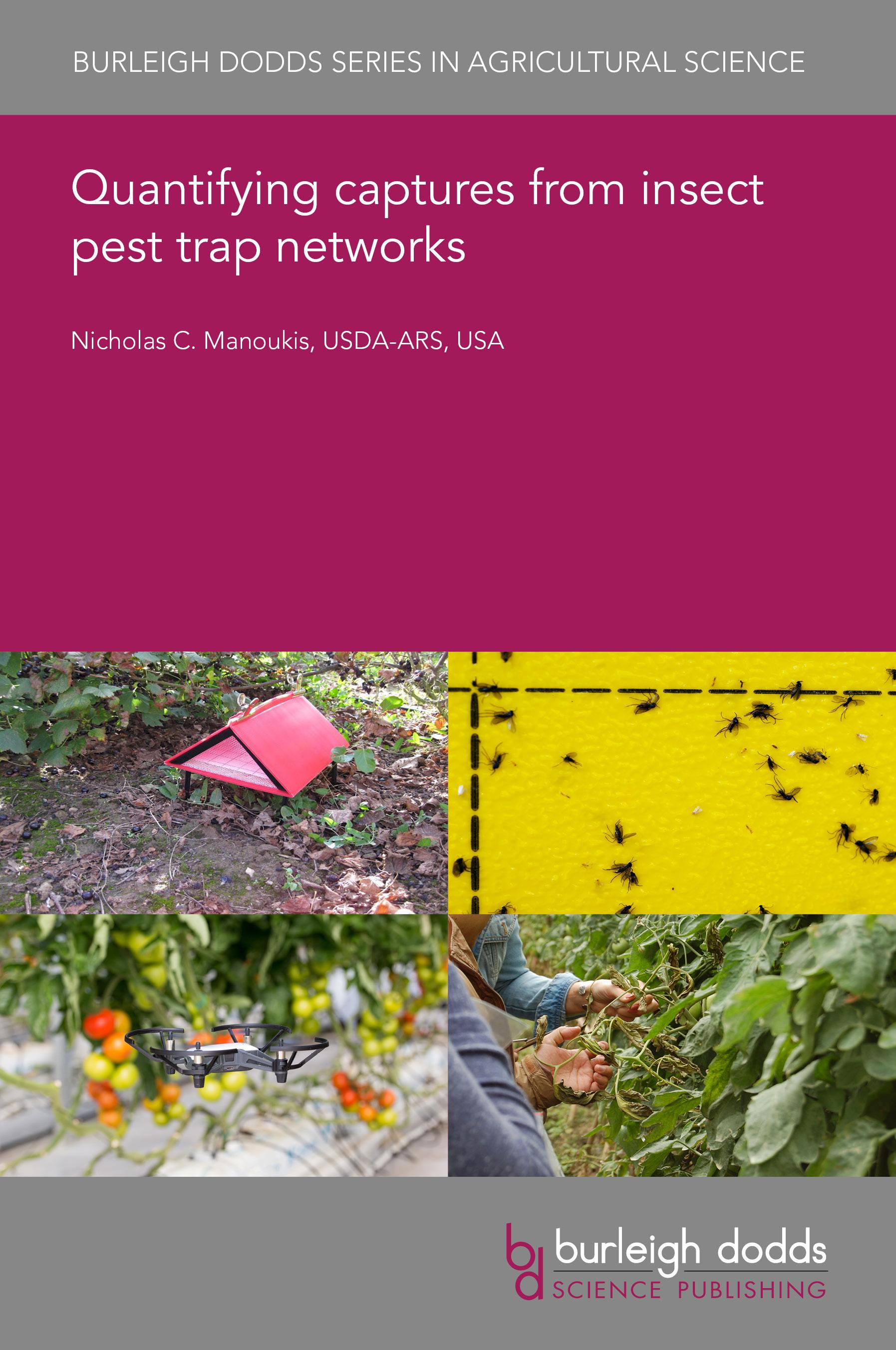
In this chapter a high-level overview of the goals of trap networks, some examples and details for tephritid fruit flies, and then a detailed description of the TrapGrid model are given. TrapGrid can be used to quantify the probability of capturing insects instantaneously or over time using a function that relates distance from a given trap to probability of capture and two models of insect dispersal. Brief descriptions of other modeling approaches to these questions, some of which have seen application outside of research, are discussed followed by ideas for the application of TrapGrid, including a way to determine trap attraction (the parameter λ in the model) and how to compare alternative trap layouts on a landscape scale. Finally, in the practicum, a working example was given comparing two alternative trap layouts in a 1 km2 area via quantification of capture probability instantaneously and over 30d.
Pay easily by card, Klarna, Apple Pay or Google Pay. Not happy? You always have a 14-day money-back guarantee. Read more in our terms. If you have any questions, email us at hello@memmo.org.
Memmo makes studying easier – wherever you are in the world. We bring your course books and smart study tools together in one place: summaries, quizzes, podcasts and flashcards. Plus Ted, your study buddy who answers anything you wonder. Over 50,000 students already study here – built to help you learn faster and stress less.