
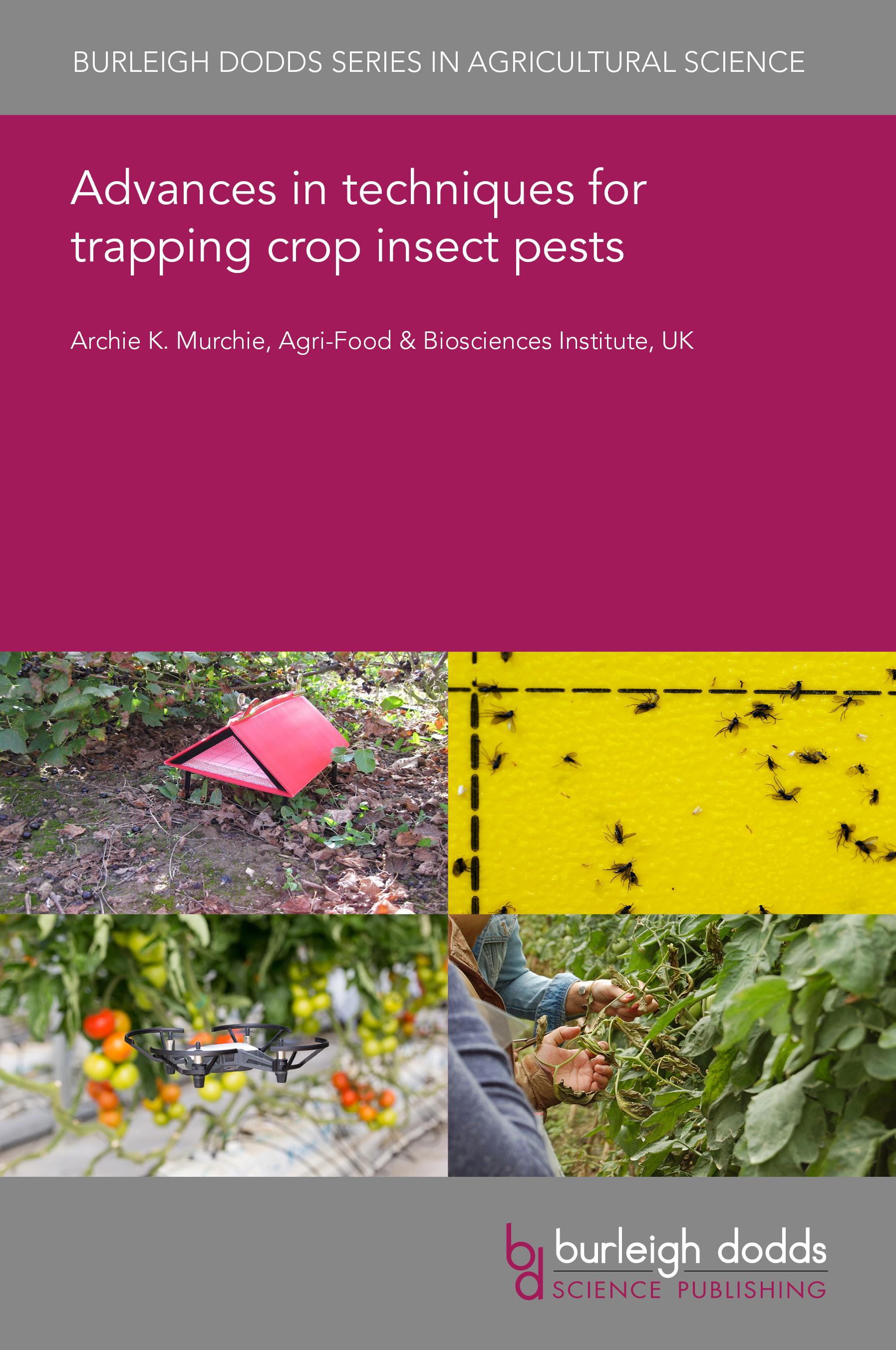
Pest monitoring is a fundamental requirement of integrated pest management. To minimise and target the use of pesticides, it is necessary to know when insect pests are present within the crop and whether their densities warrant control. There are many designs of trap to monitor insect pests. This chapter gives an overview of the principles of trap design, including the requirements of selectivity, accuracy, processing time and cost. Attracting insects to traps is key, and visual and olfactory responses to traps are explained. The following trap categories are described: water, sticky, suction, interception, funnel and cone traps; along with case studies of their usage and an evaluation of their merits and limitations. Sorting and identification of catches can be time-consuming. Automation of counting and identification of trap catches using image and wingbeat analyses is an exciting prospect with many recent advances using developments in electronic sensors, machine learning and cloud technology.
Pay easily by card, Klarna, Apple Pay or Google Pay. Not happy? You always have a 14-day money-back guarantee. Read more in our terms. If you have any questions, email us at hello@memmo.org.
Memmo makes studying easier – wherever you are in the world. We bring your course books and smart study tools together in one place: summaries, quizzes, podcasts and flashcards. Plus Ted, your study buddy who answers anything you wonder. Over 50,000 students already study here – built to help you learn faster and stress less.