
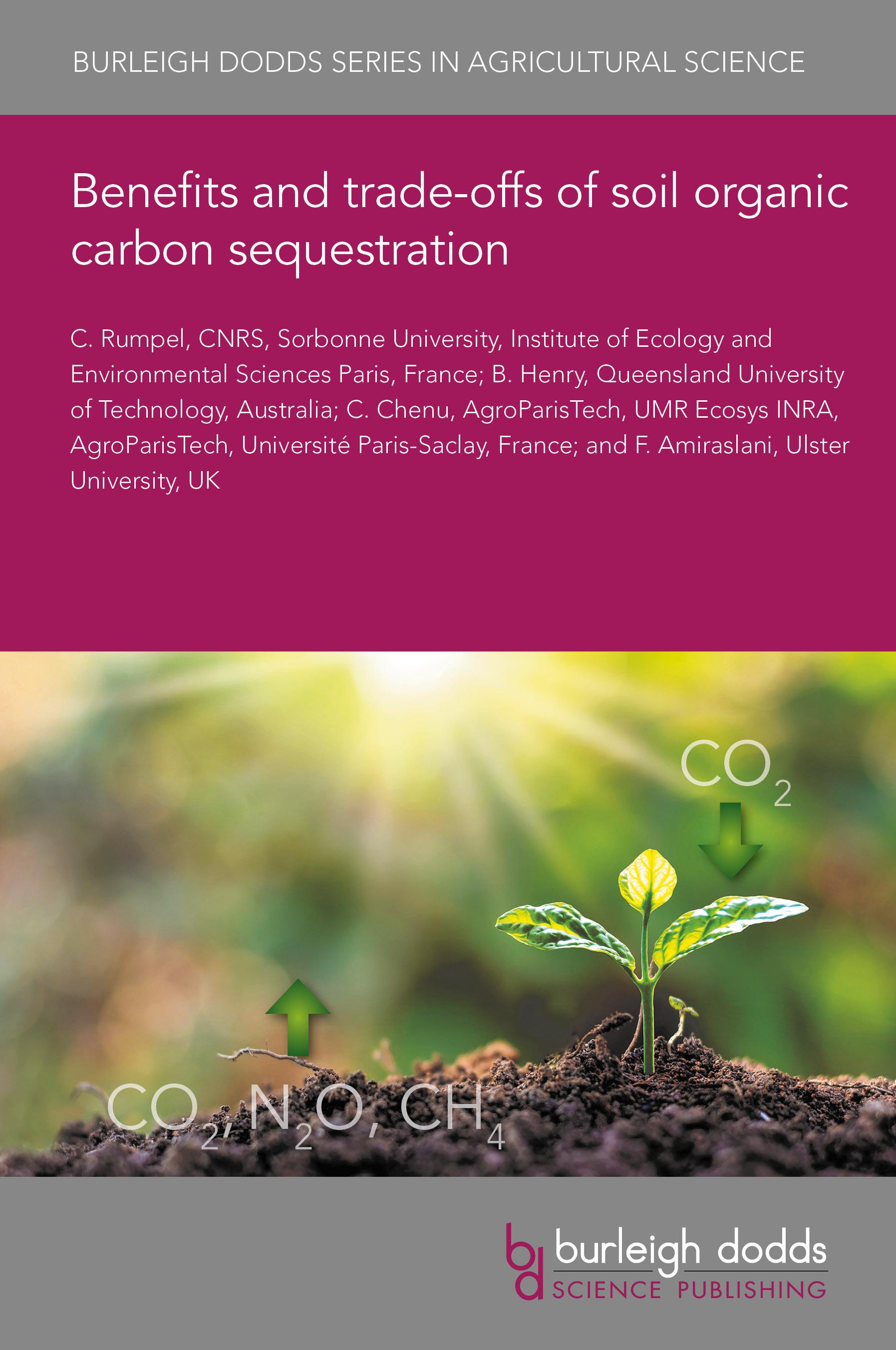
Soil organic carbon sequestration has received increasing attention due to the important benefits it can have for ecosystem services and in particular food production, climate change mitigation and adaptation. Indeed, soils rich in organic carbon are, in general, more fertile and support plant growth better than carbon-depleted soils. On the other hand, management practices applied to increase soil organic carbon may have trade-offs in terms of nutrient and water requirements and greenhouse gas emissions. In this chapter, we present the biophysical and socioeconomic benefits and trade-offs of soil carbon sequestration and show that they are specific with regards to different organic matter types. We present quantitative studies demonstrating these effects with a particular focus on trade-offs in the form of greenhouse gas emissions from agriculture, and conclude that these are crucial to accurately evaluating soil organic carbon sequestration and its contribution to climate change mitigation and other ecosystem services.
Pages: 26
Category: Miljövetenskap & Klimat
e-ISBN: 9781801466974
Shipping weight: 1.2 kg
Ships in: 1-2 days
Pay easily by card, Klarna, Apple Pay or Google Pay. Not happy? You always have a 14-day money-back guarantee. Read more in our terms. If you have any questions, email us at hello@memmo.org.
Memmo makes studying easier – wherever you are in the world. We bring your course books and smart study tools together in one place: summaries, quizzes, podcasts and flashcards. Plus Ted, your study buddy who answers anything you wonder. Over 50,000 students already study here – built to help you learn faster and stress less.
You might also like
Buy the book0