
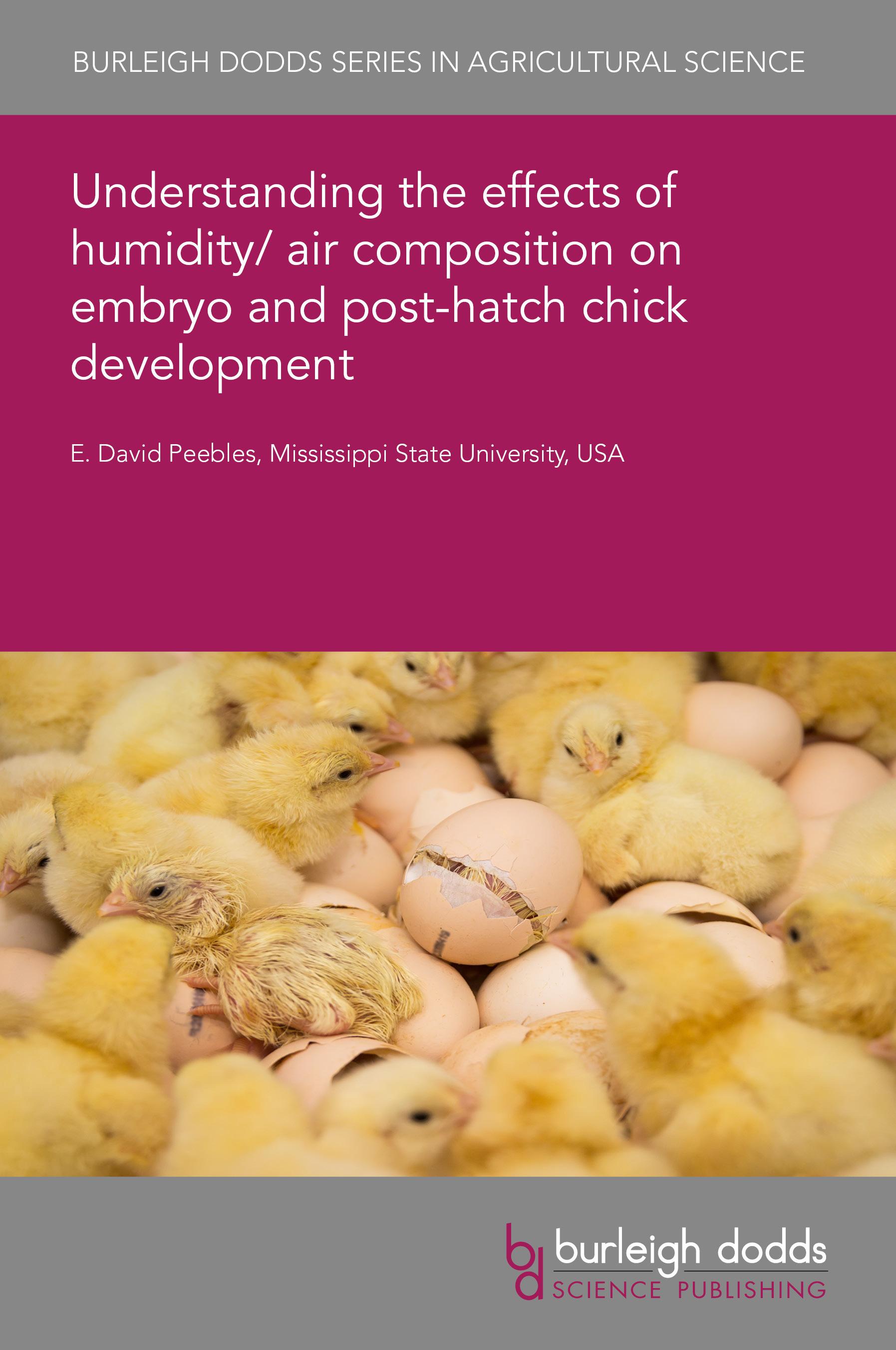
Incubational conditions influence embryo growth and viability, which subsequently affect egg hatchability. Along with temperature, environmental factors in the incubator that are of primary importance for optimum hatchability and chick quality include humidity and vital gas (carbon dioxide (CO2) and oxygen (O2)) levels. Because the movements of gases across the eggshell occur by diffusion, avian embryos are dependent on the composition of the surrounding air, with their development and hatching success being dependent on the ambient partial pressures of O2, CO2, and water vapor. The influences of the incubational environment can extend beyond embryonic development into the post-hatch period with ensuing effects on chick survival, quality, and performance. Various studies have been conducted to establish humidity and vital gas levels during incubation that will optimize the embryonic and post-hatch livability and development of poultry. The prospects for the pragmatic commercial use of these incubational regimens, as well as the physiological bases for their observed effects, are explored in this chapter.
Pay easily by card, Klarna, Apple Pay or Google Pay. Not happy? You always have a 14-day money-back guarantee. Read more in our terms. If you have any questions, email us at hello@memmo.org.
Memmo makes studying easier – wherever you are in the world. We bring your course books and smart study tools together in one place: summaries, quizzes, podcasts and flashcards. Plus Ted, your study buddy who answers anything you wonder. Over 50,000 students already study here – built to help you learn faster and stress less.