
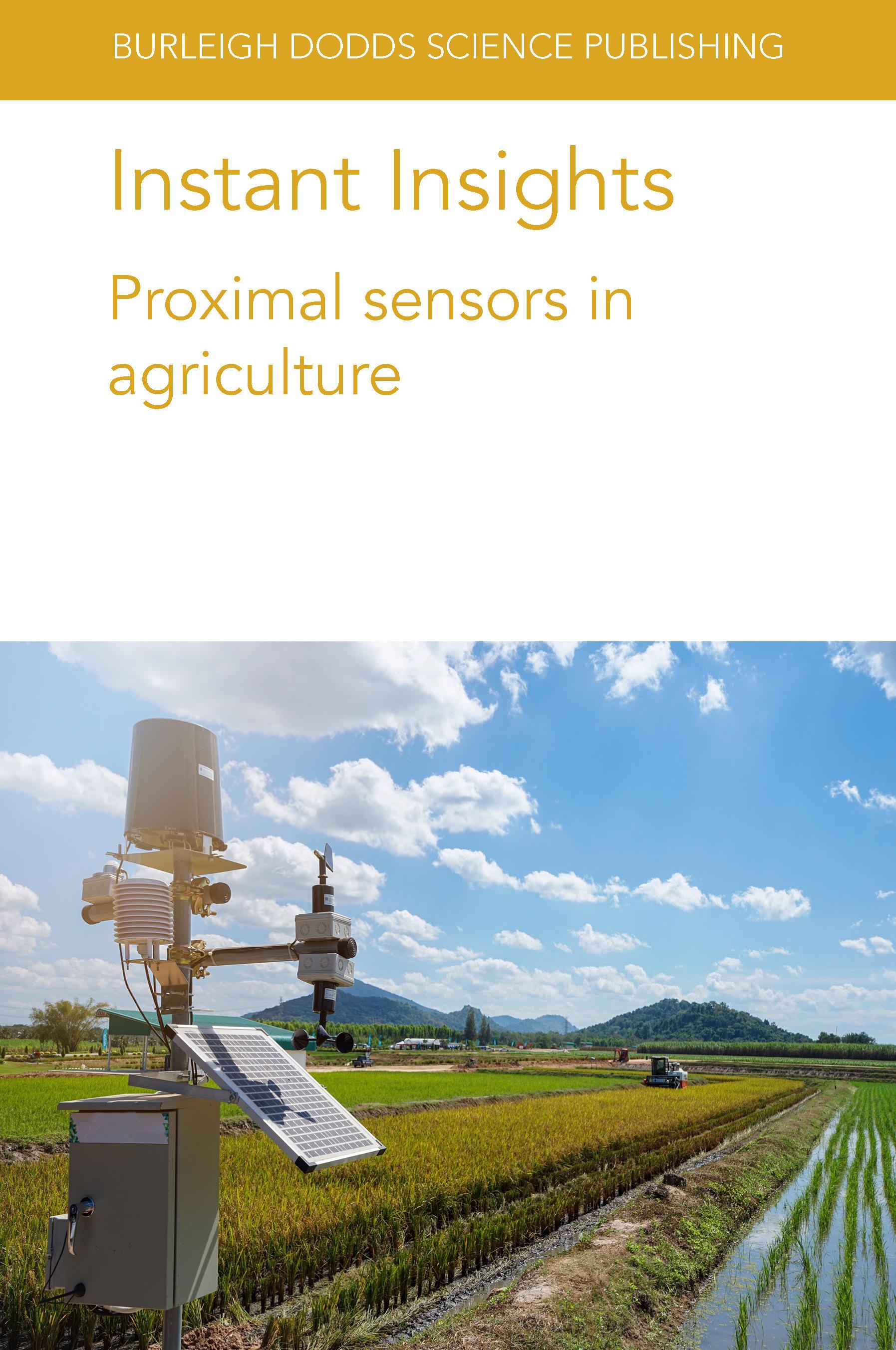
This collection features four peer-reviewed reviews on proximal sensors in agriculture.
The first chapter addresses the use of proximal sensors to evaluate crop health and performance throughout the growing season. The chapter reviews the evolution of crop sensors, as well as the issues and limitations facing further development, including the need to develop sensors equipped with the ability to detect stresses other than nitrogen.
The second chapter reviews recent advances in using proximal sensors to detect crop health status in horticultural crops. The chapter considers the application of sensors to detect micro-environmental parameters linked to pathogen lifecycles which can then be utilised to predict disease risk.
The third chapter reviews advances in using proximal spectroscopic sensors to assess soil health. It assesses principles and technologies, key properties measured, advantages and disadvantages together with applications in improving soil management.
The final chapter discusses advances in the use of proximal sensor fusion and multi-sensor platforms for improved crop management. The chapter considers the combination of remote sensing from satellites and weather station data as the basis for crop growth models and explores the benefits of utilising a selection of tools to investigate yield prediction.
Pay easily by card, Klarna, Apple Pay or Google Pay. Not happy? You always have a 14-day money-back guarantee. Read more in our terms. If you have any questions, email us at hello@memmo.org.
Memmo makes studying easier – wherever you are in the world. We bring your course books and smart study tools together in one place: summaries, quizzes, podcasts and flashcards. Plus Ted, your study buddy who answers anything you wonder. Over 50,000 students already study here – built to help you learn faster and stress less.