
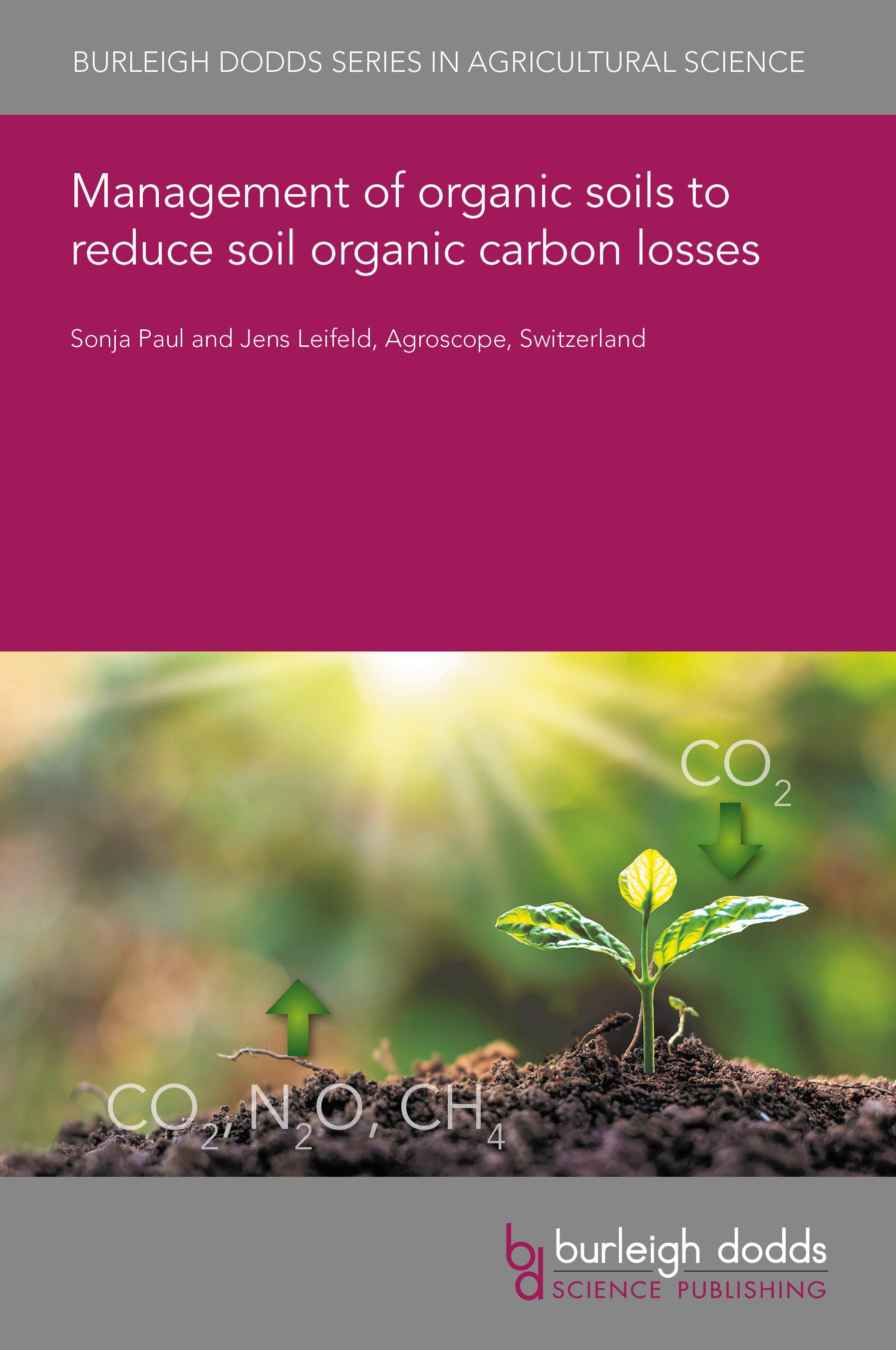
Organic soils of intact peatlands store 1/4 of the global soil organic carbon (SOC). Despite being an important source of methane (CH4), they are climate coolers because they continuously accumulate new organic carbon. However, when these organic soils are drained for agriculture, the resulting aerobic conditions lead to fast decomposition of the peat and the release of carbon dioxide (CO2) and nitrous oxide (N2O), turning them into net greenhouse gas (GHG) sources. Reducing the environmental footprint of managing these soils requires a good understanding of the processes during drainage of formerly anoxic soil horizons and eventual subsequent rewetting. We describe changes in soil properties and carbon dynamics following drainage of peatlands and discuss management strategies to reduce carbon loss from drained peatlands by raising the water table to either restore the peatland ecosystem, or to cultivate water-tolerant crops. In addition to rewetting, engineering approaches with continuous management at deeper water tables are evaluated in terms of SOC loss.
Pages: 64
Category: Miljövetenskap & Klimat
e-ISBN: 9781801463249
Shipping weight: 1.2 kg
Ships in: 1-2 days
Pay easily by card, Klarna, Apple Pay or Google Pay. Not happy? You always have a 14-day money-back guarantee. Read more in our terms. If you have any questions, email us at hello@memmo.org.
Memmo makes studying easier – wherever you are in the world. We bring your course books and smart study tools together in one place: summaries, quizzes, podcasts and flashcards. Plus Ted, your study buddy who answers anything you wonder. Over 50,000 students already study here – built to help you learn faster and stress less.
You might also like
Buy the book0