
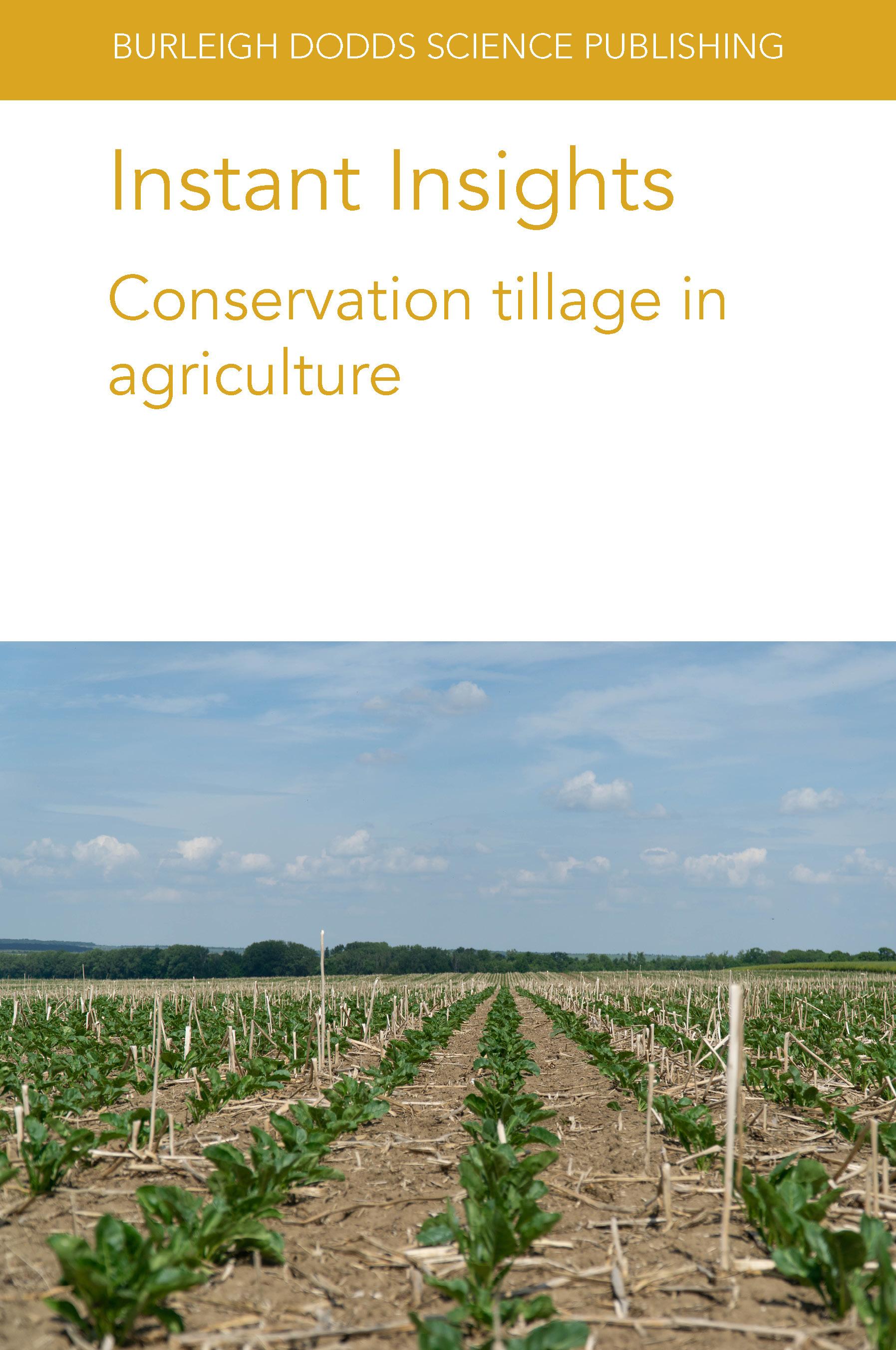
Instant Insights: Conservation tillage in agriculture
This collection features five peer-reviewed literature reviews on conservation tillage in agriculture.
The first chapter reviews types of tillage and soil disturbance and how different soil management techniques affect the cropping cycle. The chapter also discusses how soil disturbance can be minimised during key farming operations.
The second chapter describes the principles of Conservation Agriculture (CA), looking primarily at soil management. It also examines the key concepts of no-tillage agriculture, as well as the environmental and economic benefits these techniques offer.
The third chapter discusses the role of conservation tillage in organic farming, reviewing over 20 years of practical, on-farm research. It outlines the main benefits associated with conservation tillage, whilst also considering the challenges that arise with its implementation and how these can be addressed.
The fourth chapter explores the emergence of conservation tillage (CT) as an innovation to address stagnant wheat yields in the Indo-Gangetic Plains of South Asia. The chapter explores the benefits of CT for soil health and crop yields, and highlights current obstacles facing region-wide adoption of CT.
The final chapter reviews the advantages of zero-till maize cultivation, including reduced soil erosion and nutrient losses. It also summarises best management practices to optimise zero-till maize systems.
Pay easily by card, Klarna, Apple Pay or Google Pay. Not happy? You always have a 14-day money-back guarantee. Read more in our terms. If you have any questions, email us at hello@memmo.org.
Memmo makes studying easier – wherever you are in the world. We bring your course books and smart study tools together in one place: summaries, quizzes, podcasts and flashcards. Plus Ted, your study buddy who answers anything you wonder. Over 50,000 students already study here – built to help you learn faster and stress less.