
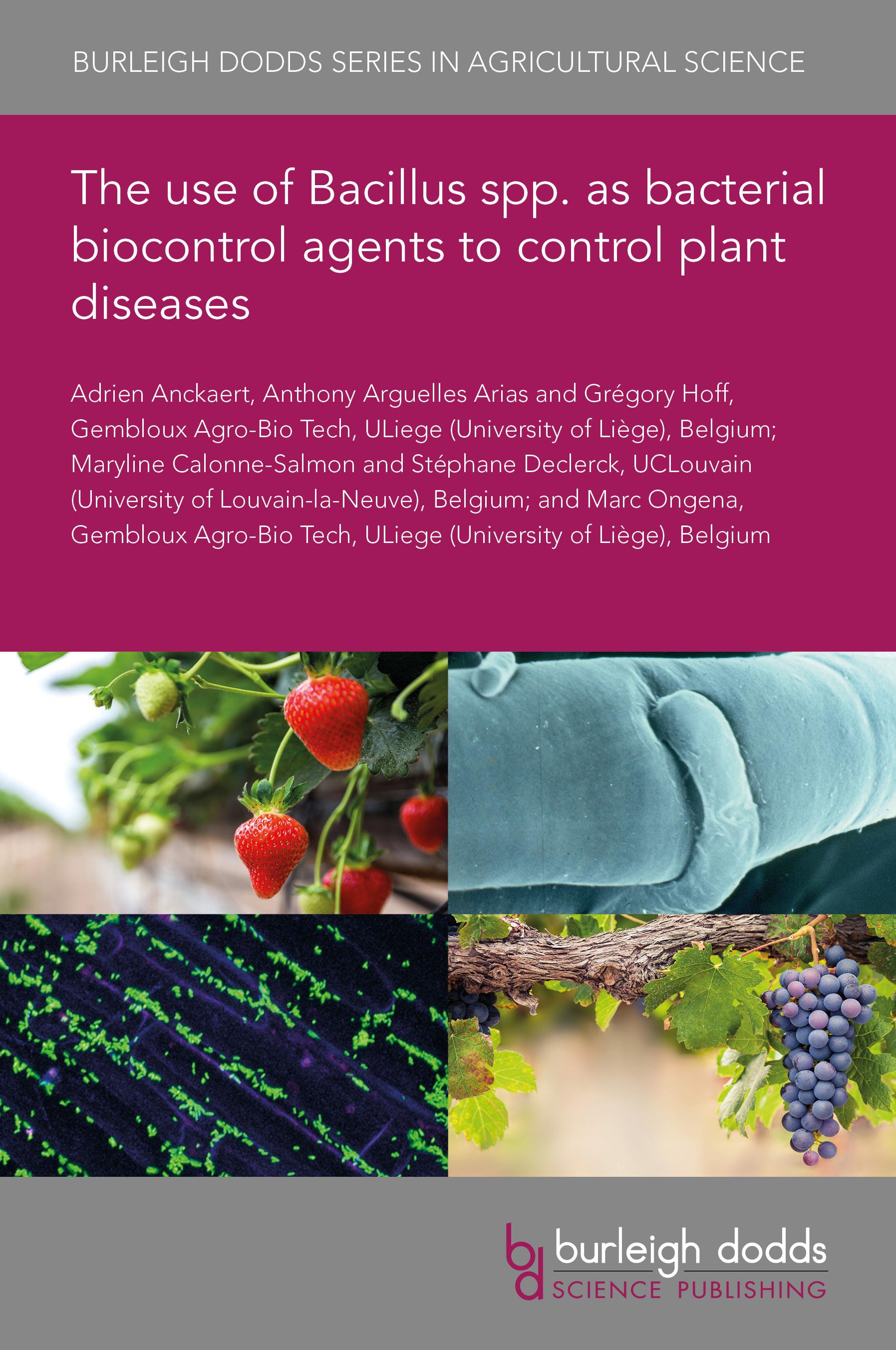
The use of Bacillus spp. as bacterial biocontrol agents to control plant diseases
Biocontrol agents (BCAs) based on plant growth promoting rhizobacteria have recently been developed as alternatives to chemical pesticides. Among those beneficial bacteria, Bacillus spp. are one of the most promising BCAs. A wide range of bioactive secondary metabolites (BSMs) are involved in biocontrol via antibiosis to phytopathogens and/or via elicitation of systemic resistance in their host plants. This chapter illustrates the diversity of pathosystems in which BCA based on Bacillus spp. have proved effective. It describes the mechanisms underpinning this biocontrol activity via production of a wide range of enzymes, proteins and small-size BSMs. As these BSMs are clearly involved in pathogen control, we emphasise the importance of understanding the ecological factors influencing their production. In the last part of the chapter, we highlight the potential interactions between Bacillus spp. and other soil microorganisms in developing consortia of biocontrol agents combining species with synergistic activities for plant health improvement.
Pay easily by card, Klarna, Apple Pay or Google Pay. Not happy? You always have a 14-day money-back guarantee. Read more in our terms. If you have any questions, email us at hello@memmo.org.
Memmo makes studying easier – wherever you are in the world. We bring your course books and smart study tools together in one place: summaries, quizzes, podcasts and flashcards. Plus Ted, your study buddy who answers anything you wonder. Over 50,000 students already study here – built to help you learn faster and stress less.