
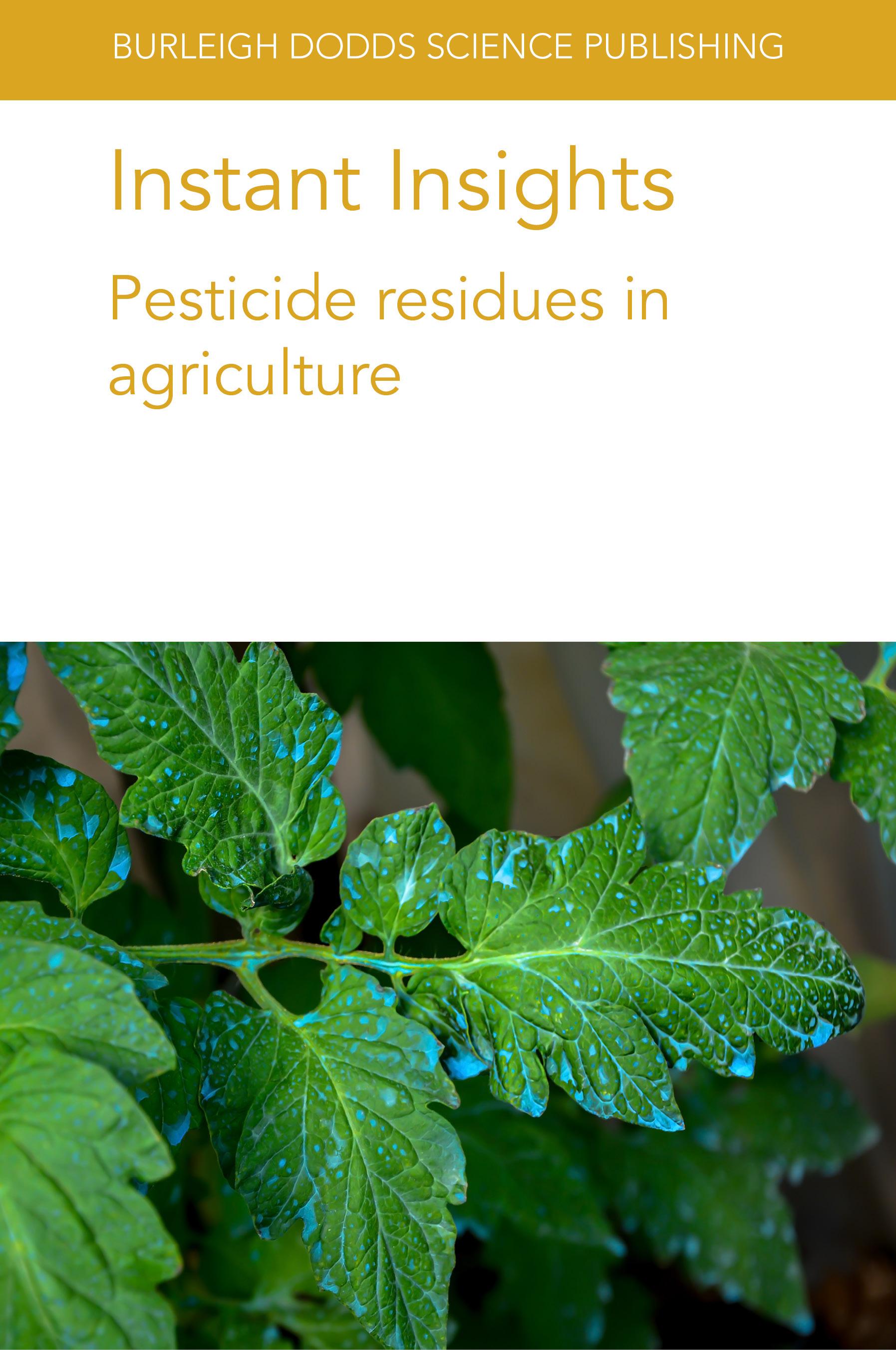
Instant Insights: Pesticide residues in agriculture
This collection features three peer-reviewed literature reviews on pesticide residues in agriculture.
The first chapter outlines the ways in which pesticide use can lead to increased pest problems, such as pest resurgence and replacement, and the development of pesticide resistance. The chapter examines current strategies for mitigating the impacts of pesticides and refers to a detailed case study on the diamondback moth (DBM) to demonstrate the practical application of these strategies.
The second chapter explores the threat of pesticide poisoning to human health, either via deliberate self-poisoning or via occupational exposure. It discusses how best to monitor exposure to pesticides, as well as how to minimize the human health risks that may arise as a result of their use/exposure. The authors refer to a case study on smallholder cotton farmers in the Republic of Benin to emphasise the global pesticide poisoning crisis.
The final chapter reviews the environmental impacts of pesticide use in agriculture, focussing on their contribution to global human and ecological health issues. It provides an overview of how pesticides are currently addressed in emission inventory and impact assessment, and discusses the relevance of spatiotemporal variability in modelling emissions and the toxicity and ecotoxicity impacts of pesticides.
Pay easily by card, Klarna, Apple Pay or Google Pay. Not happy? You always have a 14-day money-back guarantee. Read more in our terms. If you have any questions, email us at hello@memmo.org.
Memmo makes studying easier – wherever you are in the world. We bring your course books and smart study tools together in one place: summaries, quizzes, podcasts and flashcards. Plus Ted, your study buddy who answers anything you wonder. Over 50,000 students already study here – built to help you learn faster and stress less.