
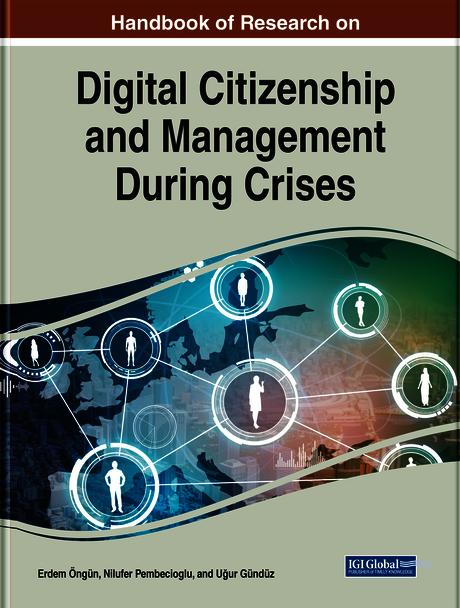
Today, individuals and societies of the digital age are no longer constrained by conventional contexts, narratives, settings, and status; they are surrounded and guided by digital tools and applications leading to a digital revolution. That digital revolution changed the individual along with living styles and cultural and social relations among people. Moreover, these revolutionary changes and the increasing capabilities of smart devices have brought today's people a new kind of public sphere with questionable freedoms but also restraints in its digital dimensions. Now, it is possible to talk about the digital dimension and equivalence of all the concepts that are both individually and socially constructed in a new digital world. The Handbook of Research on Digital Citizenship and Management During Crises covers many different components engaged with digital world responsibilities. The authors assess the position, status, and reactions of the new citizen against future catastrophes. Covering topics such as epistemic divide, internet addiction, and new media technologies, this text serves as a cutting-edge resource for researchers, scholars, lawmakers, trainers, instructional designers, university libraries, professors, students, and academicians.
Pay easily by card, Klarna, Apple Pay or Google Pay. Not happy? You always have a 14-day money-back guarantee. Read more in our terms. If you have any questions, email us at hello@memmo.org.
Memmo makes studying easier – wherever you are in the world. We bring your course books and smart study tools together in one place: summaries, quizzes, podcasts and flashcards. Plus Ted, your study buddy who answers anything you wonder. Over 75,000 students already study here – built to help you learn faster and stress less.
You might also like
Buy the book0