
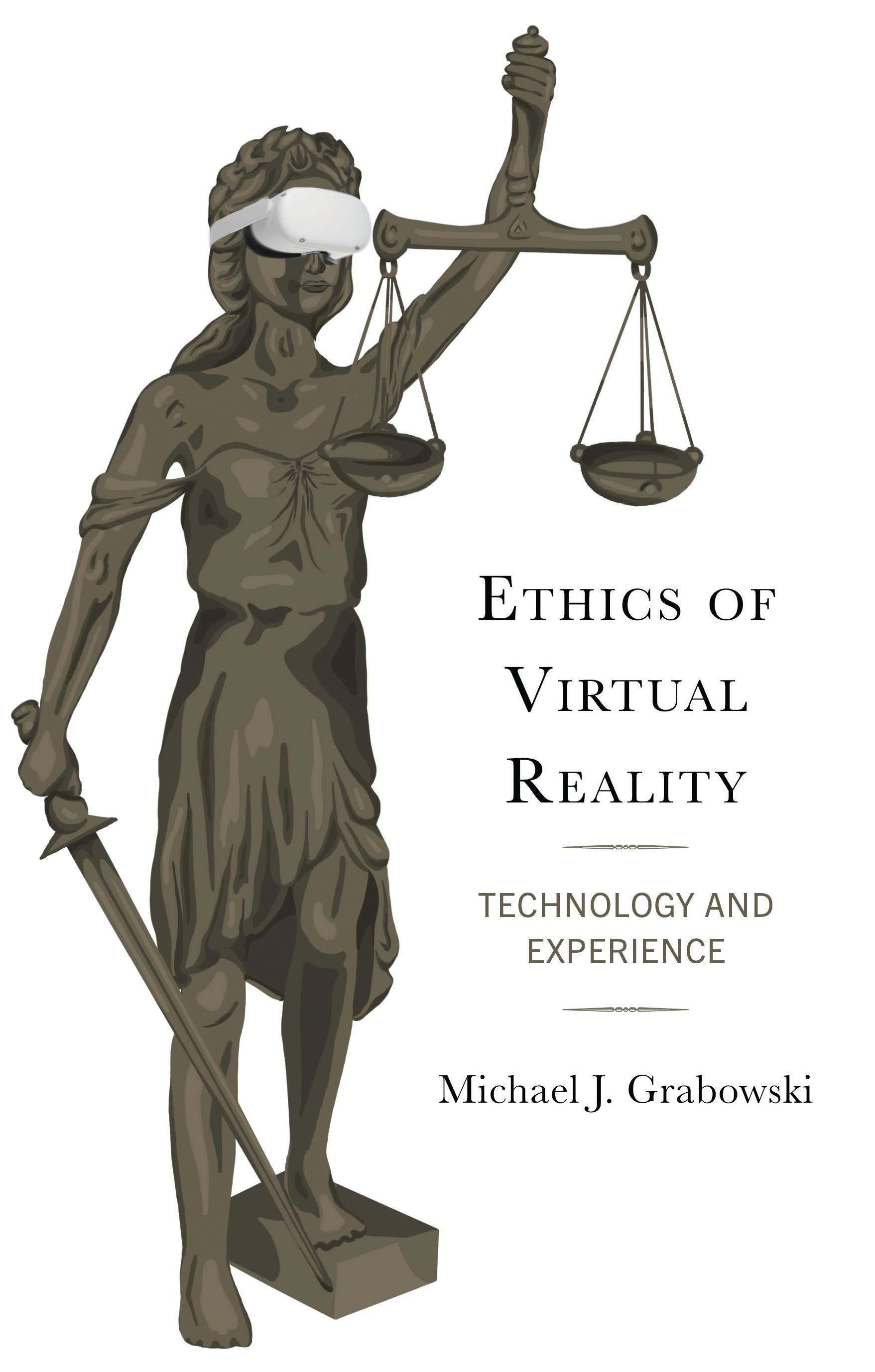
In this book, Michael Grabowski draws on established theories of ethics to consider critical questions surrounding the growing adoption of virtual reality (VR) technologies. These questions include who should control and have access to VR, its impact on privacy, its potential for misrepresentation and bias, and how to provide a platform for free expression while mitigating harassment and abuse.
Grabowski examines use cases of other digital technologies, including social media and artificial intelligence, to examine who is helped and harmed by the widespread implementation of VR and how it might transform existing institutions, social relationships, and communication. Finally, Grabowski forecasts the possible futures of VR and what limits, if any, should be placed on representing the real world or imagining new ones. Scholars of media studies, technology studies, communication, and ethics will find this book of particular interest.
Grabowski examines use cases of other digital technologies, including social media and artificial intelligence, to examine who is helped and harmed by the widespread implementation of VR and how it might transform existing institutions, social relationships, and communication. Finally, Grabowski forecasts the possible futures of VR and what limits, if any, should be placed on representing the real world or imagining new ones. Scholars of media studies, technology studies, communication, and ethics will find this book of particular interest.
Pay easily by card, Klarna, Apple Pay or Google Pay. Not happy? You always have a 14-day money-back guarantee. Read more in our terms. If you have any questions, email us at hello@memmo.org.
Memmo makes studying easier – wherever you are in the world. We bring your course books and smart study tools together in one place: summaries, quizzes, podcasts and flashcards. Plus Ted, your study buddy who answers anything you wonder. Over 50,000 students already study here – built to help you learn faster and stress less.