
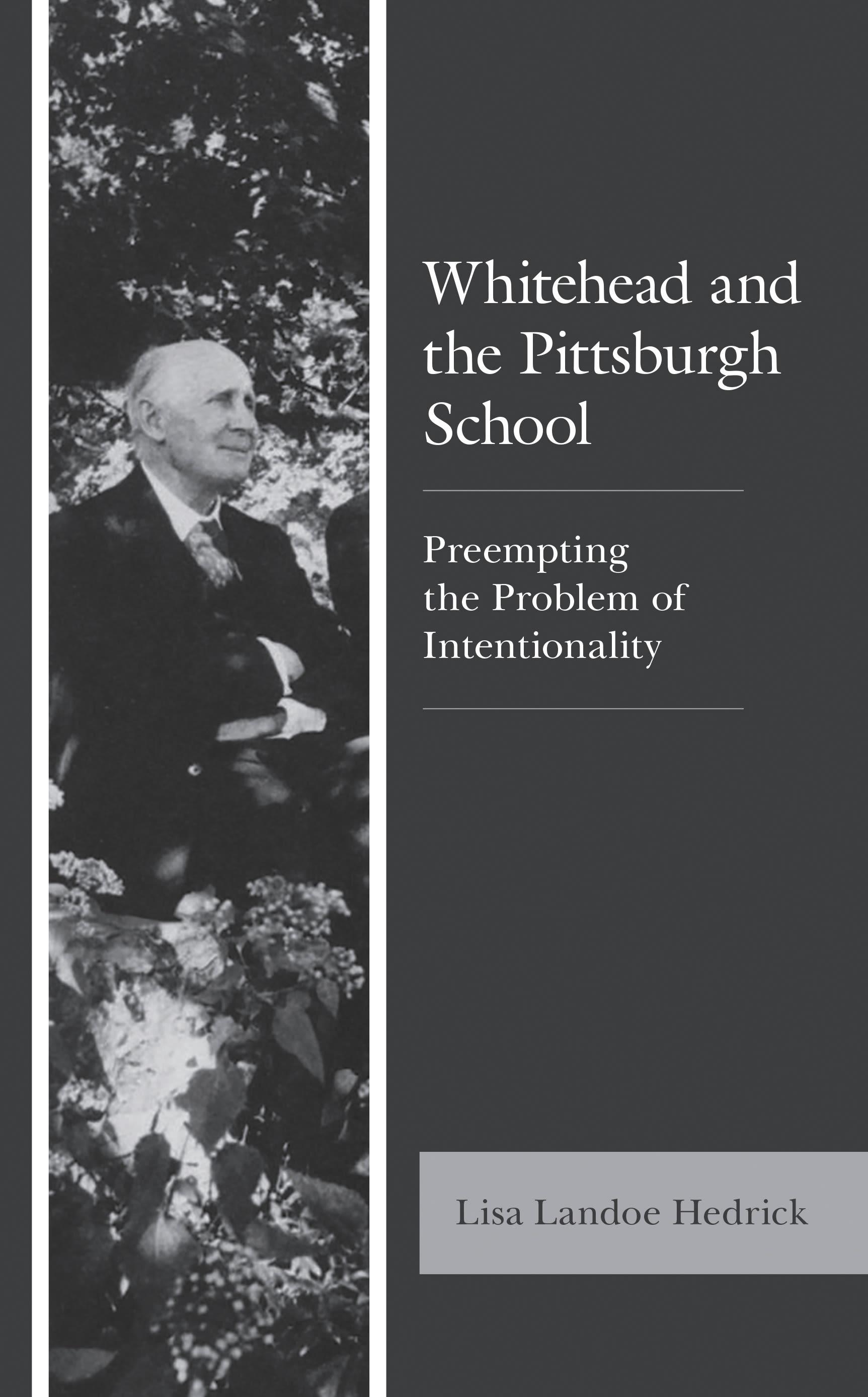
Whitehead and the Pittsburgh School: Preempting the Problem of Intentionality proposes a revisionary history of the relationship between Alfred North Whitehead and analytic philosophy, as well as a constructive proposal for how thinking with Whitehead can help disabuse analytic philosophy of the problem of intentionality. Lisa Landoe Hedrick defines “analytic” philosophy as primarily the intellectual tradition that runs from Gottlob Frege to Bertrand Russell to Wilfrid Sellars, or, geographically speaking, from Vienna to Cambridge to Pittsburgh between the twentieth and twenty-first centuries. As key members of the Pittsburgh School of philosophy, Robert Brandom and John McDowell pick up the Sellarsian project of reconciling nature and normativity in different ways, yet each of them presupposes a problematic relationship between language and the world precisely bequeathed to them by an implicit metaphysics of subjecthood that characterized analytic thinkers of the early twentieth century. Hedrick both investigates Whitehead’s published and archived critiques of early analytic thought—as an extension of a wider critique of modern philosophy—and employs Whitehead to reimagine nature and normativity after the problem of intentionality by way of his aesthetics of symbolism. This book thereby builds upon a burgeoning effort among philosophers to interface process and analytic thought, but it is the first to focus on contemporary analytic thinkers.
Pay easily by card, Klarna, Apple Pay or Google Pay. Not happy? You always have a 14-day money-back guarantee. Read more in our terms. If you have any questions, email us at hello@memmo.org.
Memmo makes studying easier – wherever you are in the world. We bring your course books and smart study tools together in one place: summaries, quizzes, podcasts and flashcards. Plus Ted, your study buddy who answers anything you wonder. Over 50,000 students already study here – built to help you learn faster and stress less.