
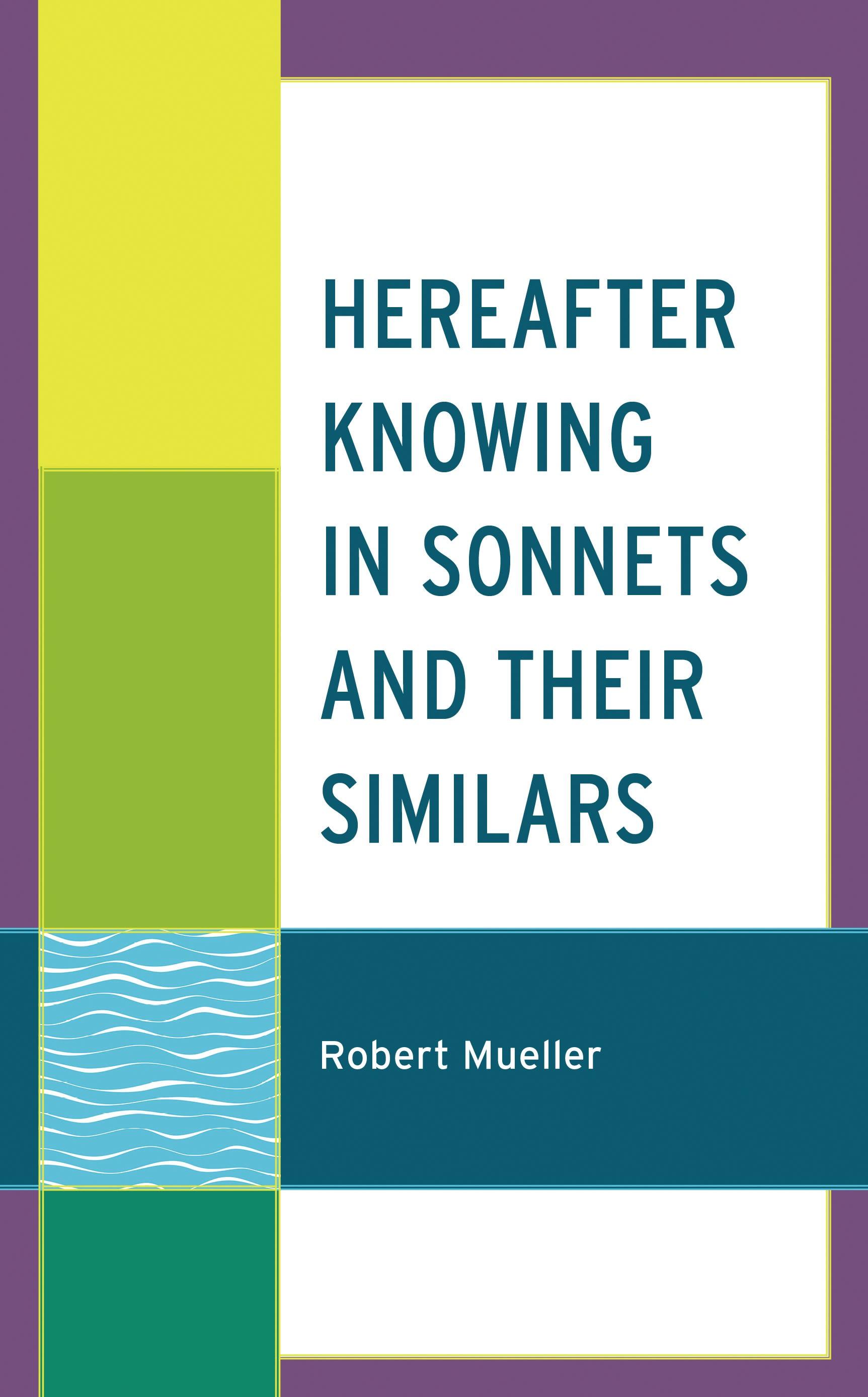
Hereafter Knowing in Sonnets and Their Similars explores the work of prominent poets through a philosophical and theological lens. It focuses on the well-travelled yet precarious achievement that is Petrarch’s writing of the sonnet in Italian, his English successors Wyatt and Spenser with their own amatory strategies, and how Shakespeare’s sonnets turn the many difficult corners for imagining a writing against the untimely.
Its reach includes ancient, medieval, and modern philosophy; scripture; patristic theology; Renaissance and contemporary poetry; and numerous language traditions including Greek, Latin, Italian, French, German, and English. Robert Mueller explores a set of writers who address themselves to manifestations of the Other—for Dan Machlin to the place of Body, for Augustine to his wanting to know the Lord, for Petrarch to the honor of Love—alongside Aristotelian and other forms of epistemology. Through exacting, insightful, and original readings of these writers, Mueller analyzes the circuits and relations that connect them to those they address, with particular attention, especially for Sharon Dolin, to living their lives in these relations, and also to the temporal positions they adopt among the similar expressions of longing and seeking. The book offers new readings of canonical and noncanonical texts and assembles a singular archive of writers across many centuries and language traditions.
Its reach includes ancient, medieval, and modern philosophy; scripture; patristic theology; Renaissance and contemporary poetry; and numerous language traditions including Greek, Latin, Italian, French, German, and English. Robert Mueller explores a set of writers who address themselves to manifestations of the Other—for Dan Machlin to the place of Body, for Augustine to his wanting to know the Lord, for Petrarch to the honor of Love—alongside Aristotelian and other forms of epistemology. Through exacting, insightful, and original readings of these writers, Mueller analyzes the circuits and relations that connect them to those they address, with particular attention, especially for Sharon Dolin, to living their lives in these relations, and also to the temporal positions they adopt among the similar expressions of longing and seeking. The book offers new readings of canonical and noncanonical texts and assembles a singular archive of writers across many centuries and language traditions.
Pay easily by card, Klarna, Apple Pay or Google Pay. Not happy? You always have a 14-day money-back guarantee. Read more in our terms. If you have any questions, email us at hello@memmo.org.
Memmo makes studying easier – wherever you are in the world. We bring your course books and smart study tools together in one place: summaries, quizzes, podcasts and flashcards. Plus Ted, your study buddy who answers anything you wonder. Over 50,000 students already study here – built to help you learn faster and stress less.