
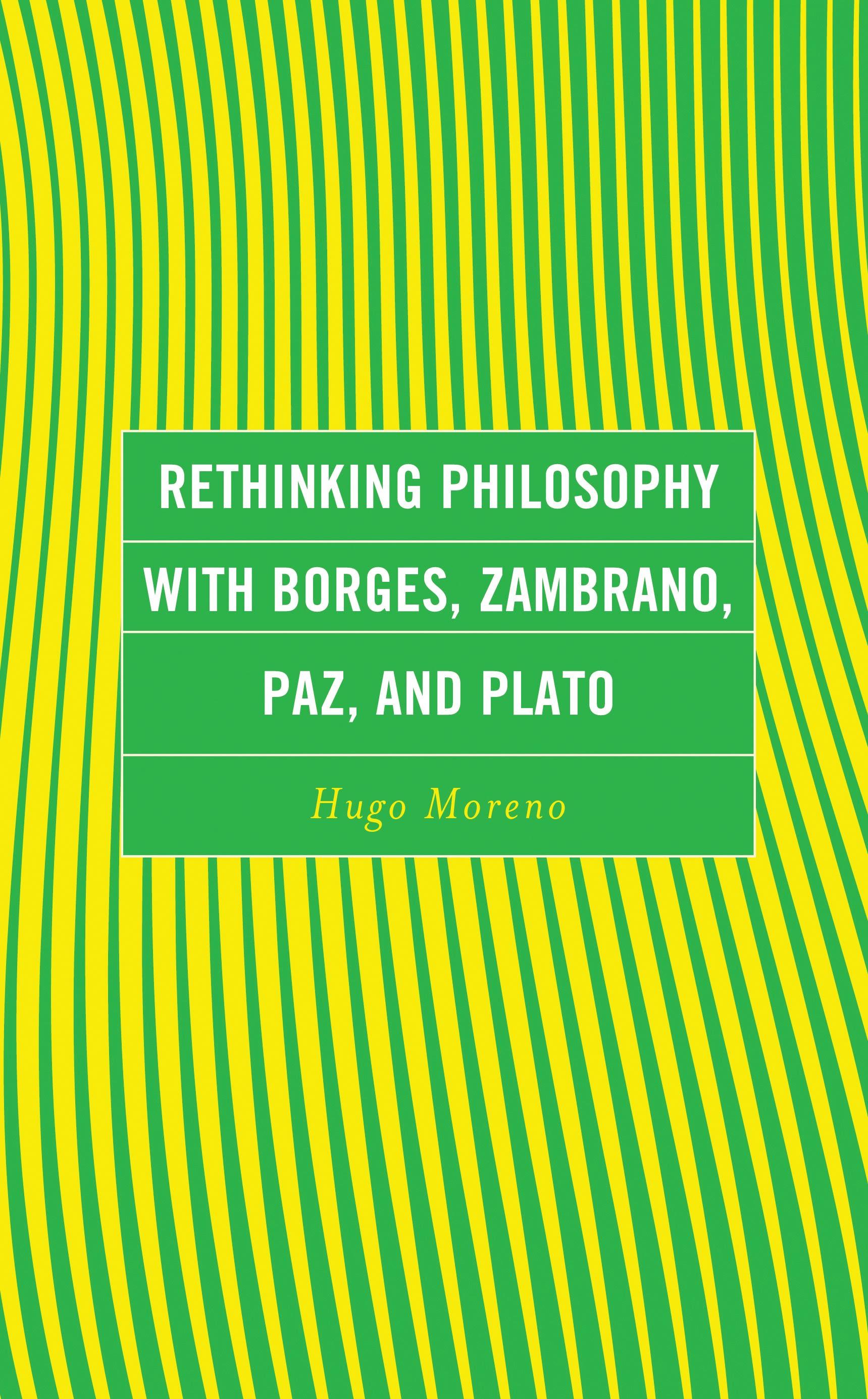
In Rethinking Philosophy with Borges, Zambrano, Paz, and Plato, Hugo Moreno argues that in Ficciones, Claros del bosque, and El mono gramático, Jorge Luis Borges, María Zambrano, and Octavio Paz practice a literary way of philosophizing—a way of seeking and communicating knowledge of reality that takes up analogical procedures. They deploy analogy as an indispensable and irreplaceable heuristic tool and literary device to convey their insight and perplexities on the nature of existence. Borges’ ironic approach involves reading and writing philosophy as fiction. Zambrano’s poetic reason is a mode of writing and thinking based on an imaginative sort of recollection that is ultimately a visionary’s poetizing technique. Paz’s poetic thinking relies on analogy to correlate and harmonize an array of worldviews, ideas, and discourses.
In the appendix, Moreno shows that Plato's Republic is a forerunner of this way of philosophizing in literature. Moreno suggests that in the Republic, Plato reconciles philosophy and poetry and creates a rational prose poetry that fuses argumentation and narration, dialectical and analogical reasoning, and abstract concepts and poetic images.
In the appendix, Moreno shows that Plato's Republic is a forerunner of this way of philosophizing in literature. Moreno suggests that in the Republic, Plato reconciles philosophy and poetry and creates a rational prose poetry that fuses argumentation and narration, dialectical and analogical reasoning, and abstract concepts and poetic images.
Pay easily by card, Klarna, Apple Pay or Google Pay. Not happy? You always have a 14-day money-back guarantee. Read more in our terms. If you have any questions, email us at hello@memmo.org.
Memmo makes studying easier – wherever you are in the world. We bring your course books and smart study tools together in one place: summaries, quizzes, podcasts and flashcards. Plus Ted, your study buddy who answers anything you wonder. Over 50,000 students already study here – built to help you learn faster and stress less.