
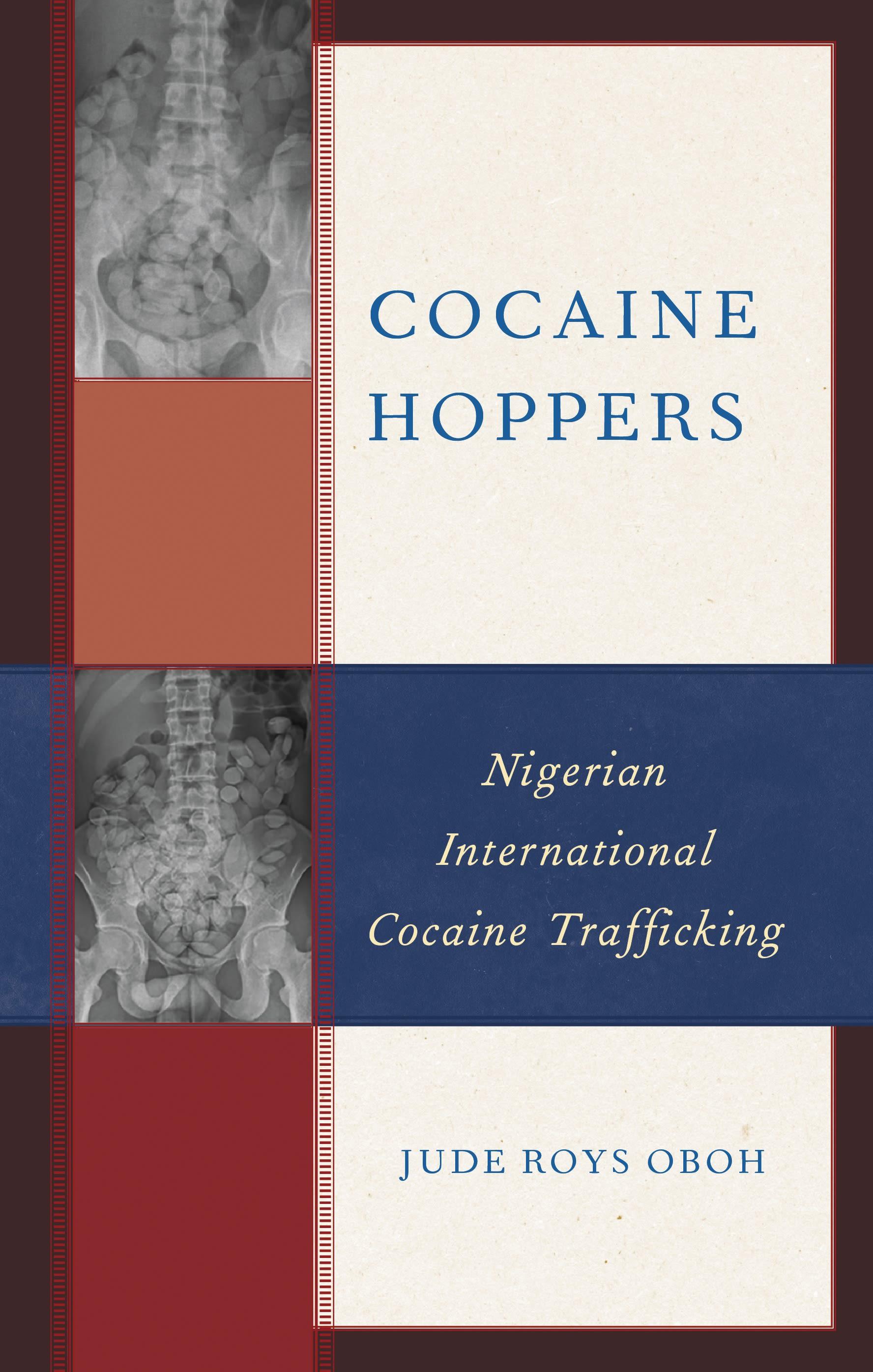
Cocaine Hoppers provides empirical evidence to explain the involvement of Nigerians in the global cocaine trade. Investigating the criminogenic environment created by the Nigerian ‘state crisis,’ Oboh traces the geographic, demographic, economic, historical, political, and cultural factors enhancing cocaine culture in Nigeria. Based on years of research, Oboh reveals this social network that relies on “reverse social capital” wherein wealth and power are achieved through illegal means solely to benefit the individual. This lively, theoretically grounded study examines the new trend of traffickers dominating the illicit cocaine trade through West Africa to destinations across the globe to provide an account of Nigerian involvement in international drug trafficking as it has never been divulged before. This book will be appreciated by criminologists, social scientists, policymakers, drug researchers and organized crime scholars. And eagerly be read by those interested in Nigeria, and problems of African immigrants, and in the international drug trafficking.
Pay easily by card, Klarna, Apple Pay or Google Pay. Not happy? You always have a 14-day money-back guarantee. Read more in our terms. If you have any questions, email us at hello@memmo.org.
Memmo makes studying easier – wherever you are in the world. We bring your course books and smart study tools together in one place: summaries, quizzes, podcasts and flashcards. Plus Ted, your study buddy who answers anything you wonder. Over 50,000 students already study here – built to help you learn faster and stress less.