
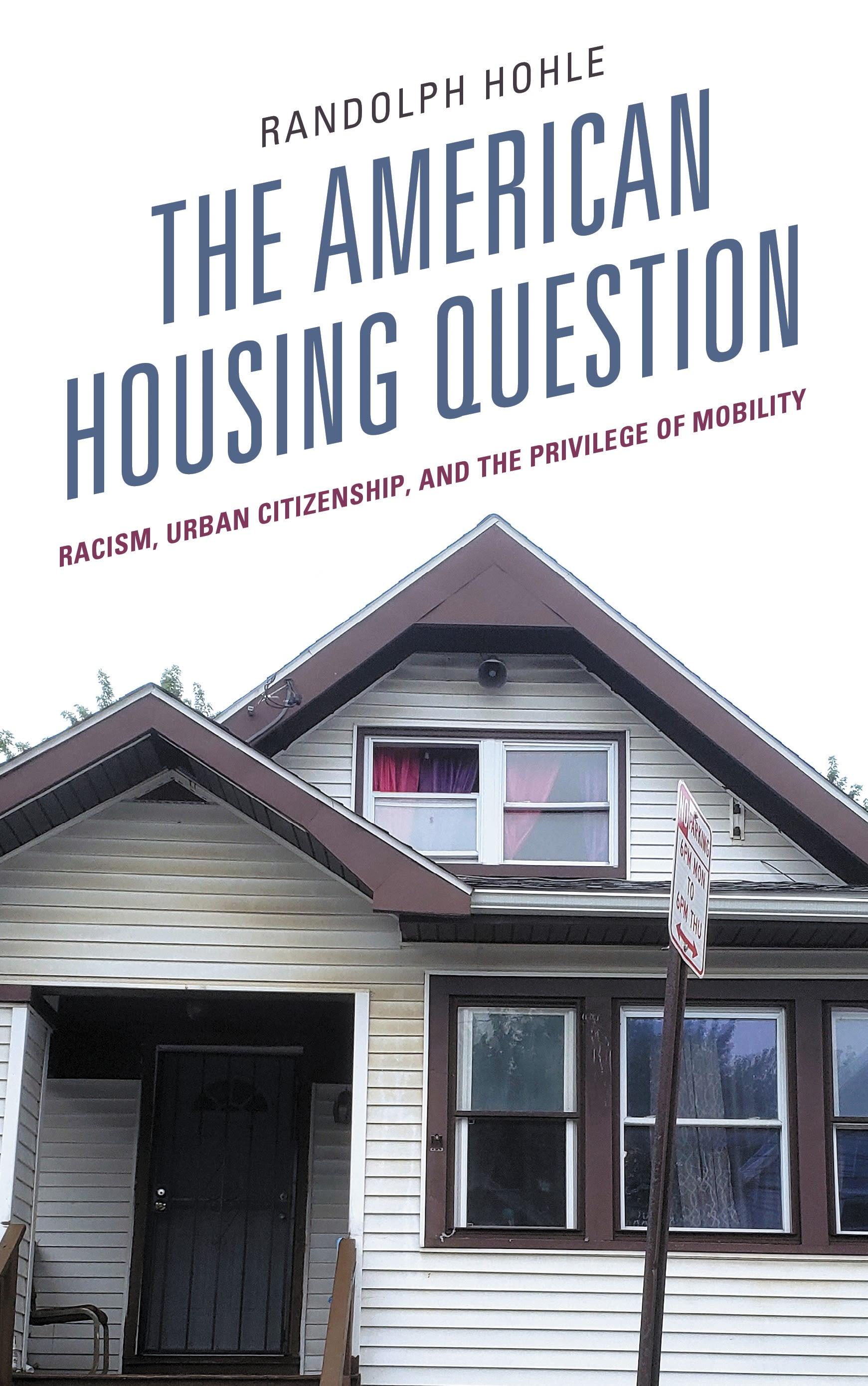
The American Housing Question reframes the question of affordable housing through the concepts of urban citizenship and racism. Randolph Hohle argues that when we consider who benefits from affordable housing, we end up with a complex story of inclusion and exclusion and of privilege and mobility centered around race and social class. Historically, affordable housing’s underlying logic was to create the conditions for white people to exercise the privilege of mobility. Affordable housing policy was first and foremost about granting white people the ability to live in racially-segregated neighborhoods within and across urban areas. When the beneficiaries of affordable housing policy were predominately white, the state proceeded with a comprehensive and multifaceted plan to supply housing, including public housing, subsidizing the construction of market rate housing, rental vouchers, and rent control. The white response to the Civil Rights era – the precursor to neoliberal urban policy – privatized public housing, switched the responsibility to provide affordable housing to the market, and created the conditions for the financialization of housing in the twenty-first century that have made housing unaffordable for everyone. As the author aptly demonstrates, solving America’s housing question means addressing both racism and revaluing the notion of the public.
Pay easily by card, Klarna, Apple Pay or Google Pay. Not happy? You always have a 14-day money-back guarantee. Read more in our terms. If you have any questions, email us at hello@memmo.org.
Memmo makes studying easier – wherever you are in the world. We bring your course books and smart study tools together in one place: summaries, quizzes, podcasts and flashcards. Plus Ted, your study buddy who answers anything you wonder. Over 50,000 students already study here – built to help you learn faster and stress less.