
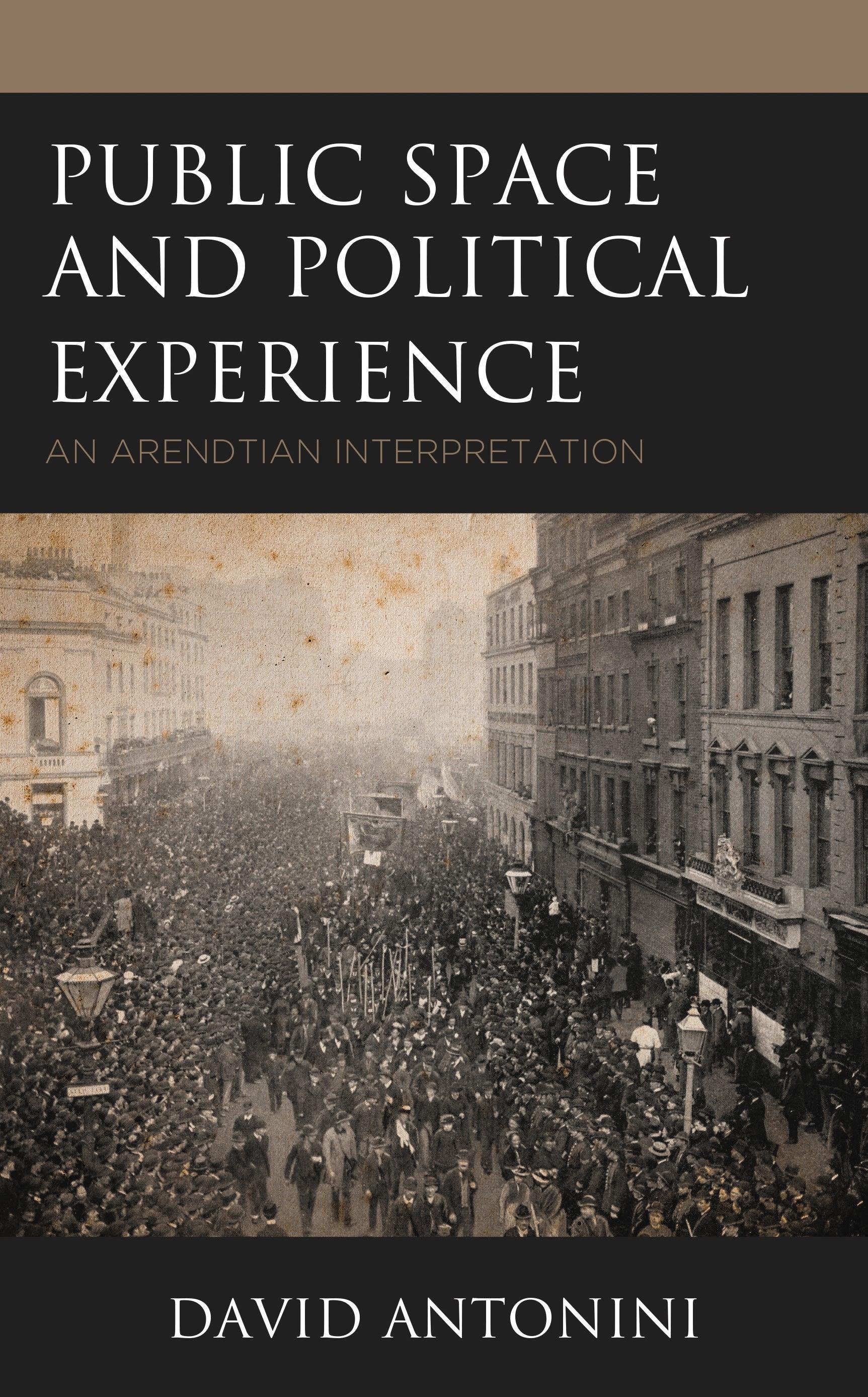
Contemporary politics is dominated by discussions of rights and liberties as the proper subjects about which citizens should be concerned in the political sphere. In Public Space and Political Experience: An Arendtian Interpretation, David Antonini argues that Hannah Arendt conceived of politics differently and that her thought can help us retrieve a more authentic sense of politics as the site where citizens can speak and act together about matters of shared concern. Antonini shows that citizens can experience politics together if they approach it not as a realm where privately interested individuals compete for their rights or liberties but instead as a space where plural human beings come together as distinct yet equal creatures. Antonini argues that if we read Arendt as primarily concerned with political experience, we can reimagine common political concepts such as freedom, power, revolution, and civil disobedience. The book posits that politics should be considered a fundamental form of human experience, one rooted in what Arendt refers to as the existential condition of politics—human plurality. If plurality is the existential condition out of which our political life emerges, we can enliven and reimagine the possibilities that political life can provide for contemporary citizens.
Pay easily by card, Klarna, Apple Pay or Google Pay. Not happy? You always have a 14-day money-back guarantee. Read more in our terms. If you have any questions, email us at hello@memmo.org.
Memmo makes studying easier – wherever you are in the world. We bring your course books and smart study tools together in one place: summaries, quizzes, podcasts and flashcards. Plus Ted, your study buddy who answers anything you wonder. Over 50,000 students already study here – built to help you learn faster and stress less.