
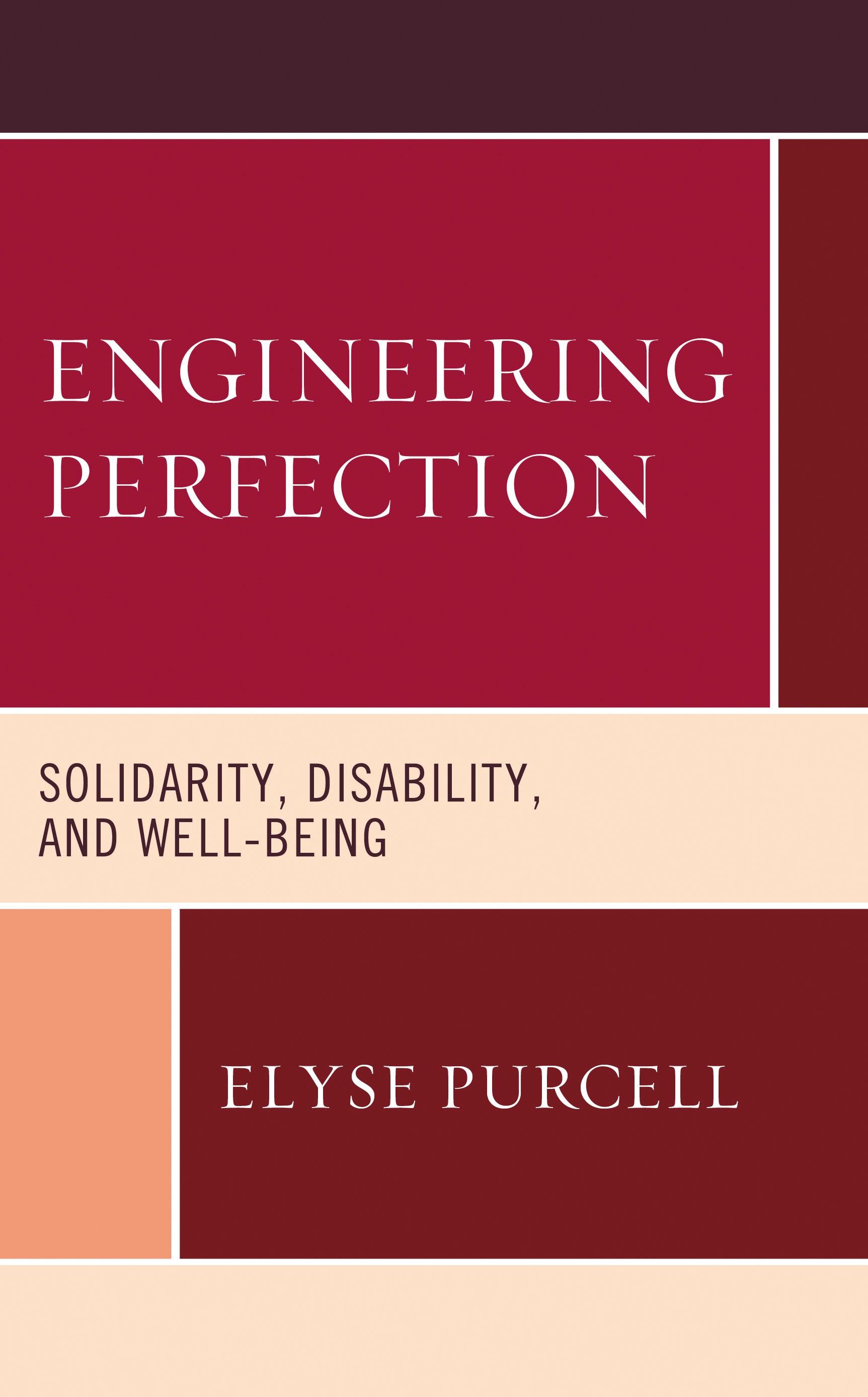
What do we owe our future children? How do advances in biomedical science bear on these obligations? How do capitalist incentives distort their execution? Advances in biotechnologies for human enhancement and designer babies appear to offer us new hope to control the fragility of human living. Some philosophers have argued that we have a moral imperative to use them, especially to eliminate disabilities.
Elyse Purcell offers an opposing view, one guided by existential insights and Marxist reflections. Engineering Perfection: Solidarity, Disability, and Well-being explores the effect global capitalism may have on the selection of traits for our future children and how the commercialization of these technologies may lead to the elimination of bodily diversity. Although philosophers have addressed the possible widening between the haves and have-nots, this book considers the role oppression and exploitation may play in enhancing bodies for profit. As a challenge to the global economy of debility, Purcell proposes the Solidarity view, which embraces human vulnerability and embodied difference. By reflecting on facets of the human condition, the Solidarity view challenges us to reject our conception of the good life as human perfection, and instead reconceive of the good as one’s self-realization through the interdependent mutual recognition and co-belonging with others.
Elyse Purcell offers an opposing view, one guided by existential insights and Marxist reflections. Engineering Perfection: Solidarity, Disability, and Well-being explores the effect global capitalism may have on the selection of traits for our future children and how the commercialization of these technologies may lead to the elimination of bodily diversity. Although philosophers have addressed the possible widening between the haves and have-nots, this book considers the role oppression and exploitation may play in enhancing bodies for profit. As a challenge to the global economy of debility, Purcell proposes the Solidarity view, which embraces human vulnerability and embodied difference. By reflecting on facets of the human condition, the Solidarity view challenges us to reject our conception of the good life as human perfection, and instead reconceive of the good as one’s self-realization through the interdependent mutual recognition and co-belonging with others.
Pay easily by card, Klarna, Apple Pay or Google Pay. Not happy? You always have a 14-day money-back guarantee. Read more in our terms. If you have any questions, email us at hello@memmo.org.
Memmo makes studying easier – wherever you are in the world. We bring your course books and smart study tools together in one place: summaries, quizzes, podcasts and flashcards. Plus Ted, your study buddy who answers anything you wonder. Over 50,000 students already study here – built to help you learn faster and stress less.