
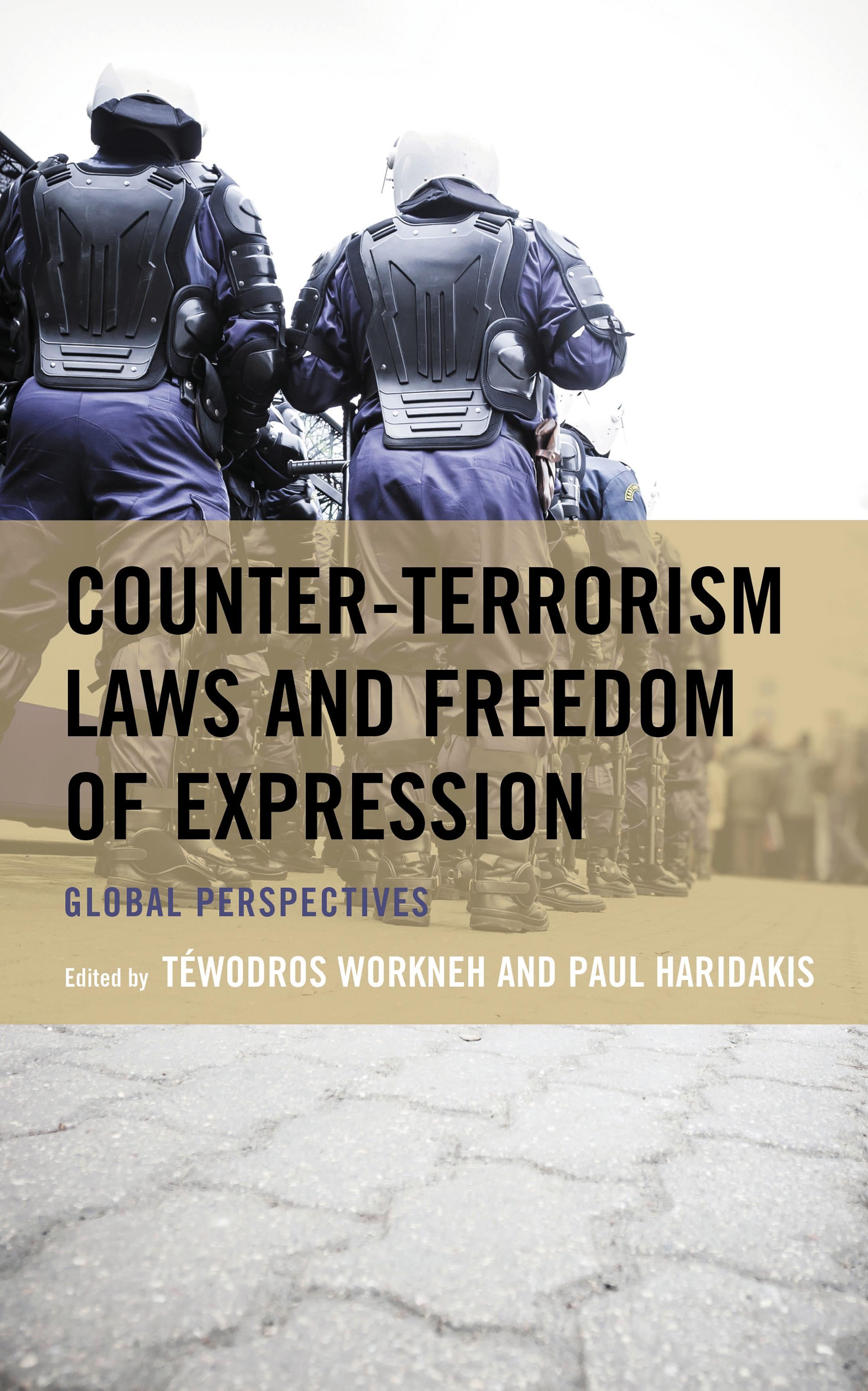
Counter-Terrorism Laws and Freedom of Expression
Author: Andrew Robinson, Wei Sun, Eunice Castro Seixas, Paul Haridakis, Rebecca Ananian-Welsh, Nazli Bulay Dogan, Peter Greste, Athina Karatzogianni, Isabel Serrano Maillo, Gabriela Martínez, Richard Murray, Daniel Oppermann, Daniel Ortner, Mohammad Imran Parray, Rita Radostitz, Florence Namasinga Selnes, Shudipta Sharma, Francesco Tamburini, Peter Tiako Ngangum, Téwodros Workneh
Publisher: Bloomsbury Publishing
Edition: 1
Published date: 2021
ISBN: 9781793622167
As nations have aggressively implemented a wide range of mechanisms to proactively curb potential threats terrorism, Counter-Terrorism Laws and Freedom of Expression: Global Perspectives offers critical insight into how counter-terrorism laws have adversely affected journalism practice, digital citizenship, privacy, online activism, and other forms of expression. While governments assert the need for such laws to protect national security, critics argue counter-terrorism laws are prone to be misappropriated by state actors who use such laws to quash political dissent, target journalists, and restrict other forms of citizen expression.
The book is divided into three parts. Part I deals with the politics and discourse of counter-terrorism laws. Part II focuses on the ways counter-terrorism laws have impacted journalistic practice in different countries, with effects ranging from imprisonment of reporters to self-censorship. Part III addresses how counter-terrorism laws have been used to target everyday citizens, social media activists, whistleblowers, and human rights advocates around the world. Together, the chapters address how counter-terrorism laws have undermined democratic values in both authoritarian and liberal political contexts. Scholars of political science, communication, and legal studies will find this book particularly interesting.
The book is divided into three parts. Part I deals with the politics and discourse of counter-terrorism laws. Part II focuses on the ways counter-terrorism laws have impacted journalistic practice in different countries, with effects ranging from imprisonment of reporters to self-censorship. Part III addresses how counter-terrorism laws have been used to target everyday citizens, social media activists, whistleblowers, and human rights advocates around the world. Together, the chapters address how counter-terrorism laws have undermined democratic values in both authoritarian and liberal political contexts. Scholars of political science, communication, and legal studies will find this book particularly interesting.
Pay easily by card, Klarna, Apple Pay or Google Pay. Not happy? You always have a 14-day money-back guarantee. Read more in our terms. If you have any questions, email us at hello@memmo.org.
Memmo makes studying easier – wherever you are in the world. We bring your course books and smart study tools together in one place: summaries, quizzes, podcasts and flashcards. Plus Ted, your study buddy who answers anything you wonder. Over 75,000 students already study here – built to help you learn faster and stress less.