
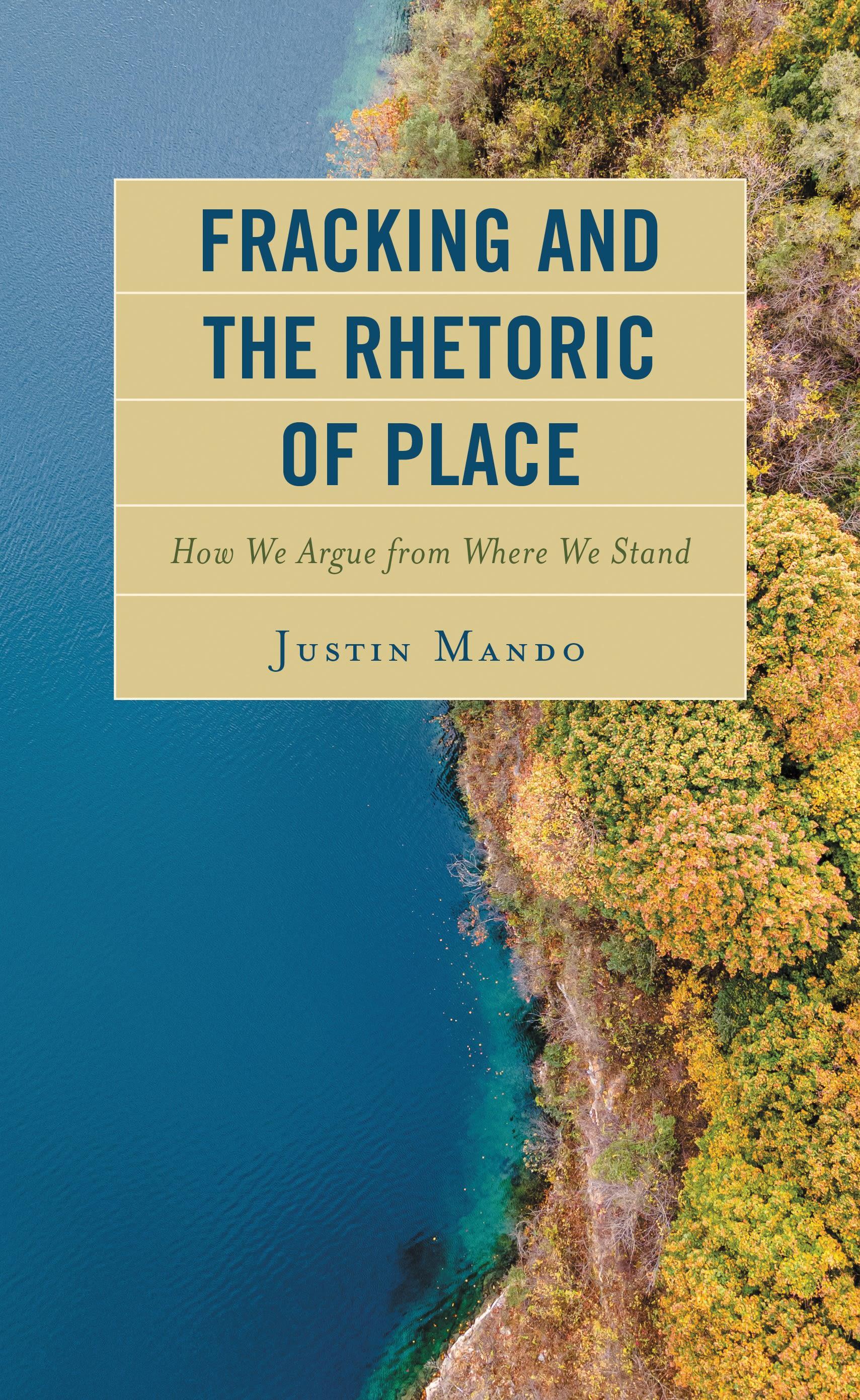
Fracking and the Rhetoric of Place investigates the rhetorical strategies of speakers at public hearings on hydraulic fracturing (“fracking”) in order to understand how places shape and are shaped by citizens as they engage in their democracy. As an important argumentative resource in environmental controversy, the rhetoric of place helps citizens situate themselves within local contexts and raise their voices in times of social conflict. Justin Mando uses rhetorical analysis, discourse analysis, and corpus analysis to offer scholars of place-based rhetoric and environmental communication a heuristic approach to studying their own sites. This approach reveals that place-based arguments are a ubiquitous rhetorical resource in the dispute over hydraulic fracturing that shapes how the issue is perceived. Pro-frackers and anti-frackers use rhetoric of place in striking ways that reveal their values, motivations, strengths, and weaknesses. Place functions as an interface of potential common ground that connects the local to the global, what is here to what is there. Scholars and students of rhetoric, communication, and environmental studies will find this book particularly interesting.
Pay easily by card, Klarna, Apple Pay or Google Pay. Not happy? You always have a 14-day money-back guarantee. Read more in our terms. If you have any questions, email us at hello@memmo.org.
Memmo makes studying easier – wherever you are in the world. We bring your course books and smart study tools together in one place: summaries, quizzes, podcasts and flashcards. Plus Ted, your study buddy who answers anything you wonder. Over 75,000 students already study here – built to help you learn faster and stress less.