
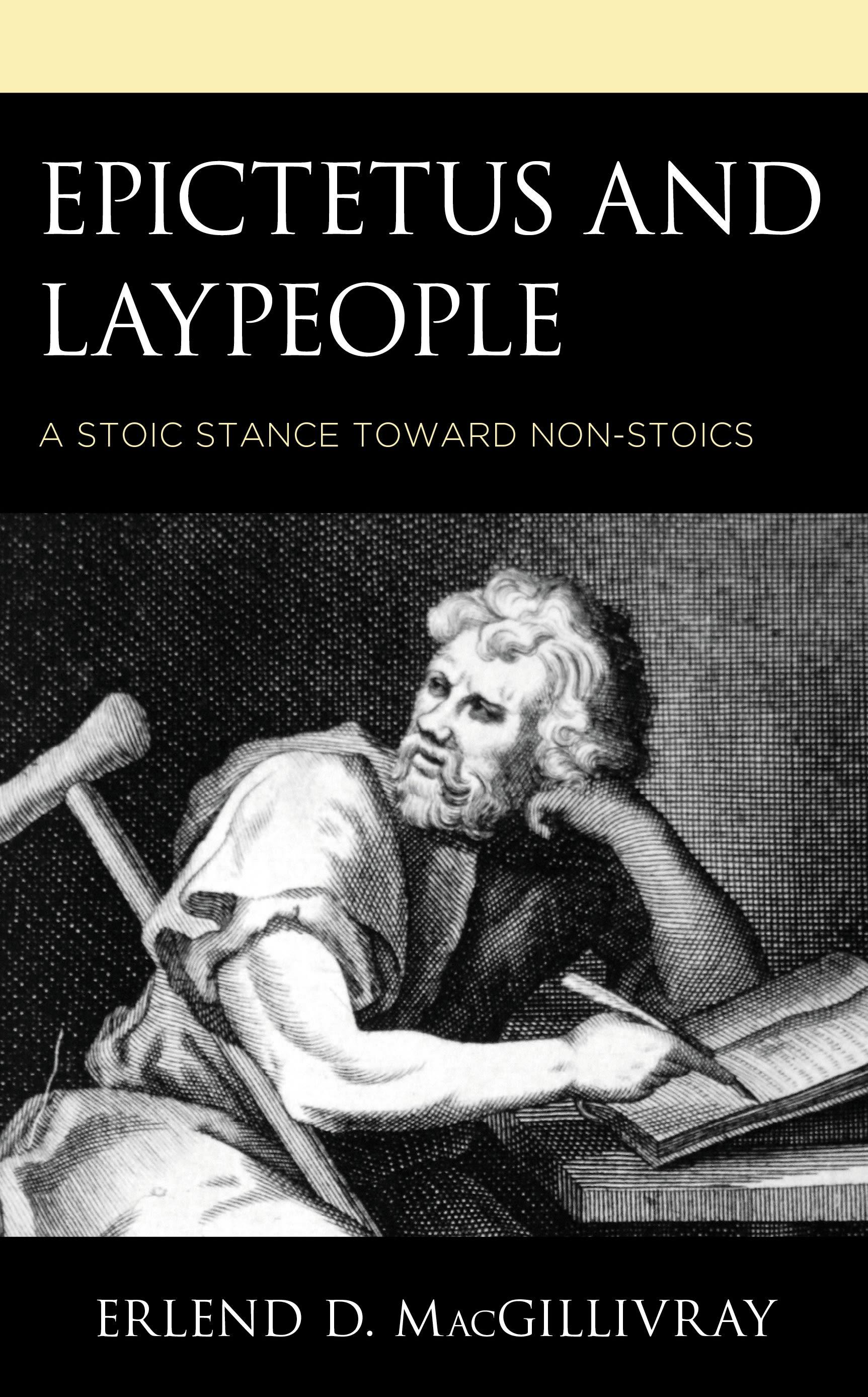
Erlend D. MacGillivray’s Epictetus and Laypeople: A Stoic Stance toward the Rest of Humanity explores the understanding that ancient philosophers had towards the vast majority of people at the time, those who had no philosophical knowledge or adherence—laypeople. After exploring how philosophical identity was established in antiquity, this book examines the Stoic philosopher Epictetus, who reflected upon laypeople with remarkable frequency. MacGillivray shows that Epictetus maintained his stance that a small and distinguishable group of philosophically aware individuals existed, alongside his conviction that most of humanity can be inclined to act in accordance with virtuous principles by their dependence upon preconceptions, civic law, popular religion, exempla, and the adoption of primitive conditions, among other means. This book also highlights other Stoics and their commentators to show that the means of lay reform that MacGillivray explores were not just implicitly understood in antiquity, but reveal a well-developed system of thought in the school which has, until now, evaded the notice of modern scholars.
Pay easily by card, Klarna, Apple Pay or Google Pay. Not happy? You always have a 14-day money-back guarantee. Read more in our terms. If you have any questions, email us at hello@memmo.org.
Memmo makes studying easier – wherever you are in the world. We bring your course books and smart study tools together in one place: summaries, quizzes, podcasts and flashcards. Plus Ted, your study buddy who answers anything you wonder. Over 50,000 students already study here – built to help you learn faster and stress less.