
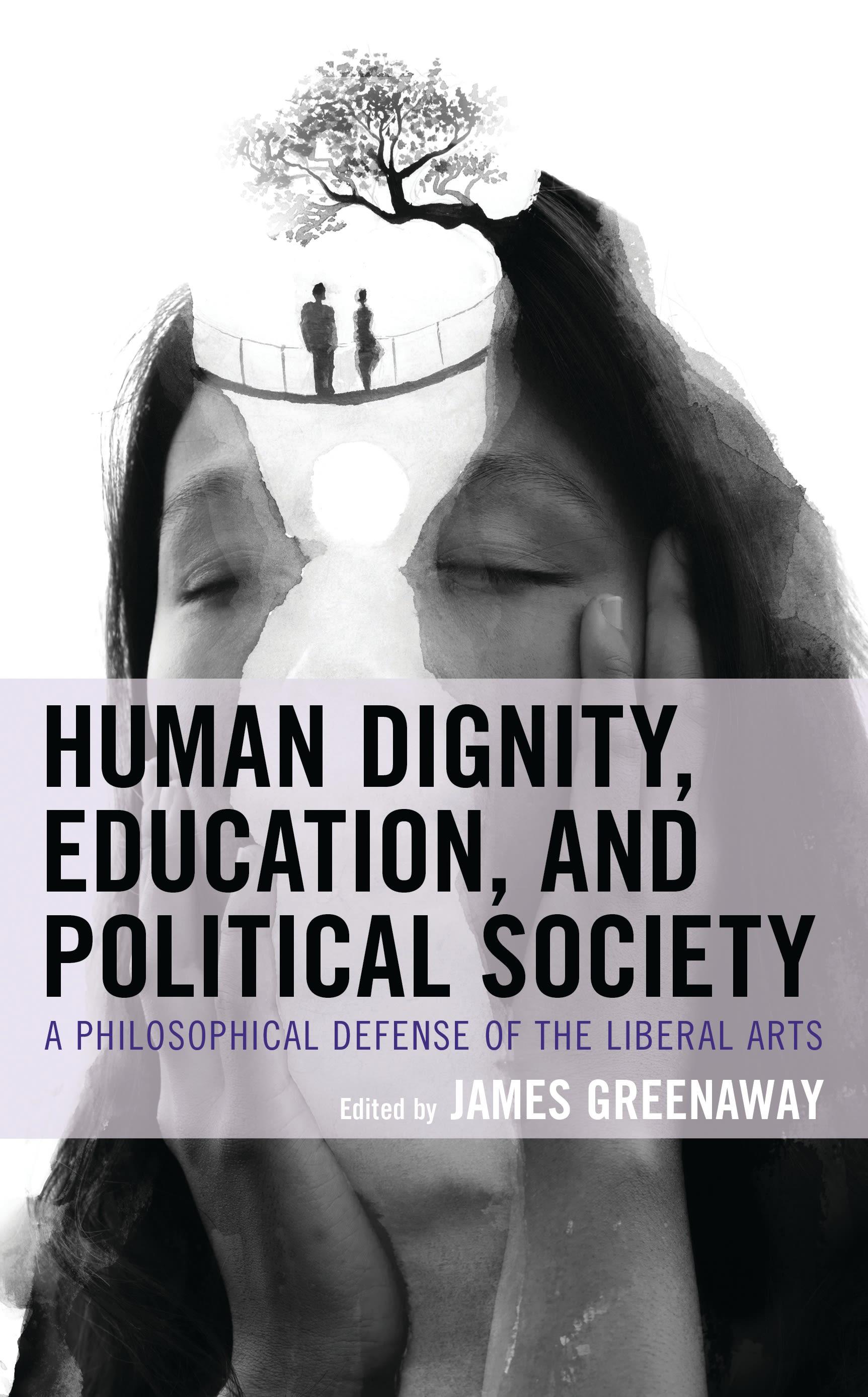
A life of liberty and responsibility does not just happen, but requires a particular kind of education, one that aims at both a growth of the human soul and an enrichment of political society in justice and the common good. This we call a liberal education. Forgetfulness of liberty is also a forgetfulness of the multi-dimensional nature of the human person, and a diminution of political life. Keeping in mind what can be lost when liberal education is lost, this volume makes the case for recovering what is perennially noble and good in the liberal arts, and why the liberal arts always have a role to play in human flourishing.
Each of the authors herein focuses on the connection of three primary themes: human dignity, liberal education, and political society. Intentionally rooted in the hub that joins the three themes, each author seeks to unfold the contemporary significance of that hub. As a whole, the volume explores how the three themes are crucial to each other: how they illuminate each other, how they need each other, and how the loss of one jeopardizes the wellbeing of the others. In individual chapters, the authors engage various relevant aspects of liberal education. As a result, the volume is organized into three parts: Liberal Education and a Life Well Lived; Thinkers on Dignity and Education in History; Contemporary Topics in Dignity and Education.
As education is increasingly channeled into an ever more narrow focus on technical specialization, and measured against professional success, students themselves face a maelstrom of campus politics and competing political orthodoxies. These are among the issues that tend to militate against the operative liberty of the student to think and to speak as a person. This edited collection is offered as an invitation to think again about the liberal arts in order to recover the meaning of education as the authentic pursuit of the good life or eudemonia.
Each of the authors herein focuses on the connection of three primary themes: human dignity, liberal education, and political society. Intentionally rooted in the hub that joins the three themes, each author seeks to unfold the contemporary significance of that hub. As a whole, the volume explores how the three themes are crucial to each other: how they illuminate each other, how they need each other, and how the loss of one jeopardizes the wellbeing of the others. In individual chapters, the authors engage various relevant aspects of liberal education. As a result, the volume is organized into three parts: Liberal Education and a Life Well Lived; Thinkers on Dignity and Education in History; Contemporary Topics in Dignity and Education.
As education is increasingly channeled into an ever more narrow focus on technical specialization, and measured against professional success, students themselves face a maelstrom of campus politics and competing political orthodoxies. These are among the issues that tend to militate against the operative liberty of the student to think and to speak as a person. This edited collection is offered as an invitation to think again about the liberal arts in order to recover the meaning of education as the authentic pursuit of the good life or eudemonia.
Pay easily by card, Klarna, Apple Pay or Google Pay. Not happy? You always have a 14-day money-back guarantee. Read more in our terms. If you have any questions, email us at hello@memmo.org.
Memmo makes studying easier – wherever you are in the world. We bring your course books and smart study tools together in one place: summaries, quizzes, podcasts and flashcards. Plus Ted, your study buddy who answers anything you wonder. Over 50,000 students already study here – built to help you learn faster and stress less.