
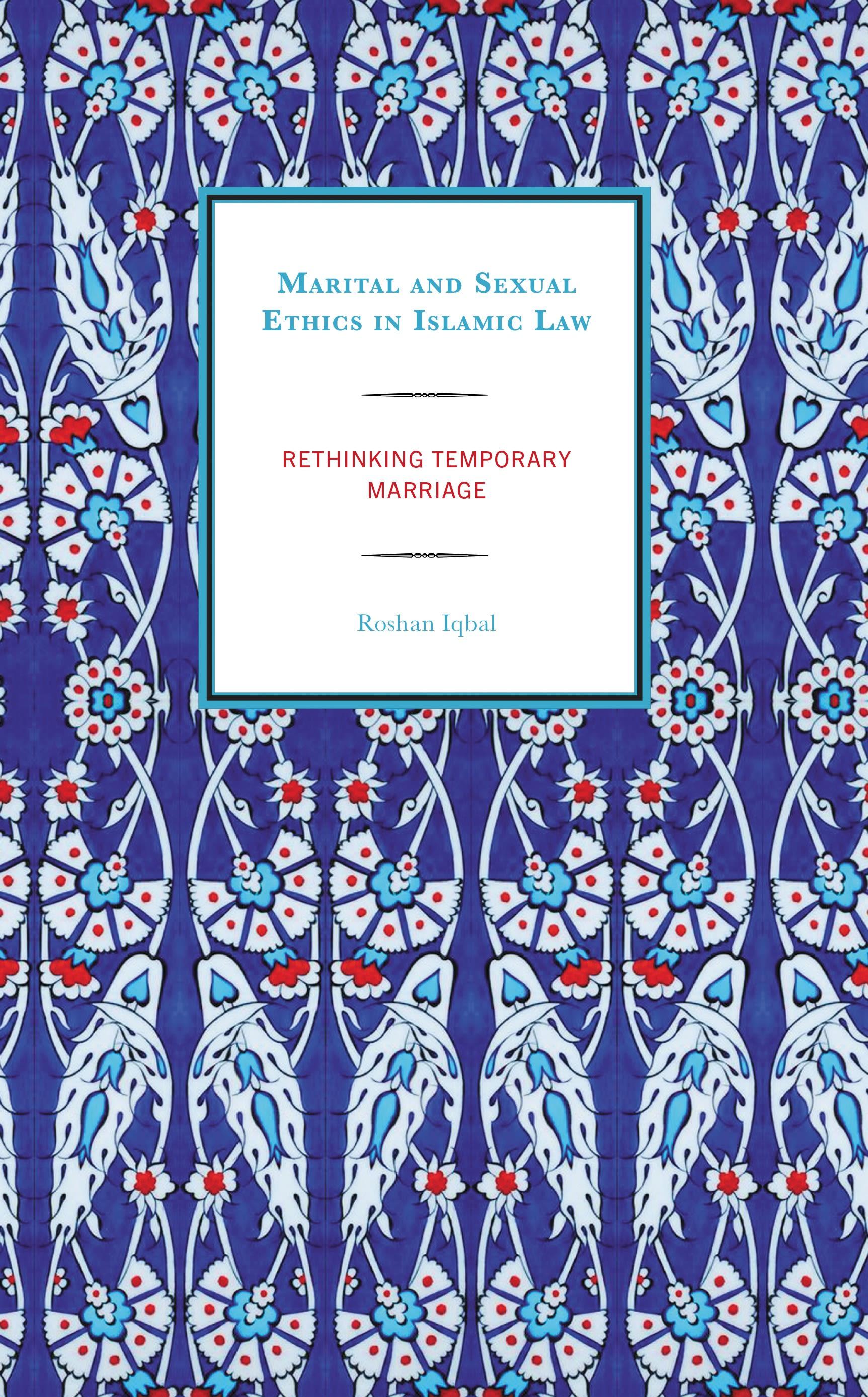
Roshan Iqbal traces the intellectual legacy of the exegesis of Qur’an 4:24, which is used as the proof text for the permissibility of mut’a (temporary marriage) and asks if the use of verse 4.24 for the permissibility of mut’a marriage is justified within the rules and regulations of Qur’anic hermeneutics. Iqbal examines seventeen Qur’an commentaries, the chronological span of which extends from the first extant commentary to the present day in three major Islamicate languages. Iqbal concludes that doctrinal self-identity, rather than strictly philological analyses, shaped the interpretation of this verse. As Western academia’s first comprehensive work concerning the intellectual history of mut’a marriage and sexual ethics, this work illustrates the power of sectarian influences on how scholars have interpreted verse 4:24. This book is the only work in English that includes a plurality of voices from minor schools (Ibadi, Ashari, Zaidi, and Ismaili) largely neglected by Western scholars, alongside major schools, and draws from all available sub-genres of exegesis. Further, by revealing ambiguities in the interpretation of mut’a, this work challenges accepted sexual ethics in Islamic thought—as presented by most classical and many modern Muslim scholars—and thus opens up space to theorize Islamic sexual ethics anew and contribute to this crucial conversation from the perspective of Muslim feminism.
Pages: 220
Category: Religion & Teologi
e-ISBN: 9781793606280
Shipping weight: 1.2 kg
Ships in: 1-2 days
Pay easily by card, Klarna, Apple Pay or Google Pay. Not happy? You always have a 14-day money-back guarantee. Read more in our terms. If you have any questions, email us at hello@memmo.org.
Memmo makes studying easier – wherever you are in the world. We bring your course books and smart study tools together in one place: summaries, quizzes, podcasts and flashcards. Plus Ted, your study buddy who answers anything you wonder. Over 50,000 students already study here – built to help you learn faster and stress less.