
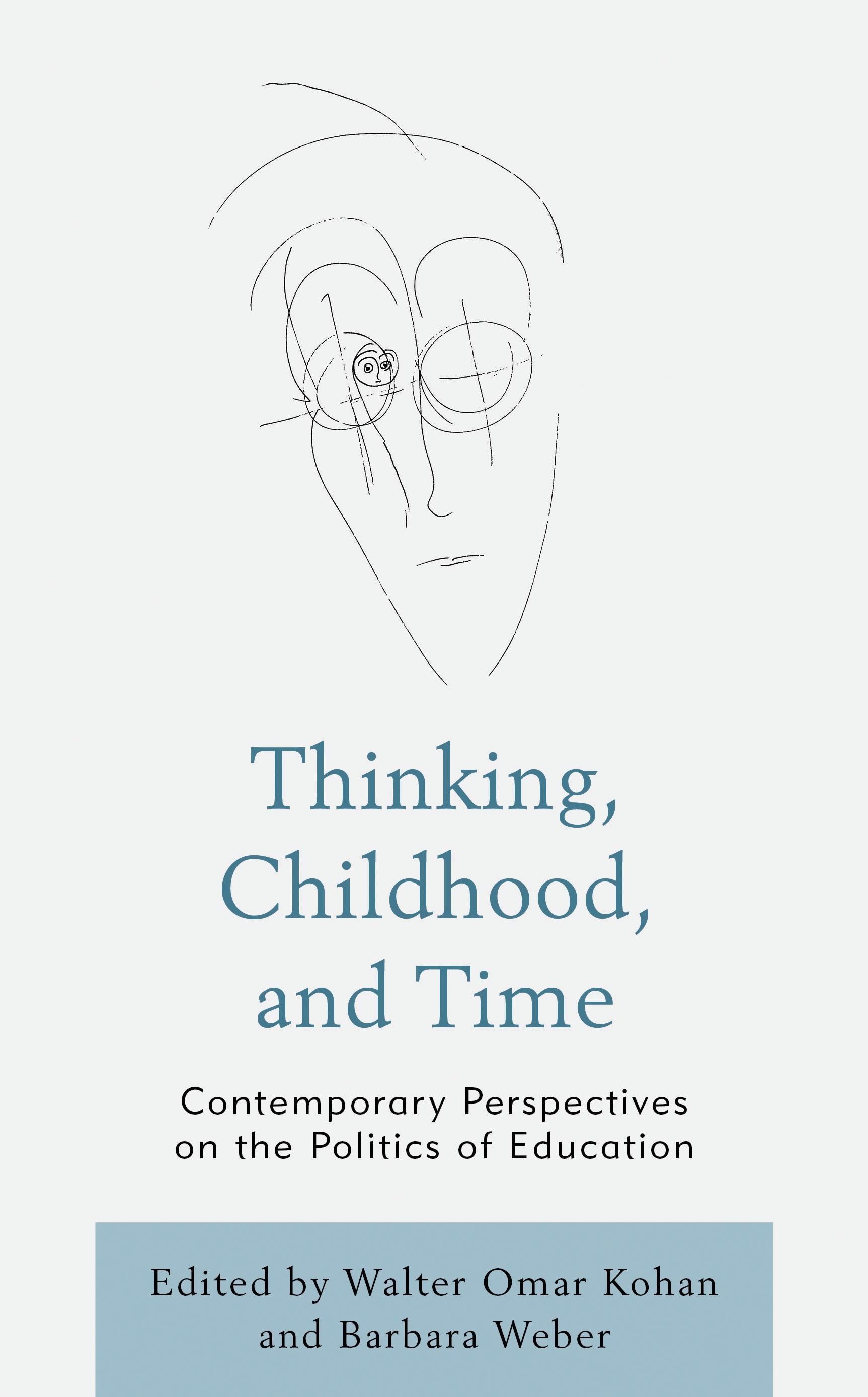
Thinking, Childhood, and Time
Author: Barbara Weber, David Kennedy, Karin Murris, Annalisa Caputo, Walter Omar Kohan, Peter Costello, Adrienne Argent, Iris Berger, Michael A. Bonnett, Pablo Muruzábal Lamberti, James Mensch, Juliana Merçon, Toby Rollo, Cristina Delgado Vintimilla
Publisher: Bloomsbury Publishing
Edition: 1
Published date: 2020
ISBN: 9781793604583
Thinking, Childhood, and Time: Contemporary Perspectives on the Politics of Education is an interdisciplinary exploration of the notion of childhood and its place in a philosophical education. Contributors consider children’s experiences of time, space, embodiment, and thinking. By acknowledging Hannah Arendt’s notion that every child brings a new beginning into the world, they address the question of how educators can be more responsive to the Otherness that childhood offers, while assuming that most educational models follow either a chronological model of child development or view children as human beings that are lacking.
The contributors explore childhood as a philosophical concept in children, adults, and even beyond human beings—Childhood as a (forgotten) dimension of the world. Contributors also argue that a pedagogy that does not aim for an “exodus of childhood,” but rather responds to the arrival of a new human being responsibly (dialogically), fosters a deeper appreciation of the newness that children bring in order to sensitize us for our own Childhood as adults as well and allow us to welcome other forms of childhood in the world. As a whole, this book argues that the experience of natality, such as the beginning of life, is not chronologically determined, but rather can occur more than once in a human life and beyond. Scholars of philosophy, education, psychology, and childhood studies will find this book particularly useful.
The contributors explore childhood as a philosophical concept in children, adults, and even beyond human beings—Childhood as a (forgotten) dimension of the world. Contributors also argue that a pedagogy that does not aim for an “exodus of childhood,” but rather responds to the arrival of a new human being responsibly (dialogically), fosters a deeper appreciation of the newness that children bring in order to sensitize us for our own Childhood as adults as well and allow us to welcome other forms of childhood in the world. As a whole, this book argues that the experience of natality, such as the beginning of life, is not chronologically determined, but rather can occur more than once in a human life and beyond. Scholars of philosophy, education, psychology, and childhood studies will find this book particularly useful.
Pay easily by card, Klarna, Apple Pay or Google Pay. Not happy? You always have a 14-day money-back guarantee. Read more in our terms. If you have any questions, email us at hello@memmo.org.
Memmo makes studying easier – wherever you are in the world. We bring your course books and smart study tools together in one place: summaries, quizzes, podcasts and flashcards. Plus Ted, your study buddy who answers anything you wonder. Over 50,000 students already study here – built to help you learn faster and stress less.