
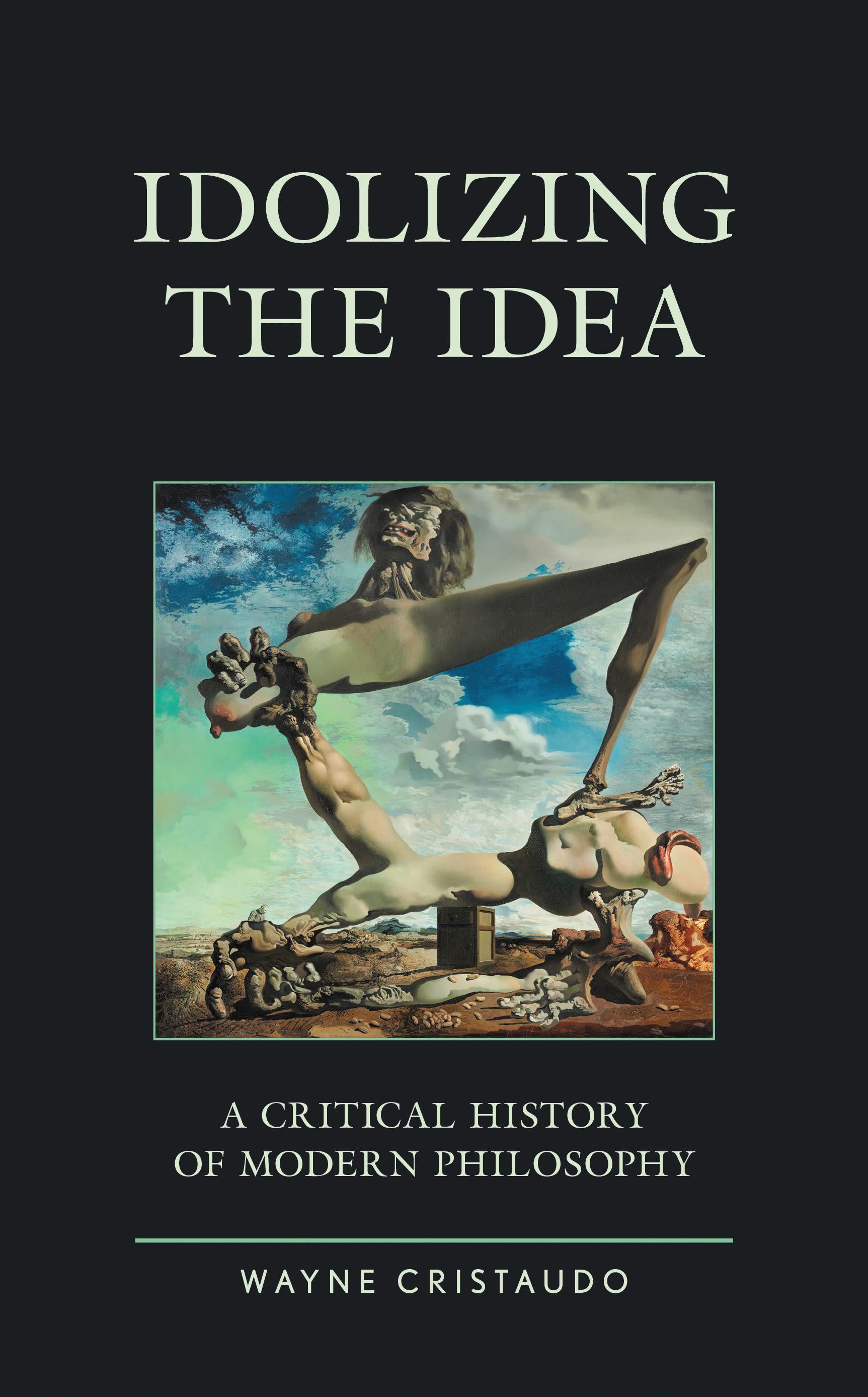
Ever since Plato made the case for the primacy of ideas over names, philosophy has tended to elevate the primacy of its ideas over the more common understanding and insights that are circulated in the names drawn upon by the community. Commencing with a critique of Plato’s original philosophical decision, Cristaudo takes up the argument put forward by Thomas Reid that modern philosophy has generally continued along the ‘way of ideas’ to its own detriment. His argument identifies the major paradigmatic developments in modern philosophy commencing from the new metaphysics pioneered by Descartes up until the analytic tradition and the anti-domination philosophies which now dominate social and political thought. Along the way he argues that the paradigmatic shifts and break-downs that have occurred in modern philosophy are due to being beholden to an inadequate sovereign idea, or small cluster of ideas, which contribute to the occlusion of important philosophical questions. In addition to chapters on Descartes, and the analytic tradition and anti-domination philosophies, his critical history of modern philosophy explores the core ideas of Locke, Berkeley, Malebranche, Locke, Hume, Reid, Kant, Fichte, Hegel, Schelling, Marx, Kierkegaard, Schopenhauer, Nietzsche, Husserl and Heidegger. The common thread uniting these disparate philosophies is what Cristaudo calls ‘ideaism’ (sic.). Rather than expanding our reasoning capacity, ‘ideaism’ contributes to philosophers imposing dictatorial principles or models that ultimately occlude and distort our understanding of our participative role within reality. Drawing upon thinkers such as Pascal, Vico, Hamann, Herder, Franz Rosenzweig, Martin Buber and Eugen Rosensock-Huessy Cristaudo advances his argument by drawing upon the importance of encounter, dialogue, and a more philosophical anthropological and open approach to philosophy.
Pay easily by card, Klarna, Apple Pay or Google Pay. Not happy? You always have a 14-day money-back guarantee. Read more in our terms. If you have any questions, email us at hello@memmo.org.
Memmo makes studying easier – wherever you are in the world. We bring your course books and smart study tools together in one place: summaries, quizzes, podcasts and flashcards. Plus Ted, your study buddy who answers anything you wonder. Over 50,000 students already study here – built to help you learn faster and stress less.