
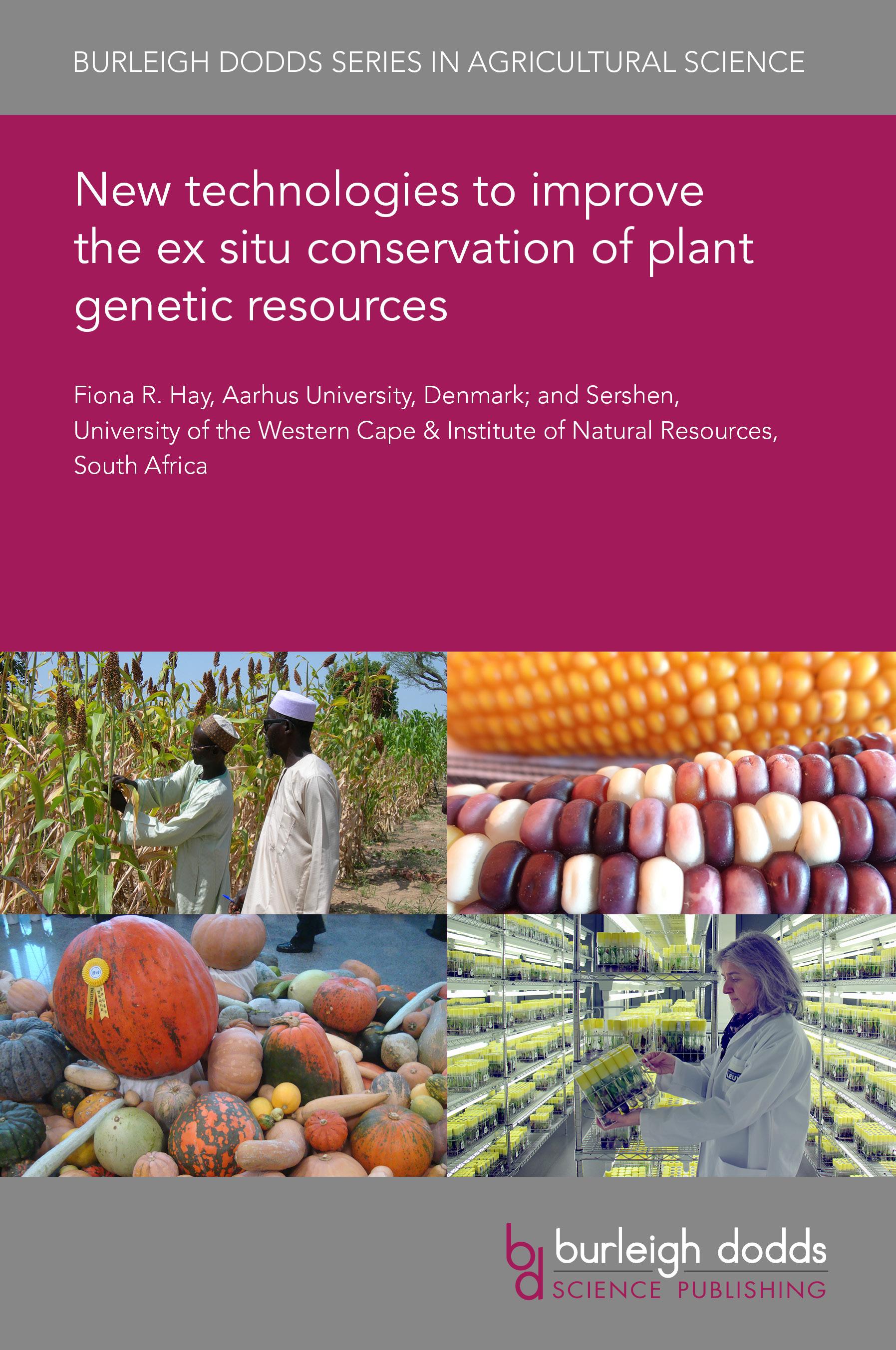
Access to plant genetic resources is fundamental to the development of more resilient and nutritious crops. The efficient and effective conservation of plant genetic resources is therefore key to ensuring global food security. There are more than 1750 genebanks around the world, storing various types of plant germplasm including tissue cultures, seeds, embryos and pollen. The method of conservation depends on the seed storage behaviour and propagation requirements of the species. The germplasm of most major crops is conserved as seeds under ‘conventional’ genebank storage conditions, because the seeds tolerate drying to low moisture content and survive storage, perhaps for many decades, at low temperature. Other species are typically conserved as tissue cultures and/or as cryopreserved explants. New technologies for the routine conservation of seeds in genebanks includes evidence-based refining of procedures and the introduction of automation. Similarly, in vitro culture and cryopreservation techniques continue to be developed and improved.
Pay easily by card, Klarna, Apple Pay or Google Pay. Not happy? You always have a 14-day money-back guarantee. Read more in our terms. If you have any questions, email us at hello@memmo.org.
Memmo makes studying easier – wherever you are in the world. We bring your course books and smart study tools together in one place: summaries, quizzes, podcasts and flashcards. Plus Ted, your study buddy who answers anything you wonder. Over 50,000 students already study here – built to help you learn faster and stress less.
You might also like
Buy the book0