
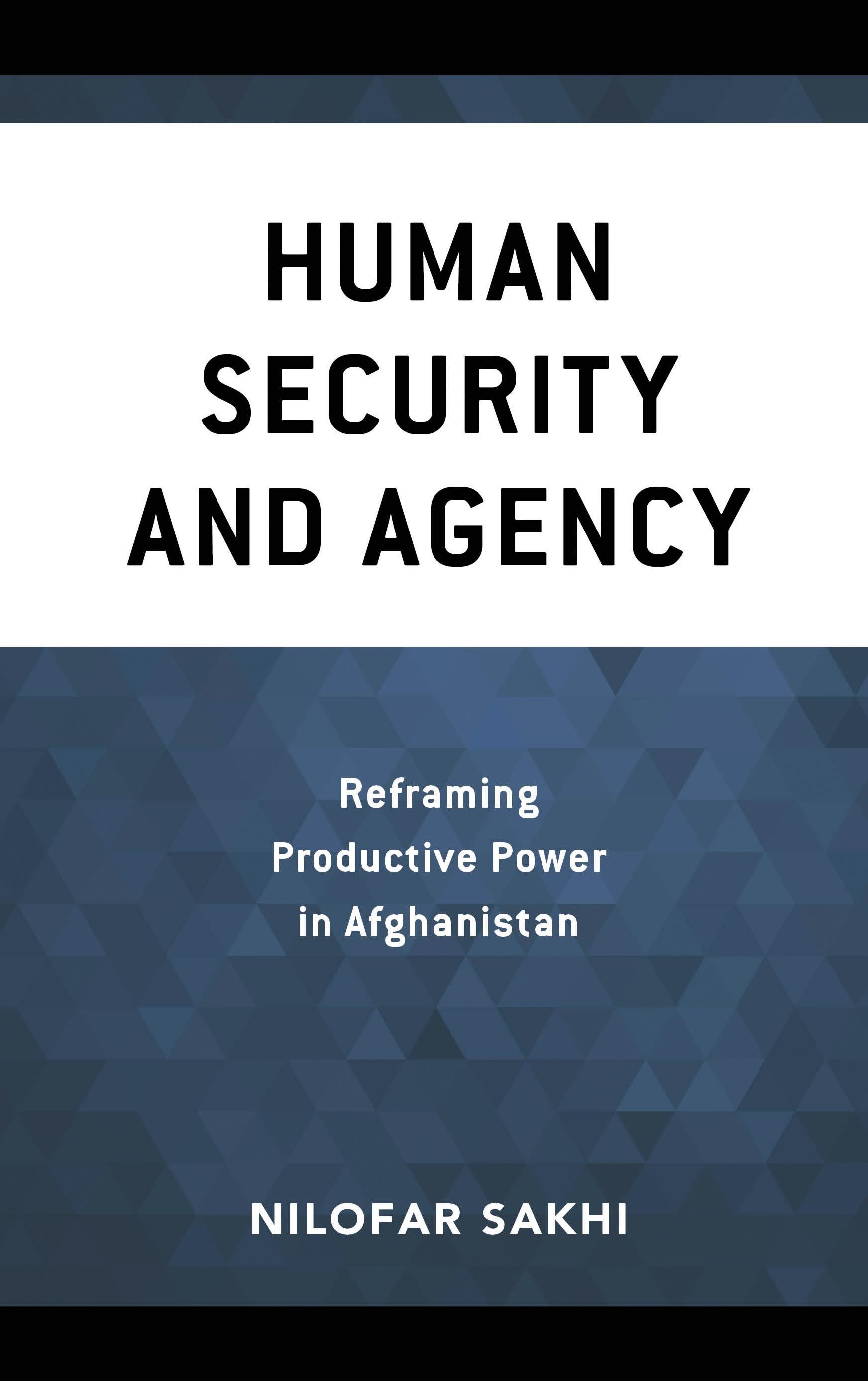
Human Security and Agency investigates how human security manifests itself in the context of Afghanistan and explores the factors that promote and impede its development. To that end, Nilofar Sakhi examines whether the development of productive power is an effective approach to human security implementation in a country that has experienced numerous development programs, which were designed and implemented to build communities and protect their security. The objective of this book is to move beyond a simple exploration of the causal relationship between human security, structures, and agency and investigate the factors that either promote or impede the implementation of human security. It employs multiple methods of systematic inquiry and engages literature on the socioeconomic and political context in Afghanistan to understand the factors that influence the agency of production, creativity, and control that individuals possess. The combination of well-grounded empirical work and theoretical insights makes this book an invaluable introduction to the study of human security.
Pay easily by card, Klarna, Apple Pay or Google Pay. Not happy? You always have a 14-day money-back guarantee. Read more in our terms. If you have any questions, email us at hello@memmo.org.
Memmo makes studying easier – wherever you are in the world. We bring your course books and smart study tools together in one place: summaries, quizzes, podcasts and flashcards. Plus Ted, your study buddy who answers anything you wonder. Over 50,000 students already study here – built to help you learn faster and stress less.