
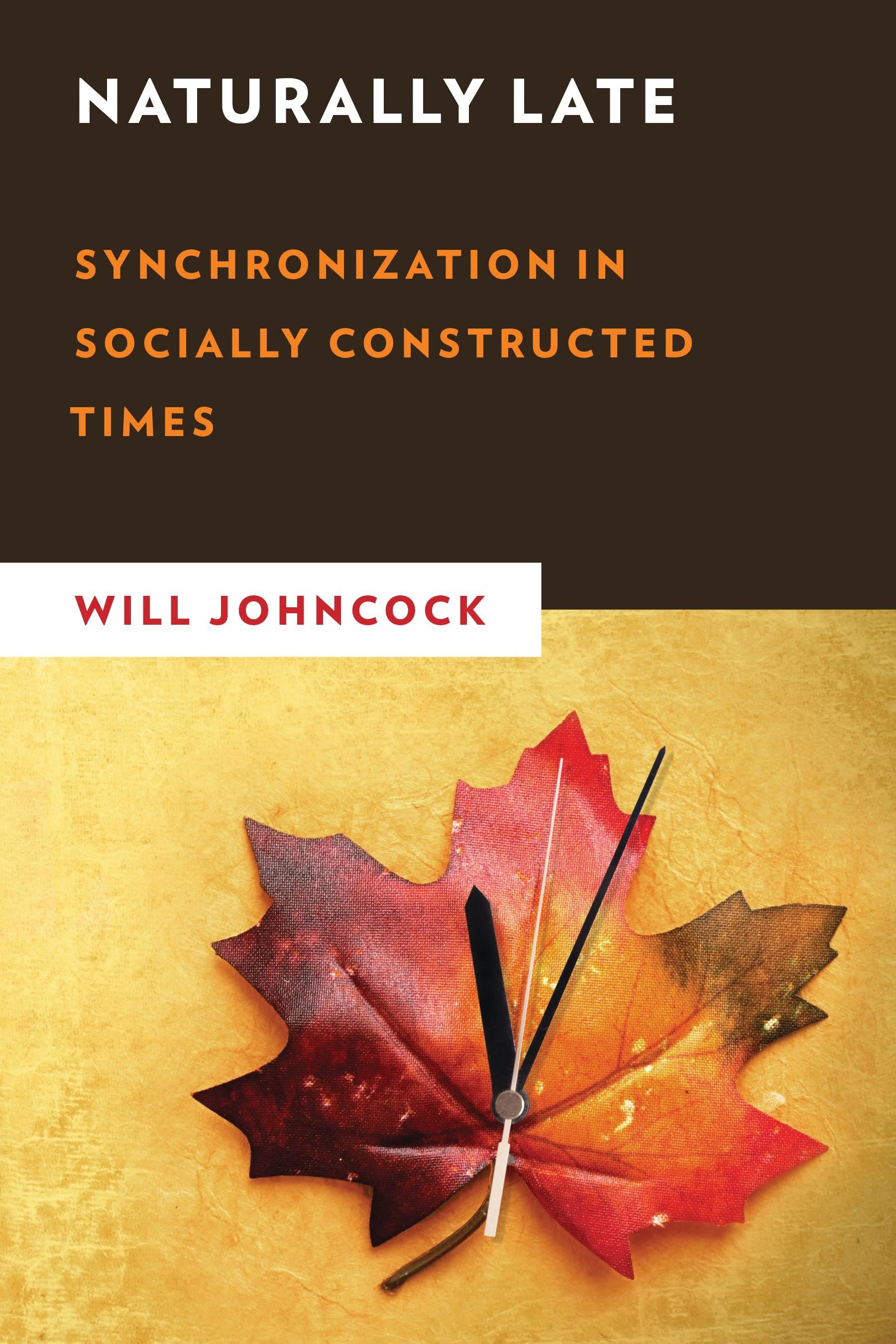
Is time a natural reality that social symbols such as clocks and calendars merely contingently represent? Lateness protocols seemingly exhibit such contingency, for not all cultures regulate synchronization identically. Just as social/cultural time structures are interpreted to diverge from time’s natural rhythm, body modifications are often presented as social productions that divert human bodies from their naturally originated, corporeal temporality. A similar separation informs climate change discourses, supposing a natural rhythm that industrialized culture has invaded, the effects of which humans might be too late to arrest.
Interrogating this conceptual separation matters, given that if certain times are considered to be more natural than others, a situated politics emerges regarding the associated cultural structures. Furthermore, our personal investments in experiences of lateness, which are embedded within social time, seemingly contradict the constructionist impression that social time is merely a contingent misrepresentation of what time actually is. Through Derridian deconstruction, Merleau-Pontian phenomenology, and Bergsonian time-philosophy, complemented with voices from fields including object oriented ontology, new materialism, and new criticism, this book re-evaluates the timing of times from a philosophical perspective.
Interrogating this conceptual separation matters, given that if certain times are considered to be more natural than others, a situated politics emerges regarding the associated cultural structures. Furthermore, our personal investments in experiences of lateness, which are embedded within social time, seemingly contradict the constructionist impression that social time is merely a contingent misrepresentation of what time actually is. Through Derridian deconstruction, Merleau-Pontian phenomenology, and Bergsonian time-philosophy, complemented with voices from fields including object oriented ontology, new materialism, and new criticism, this book re-evaluates the timing of times from a philosophical perspective.
Pay easily by card, Klarna, Apple Pay or Google Pay. Not happy? You always have a 14-day money-back guarantee. Read more in our terms. If you have any questions, email us at hello@memmo.org.
Memmo makes studying easier – wherever you are in the world. We bring your course books and smart study tools together in one place: summaries, quizzes, podcasts and flashcards. Plus Ted, your study buddy who answers anything you wonder. Over 50,000 students already study here – built to help you learn faster and stress less.