
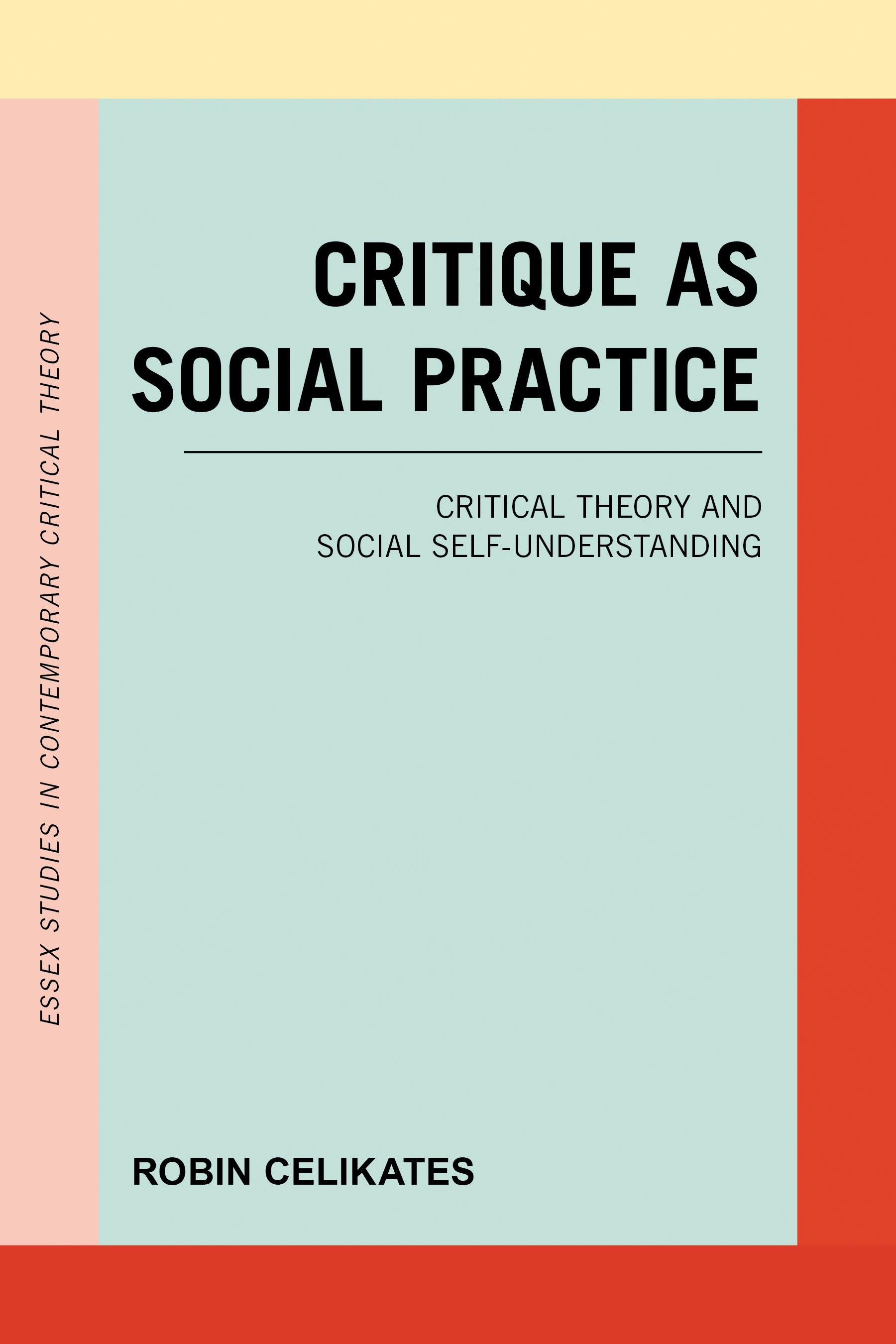
Can critical theory diagnose ideological delusion and false consciousness from above, or does it have to follow the practices of critique ordinary agents engage in? This book argues that we have to move beyond this dichotomy, which has led to a theoretical impasse. Whilst ordinary agents engage in complex forms of everyday critique, it must remain the task of critical theory to provide analysis and critique of social conditions that obstruct the development of reflexive capacities and of their realization in corresponding practices of critique. Only an approach that is at the same time non-paternalistic, pragmatist, and dialogical as well as critical will be able to realize the emancipatory potential of the Frankfurt School tradition of critical theory in radically changing social circumstances.
The translation of this work was funded by Geisteswissenschaften International – Translation Funding for Humanities and Social Sciences from Germany, a joint initiative of the Fritz Thyssen Foundation, the German Federal Foreign Office, the collecting society VG WORT and the Börsenverein des Deutschen Buchhandels (German Publisher & Booksellers Association)
The translation of this work was funded by Geisteswissenschaften International – Translation Funding for Humanities and Social Sciences from Germany, a joint initiative of the Fritz Thyssen Foundation, the German Federal Foreign Office, the collecting society VG WORT and the Börsenverein des Deutschen Buchhandels (German Publisher & Booksellers Association)
Pay easily by card, Klarna, Apple Pay or Google Pay. Not happy? You always have a 14-day money-back guarantee. Read more in our terms. If you have any questions, email us at hello@memmo.org.
Memmo makes studying easier – wherever you are in the world. We bring your course books and smart study tools together in one place: summaries, quizzes, podcasts and flashcards. Plus Ted, your study buddy who answers anything you wonder. Over 50,000 students already study here – built to help you learn faster and stress less.