
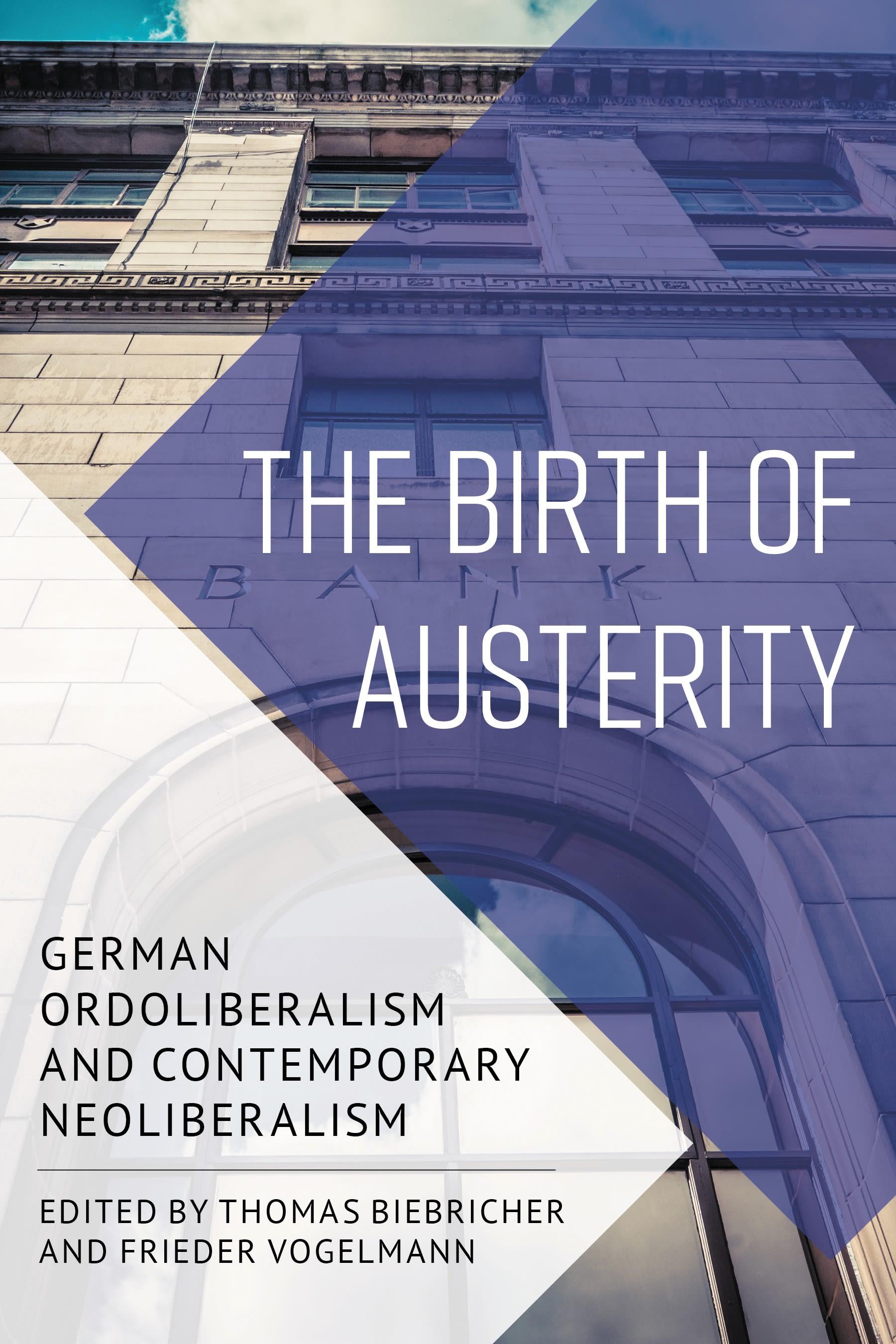
Ordoliberalism and the ‘Freiburg School’ have gained traction in contemporary political economy in response to two factors: a rising interest in governmentality studies and the banking, financial and sovereign debt crisis in Europe. In the face of these crises, Germany has assumed a position of quasi-hegemony in the European Union, making decisions about bailouts, the politics of crisis management and the rise of austerity.
This volume gathers together English translations of seminal ordoliberal texts by thinkers ranging from Walter Eucken and Wilhelm Röpke to Franz Böhm, Alexander Rüstow and Hans Grossmann-Doerth. Offering some foundational insights into ordoliberalism, these essays give insight into a field that is much misunderstood outside Germany. The second half of the book comprises of analyses of contemporary issues in light of ordoliberal thought, showing how its ideas endure and relate directly to austerity policy across Europe.
This volume gathers together English translations of seminal ordoliberal texts by thinkers ranging from Walter Eucken and Wilhelm Röpke to Franz Böhm, Alexander Rüstow and Hans Grossmann-Doerth. Offering some foundational insights into ordoliberalism, these essays give insight into a field that is much misunderstood outside Germany. The second half of the book comprises of analyses of contemporary issues in light of ordoliberal thought, showing how its ideas endure and relate directly to austerity policy across Europe.
Pay easily by card, Klarna, Apple Pay or Google Pay. Not happy? You always have a 14-day money-back guarantee. Read more in our terms. If you have any questions, email us at hello@memmo.org.
Memmo makes studying easier – wherever you are in the world. We bring your course books and smart study tools together in one place: summaries, quizzes, podcasts and flashcards. Plus Ted, your study buddy who answers anything you wonder. Over 50,000 students already study here – built to help you learn faster and stress less.