
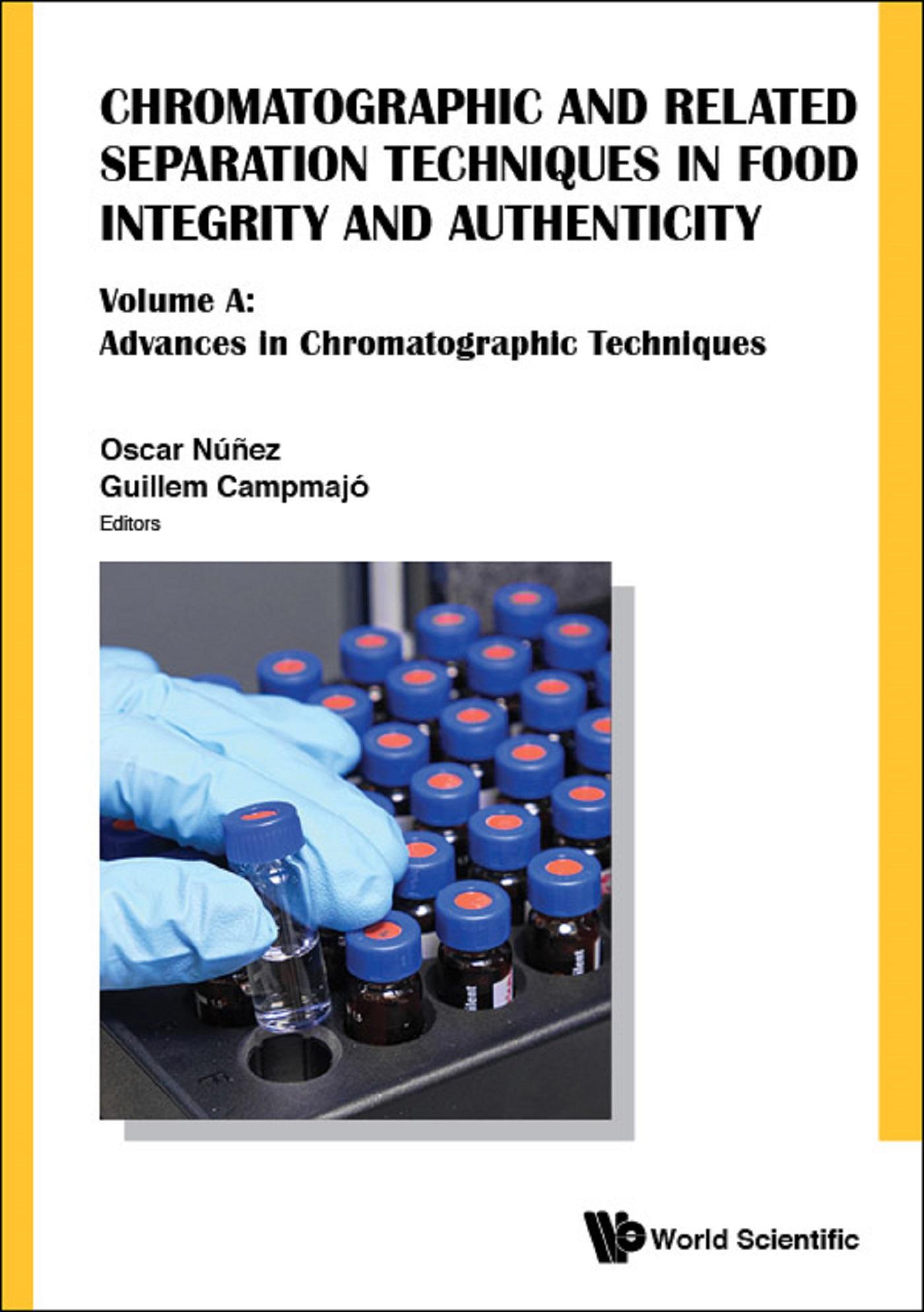
Food manufacturers, researchers and society in general are increasingly highly interested in the quality and origin of food products. Considering the complexity of the food chain in a globalized world — where many players are involved between production and consumption — fraudulent food manipulation and adulteration practices are increasingly easier to conduct without being detected. Generally, food adulteration is carried out to increase volume, to mask the presence of inferior quality components, and to replace authentic substances for the seller's economic gain. Analytical methodologies to guarantee food integrity and authenticity are therefore required.Chromatographic and Related Separation Techniques in Food Integrity and Authenticity — Volume A: Advances in Chromatographic Techniques addresses fraud prevention and the latest chromatographic and related separation analytical techniques to guarantee food integrity and authenticity by giving special attention to relevant authenticity issues in food production.Chromatographic and Related Separation Techniques in Food Integrity and Authenticity — Volume B: Relevant Applications addresses the relevant application of techniques to assess different food products' integrity and authenticity.
Pay easily by card, Klarna, Apple Pay or Google Pay. Not happy? You always have a 14-day money-back guarantee. Read more in our terms. If you have any questions, email us at hello@memmo.org.
Memmo makes studying easier – wherever you are in the world. We bring your course books and smart study tools together in one place: summaries, quizzes, podcasts and flashcards. Plus Ted, your study buddy who answers anything you wonder. Over 75,000 students already study here – built to help you learn faster and stress less.
You might also like
Buy the book0