
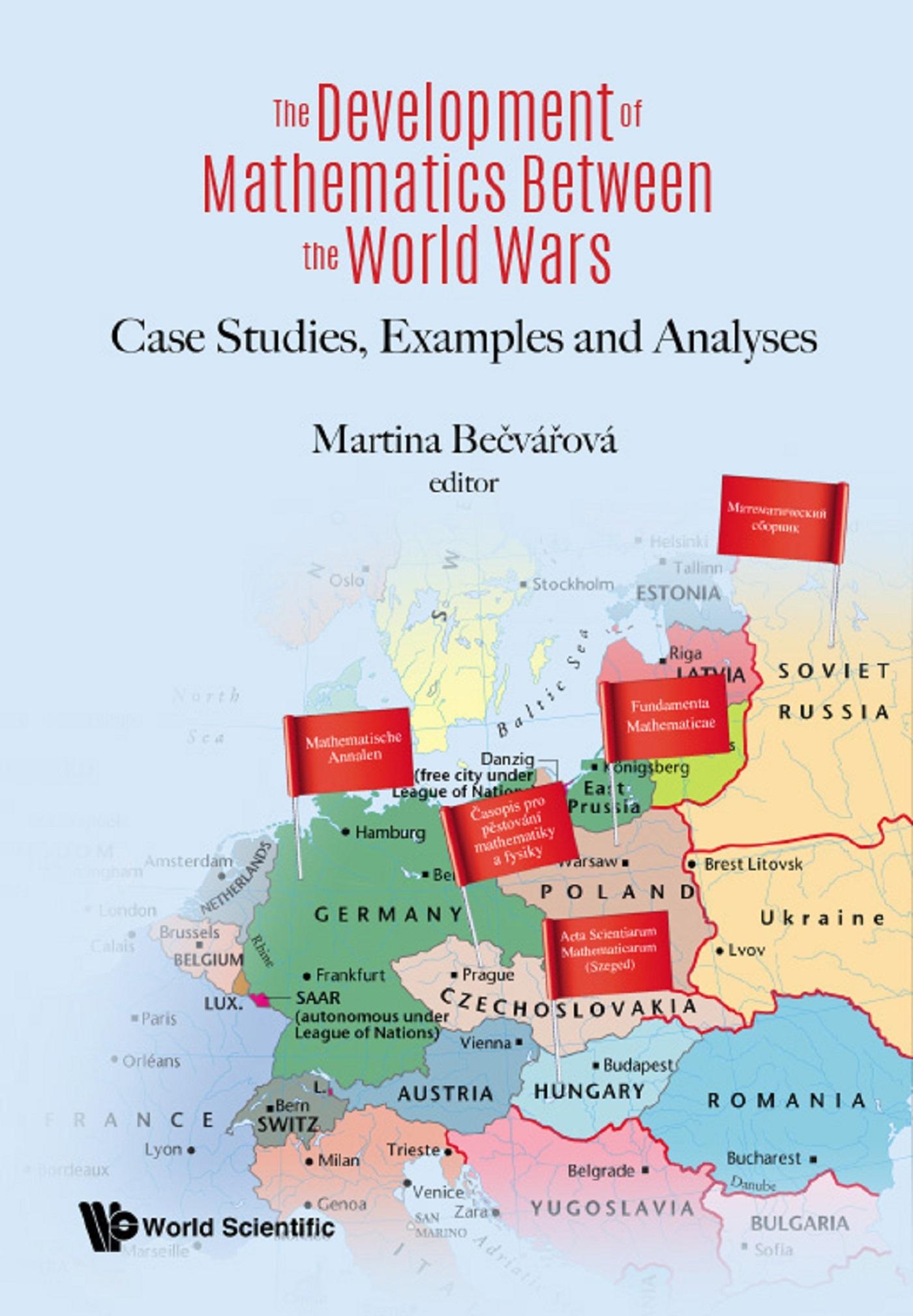
The Development of Mathematics Between the World Wars traces the transformation of scientific life within mathematical communities during the interwar period in Central and Eastern Europe, specifically in Germany, Russia, Poland, Hungary, and Czechoslovakia. Throughout the book, in-depth mathematical analyses and examples are included for the benefit of the reader.World War I heavily affected academic life. In European countries, many talented researchers and students were killed in action and scientific activities were halted to resume only in the postwar years. However, this inhibition turned out to be a catalyst for the birth of a new generation of mathematicians, for the emergence of new ideas and theories and for the surprising creation of new and outstanding scientific schools.The final four chapters are not restricted to Central and Eastern Europe and deal with the development of mathematics between World War I and World War II. After describing the general state of mathematics at the end of the 19th century and the first third of the 20th century, three case studies dealing with selected mathematical disciplines are presented (set theory, potential theory, combinatorics), in a way accessible to a broad audience of mathematicians as well as historians of mathematics.
Pay easily by card, Klarna, Apple Pay or Google Pay. Not happy? You always have a 14-day money-back guarantee. Read more in our terms. If you have any questions, email us at hello@memmo.org.
Memmo makes studying easier – wherever you are in the world. We bring your course books and smart study tools together in one place: summaries, quizzes, podcasts and flashcards. Plus Ted, your study buddy who answers anything you wonder. Over 75,000 students already study here – built to help you learn faster and stress less.
You might also like
Buy the book0