
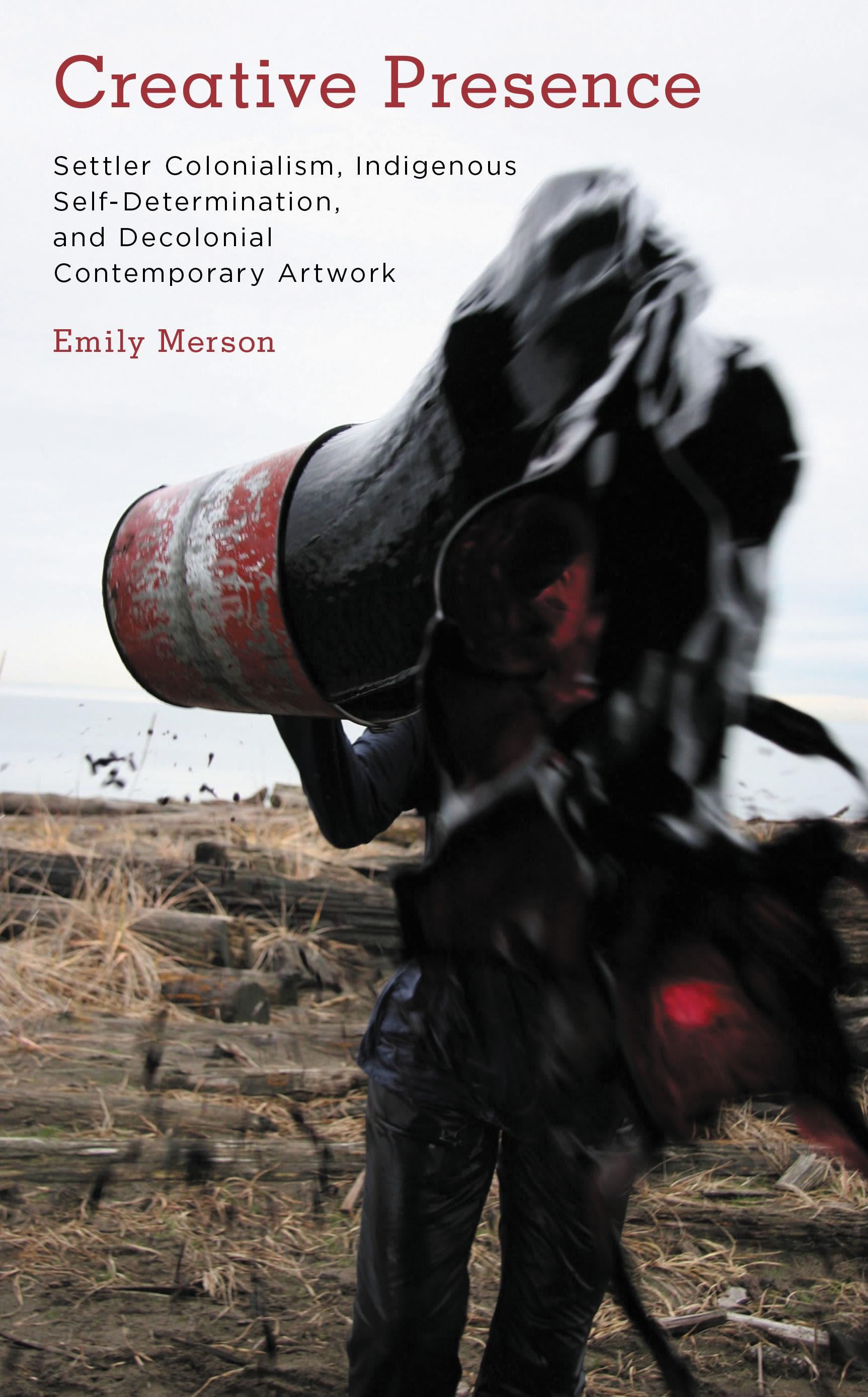
Historically, artwork has played a powerful role in shaping settler colonial subjectivity and the political imagination of Westphalian sovereignty through the canonization of particular visual artworks, aesthetic theories, and art institutions’ methods of display. Creative Presence contributes a transnational feminist intersectional analysis of visual and performance artwork by Indigenous contemporary artists who directly engage with colonialism and decolonization. This book makes the case that decolonial aesthetics is a form of labour and knowledge production that calls attention to the foundational violence of settler colonialism in the formation of the world order of sovereign states.
Creative Presence analyzes how artists’ purposeful selection of materials, media forms, and place-making in the exhibitions and performances of their work reveals the limits of conventional International Relations theories, methods, and debates on sovereignty and participates in Indigenous reclamations of lands and waterways in world politics. Brian Jungen’s sculpture series Prototypes for New Understanding and Rebecca Belmore’s filmed performances Vigil and Fountain exhibit how colonial power has been imagined, visualized and institutionalized historically and in contemporary settler visual culture. These contemporary visual and performance artworks by Indigenous artists that name the political violence of settler colonial claims to exclusive territorial sovereignty introduce possibilities for decolonizing audiences’ sensibilities and political imagination of lands and waterways.
Creative Presence analyzes how artists’ purposeful selection of materials, media forms, and place-making in the exhibitions and performances of their work reveals the limits of conventional International Relations theories, methods, and debates on sovereignty and participates in Indigenous reclamations of lands and waterways in world politics. Brian Jungen’s sculpture series Prototypes for New Understanding and Rebecca Belmore’s filmed performances Vigil and Fountain exhibit how colonial power has been imagined, visualized and institutionalized historically and in contemporary settler visual culture. These contemporary visual and performance artworks by Indigenous artists that name the political violence of settler colonial claims to exclusive territorial sovereignty introduce possibilities for decolonizing audiences’ sensibilities and political imagination of lands and waterways.
Pay easily by card, Klarna, Apple Pay or Google Pay. Not happy? You always have a 14-day money-back guarantee. Read more in our terms. If you have any questions, email us at hello@memmo.org.
Memmo makes studying easier – wherever you are in the world. We bring your course books and smart study tools together in one place: summaries, quizzes, podcasts and flashcards. Plus Ted, your study buddy who answers anything you wonder. Over 75,000 students already study here – built to help you learn faster and stress less.