
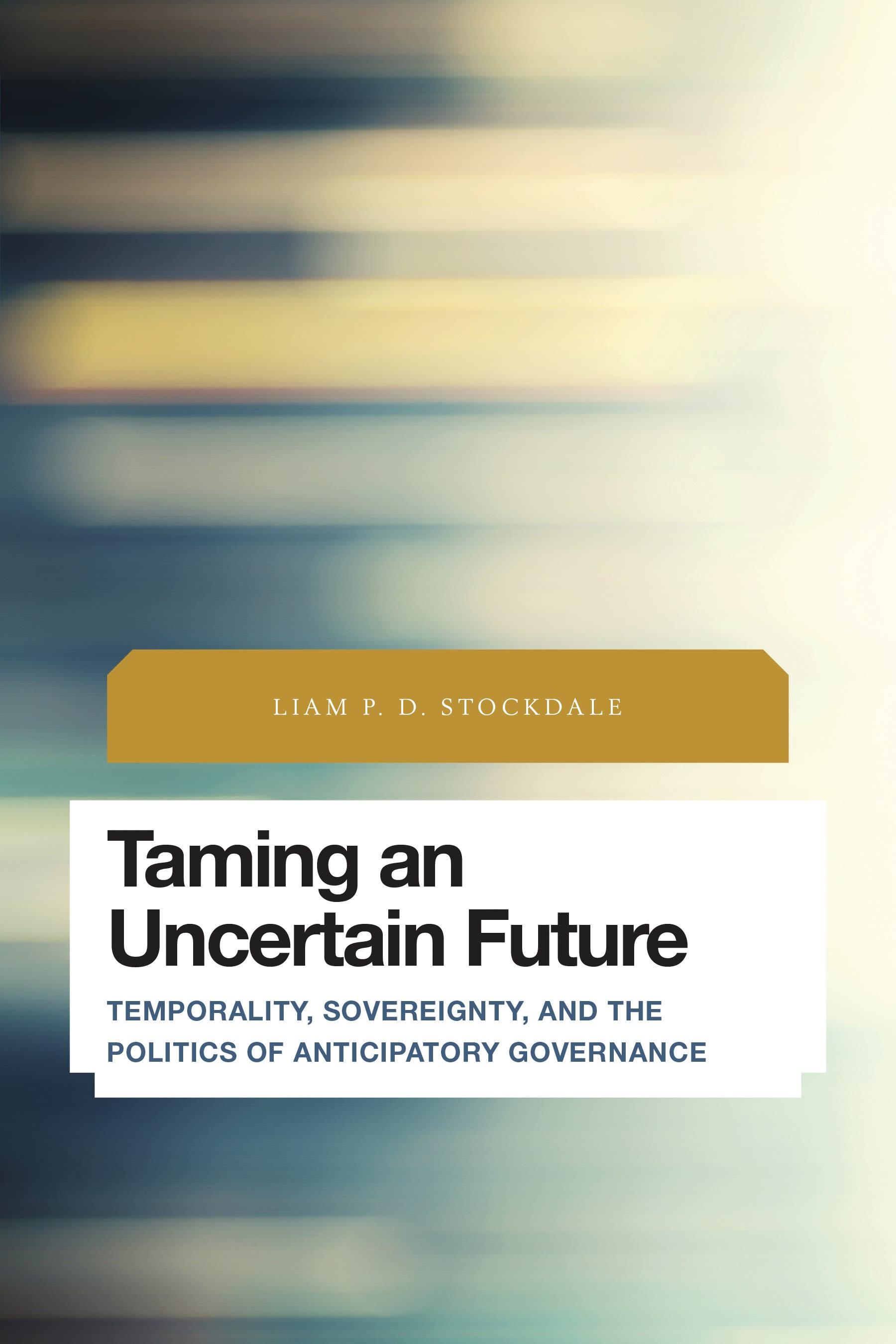
A popular cliché in contemporary public discourse holds that we live in a time of increasing uncertainty; that the next catastrophe is perpetually imminent and yet increasingly beyond our capacity to foresee. The future, in short, is becoming much more difficult to control. One consequence of this increasingly widespread understanding of the future is that societies have turned to anticipatory governance strategies based on such concepts as risk management, the precautionary principle, and pre-emption to manage human affairs.
This book takes an in-depth look at this trend by using the example of the ‘pre-emptive security’ strategies deployed in the post-9/11 War on Terror to develop a critical understanding of how the proliferation of such anticipatory governance strategies affects the way political power is organized and exercised. The book also makes a wider case for taking issues of time and the future more seriously in the study of contemporary global politics in particular and the social world more generally.
This book takes an in-depth look at this trend by using the example of the ‘pre-emptive security’ strategies deployed in the post-9/11 War on Terror to develop a critical understanding of how the proliferation of such anticipatory governance strategies affects the way political power is organized and exercised. The book also makes a wider case for taking issues of time and the future more seriously in the study of contemporary global politics in particular and the social world more generally.
Pay easily by card, Klarna, Apple Pay or Google Pay. Not happy? You always have a 14-day money-back guarantee. Read more in our terms. If you have any questions, email us at hello@memmo.org.
Memmo makes studying easier – wherever you are in the world. We bring your course books and smart study tools together in one place: summaries, quizzes, podcasts and flashcards. Plus Ted, your study buddy who answers anything you wonder. Over 50,000 students already study here – built to help you learn faster and stress less.