
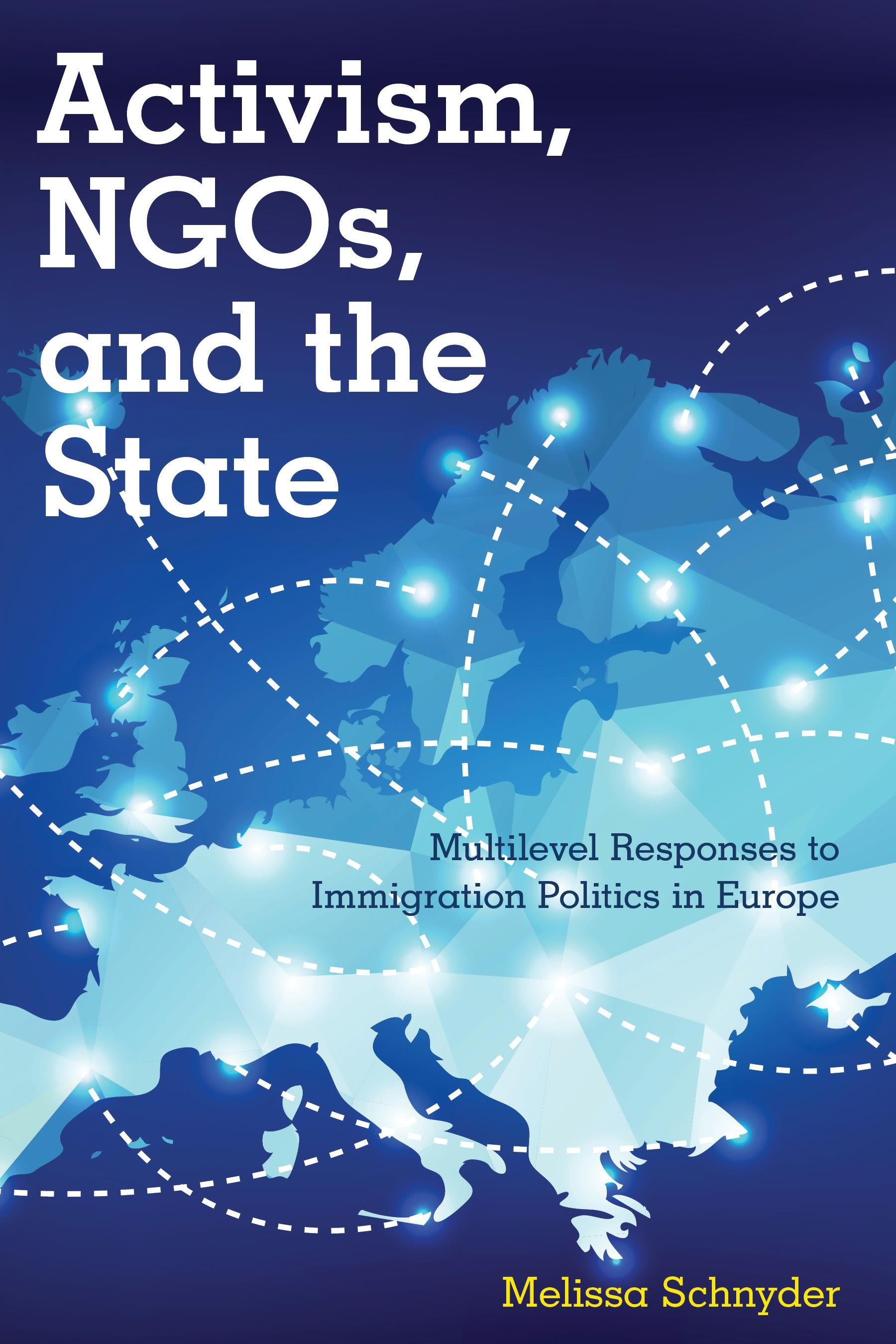
Many NGOs are mobilizing transnationally in order to form new social networks that enable them to better interact with nation-state policies on migrant and refugee inclusion.
This book empirically investigates the rich varieties of cooperative cross-border activity, and compares how the same groups behave at both the national and transnational levels. It uses an original survey – the Survey of European Migrant Inclusion NGOs – to document four types of cooperative political tactics used by NGOs cross the European Union: information-sharing, technical expertise-sharing, resource-sharing, and coordination of common projects. It also looks across the current EU member states to analyze how differences in the national policy context specific to migrants’ issues facilitate and constrain these varied forms of transnational cooperation. In doing so, the book argues that to understand the overall prevalence of transnational mobilization and the extent to which it represents the emergence of a global civil society, we need to expand the focus of social movement studies beyond just visible, public displays of contentious activity.
This book empirically investigates the rich varieties of cooperative cross-border activity, and compares how the same groups behave at both the national and transnational levels. It uses an original survey – the Survey of European Migrant Inclusion NGOs – to document four types of cooperative political tactics used by NGOs cross the European Union: information-sharing, technical expertise-sharing, resource-sharing, and coordination of common projects. It also looks across the current EU member states to analyze how differences in the national policy context specific to migrants’ issues facilitate and constrain these varied forms of transnational cooperation. In doing so, the book argues that to understand the overall prevalence of transnational mobilization and the extent to which it represents the emergence of a global civil society, we need to expand the focus of social movement studies beyond just visible, public displays of contentious activity.
Pay easily by card, Klarna, Apple Pay or Google Pay. Not happy? You always have a 14-day money-back guarantee. Read more in our terms. If you have any questions, email us at hello@memmo.org.
Memmo makes studying easier – wherever you are in the world. We bring your course books and smart study tools together in one place: summaries, quizzes, podcasts and flashcards. Plus Ted, your study buddy who answers anything you wonder. Over 50,000 students already study here – built to help you learn faster and stress less.