
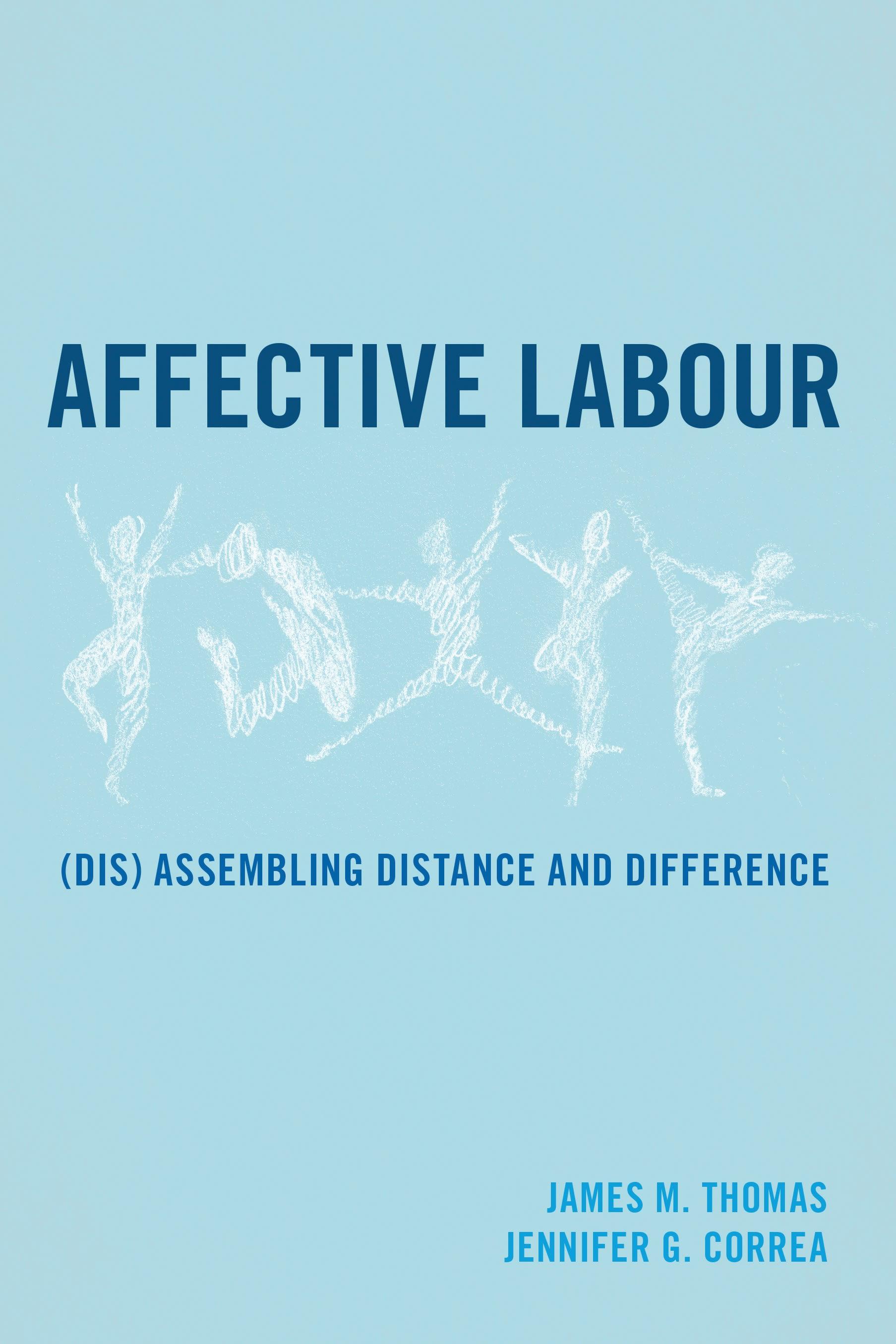
Affective Labour explores four distinct landscapes in order to demonstrate how collective feelings are organized by social actors in order to both reproduce and contest hegemony. Utilizing a variety of methods, including participant observation, in-depth interviews across field sites, and content analysis of mass media, Correa and Thomas demonstrate the centrality of affective labor in enabling and constraining prevailing norms and practices of race, citizenship, class, gender, and sexuality across multiple spatial contexts: the U.S.- Mexico border, urban nightlife districts, American college campuses, and emergent social movements against the police state.
The book demonstrates how the power of affective labour might be harnessed for progressively oriented world-building projects, including what the authors term an ‘affective labour from below.’ By tying an analysis of affective labour into movements for social justice, the authors aim to produce a critical theory of the world that can be practically applied.
The book demonstrates how the power of affective labour might be harnessed for progressively oriented world-building projects, including what the authors term an ‘affective labour from below.’ By tying an analysis of affective labour into movements for social justice, the authors aim to produce a critical theory of the world that can be practically applied.
Pay easily by card, Klarna, Apple Pay or Google Pay. Not happy? You always have a 14-day money-back guarantee. Read more in our terms. If you have any questions, email us at hello@memmo.org.
Memmo makes studying easier – wherever you are in the world. We bring your course books and smart study tools together in one place: summaries, quizzes, podcasts and flashcards. Plus Ted, your study buddy who answers anything you wonder. Over 50,000 students already study here – built to help you learn faster and stress less.