
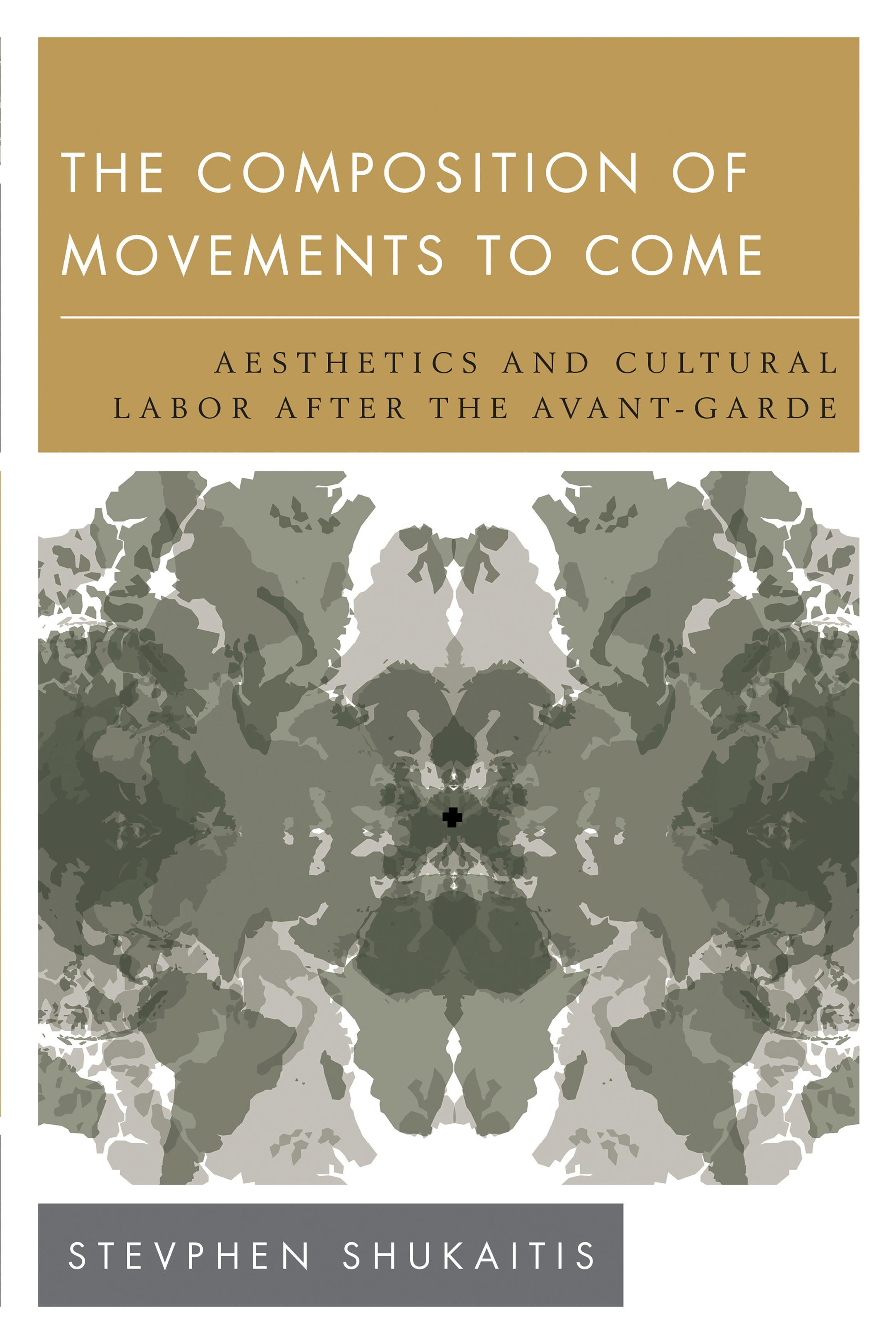
How does the avant-garde create spaces in everyday life that subvert regimes of economic and political control? How do art, aesthetics and activism inform one another? And how do strategic spaces of creativity become the basis for new forms of production and governance?
The Composition of Movements to Come reconsiders the history and the practices of the avant-garde, from the Situationists to the Art Strike, revolutionary Constructivism to Laibach and Neue Slowenische Kunst, through an autonomist Marxist framework. Moving the framework beyond an overly narrow class analysis, the book explores broader questions of the changing nature of cultural labor and forms of resistance around this labor. It examines a doubly articulated process of refusal: the refusal of separating art from daily life and the re-fusing of these antagonistic energies by capitalist production and governance. This relationship opens up a new terrain for strategic thought in relation to everyday politics, where the history of the avant-garde is no longer separated from broader questions of political economy or movement, but becomes a point around which to reorient these considerations.
The Composition of Movements to Come reconsiders the history and the practices of the avant-garde, from the Situationists to the Art Strike, revolutionary Constructivism to Laibach and Neue Slowenische Kunst, through an autonomist Marxist framework. Moving the framework beyond an overly narrow class analysis, the book explores broader questions of the changing nature of cultural labor and forms of resistance around this labor. It examines a doubly articulated process of refusal: the refusal of separating art from daily life and the re-fusing of these antagonistic energies by capitalist production and governance. This relationship opens up a new terrain for strategic thought in relation to everyday politics, where the history of the avant-garde is no longer separated from broader questions of political economy or movement, but becomes a point around which to reorient these considerations.
Pay easily by card, Klarna, Apple Pay or Google Pay. Not happy? You always have a 14-day money-back guarantee. Read more in our terms. If you have any questions, email us at hello@memmo.org.
Memmo makes studying easier – wherever you are in the world. We bring your course books and smart study tools together in one place: summaries, quizzes, podcasts and flashcards. Plus Ted, your study buddy who answers anything you wonder. Over 50,000 students already study here – built to help you learn faster and stress less.