
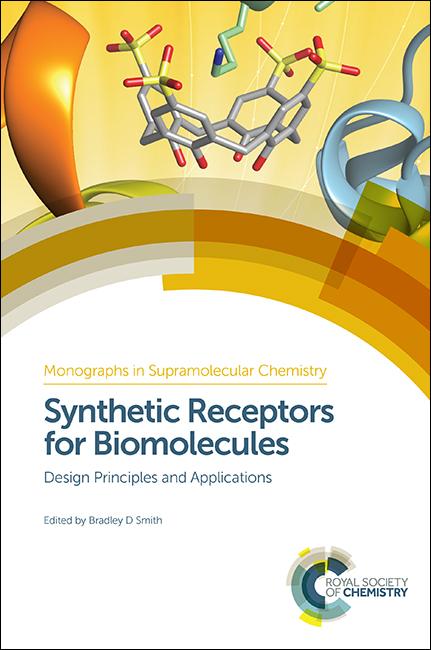
Synthetic receptor molecules, molecules that mimic antibody recognition, are widely used for developing drug leads; drug delivery vehicles; imaging agents; sensing agents; capture agents and separation systems. Synthetic Receptors for Biomolecules covers the most effective synthetic receptors for each major class of biomolecules within the context of specific applications.
The book starts with an introduction to the applications of synthetic receptors for biomolecules and their design and synthesis for biomolecule recognition. Dedicated chapters then cover synthetic receptors for the key biomolecules including inorganic cations; small organic and inorganic anions; carbohydrates; nucleosides/nucleotides; oligonucleotides; amino acids and peptides; protein surfaces as well as non-polar and polar lipids; Each chapter follows the same systematic format of (a) chemical structures and physical properties of the biomolecule, (b) biological recognition of the biomolecule, (c) synthetic receptors for the biomolecule, (d) future directions and challenges.
Edited by a leader in the field, the book is written in an accessible style for readers new to supramolecular chemistry or for those looking for synthetic receptors.
Pay easily by card, Klarna, Apple Pay or Google Pay. Not happy? You always have a 14-day money-back guarantee. Read more in our terms. If you have any questions, email us at hello@memmo.org.
Memmo makes studying easier – wherever you are in the world. We bring your course books and smart study tools together in one place: summaries, quizzes, podcasts and flashcards. Plus Ted, your study buddy who answers anything you wonder. Over 75,000 students already study here – built to help you learn faster and stress less.