
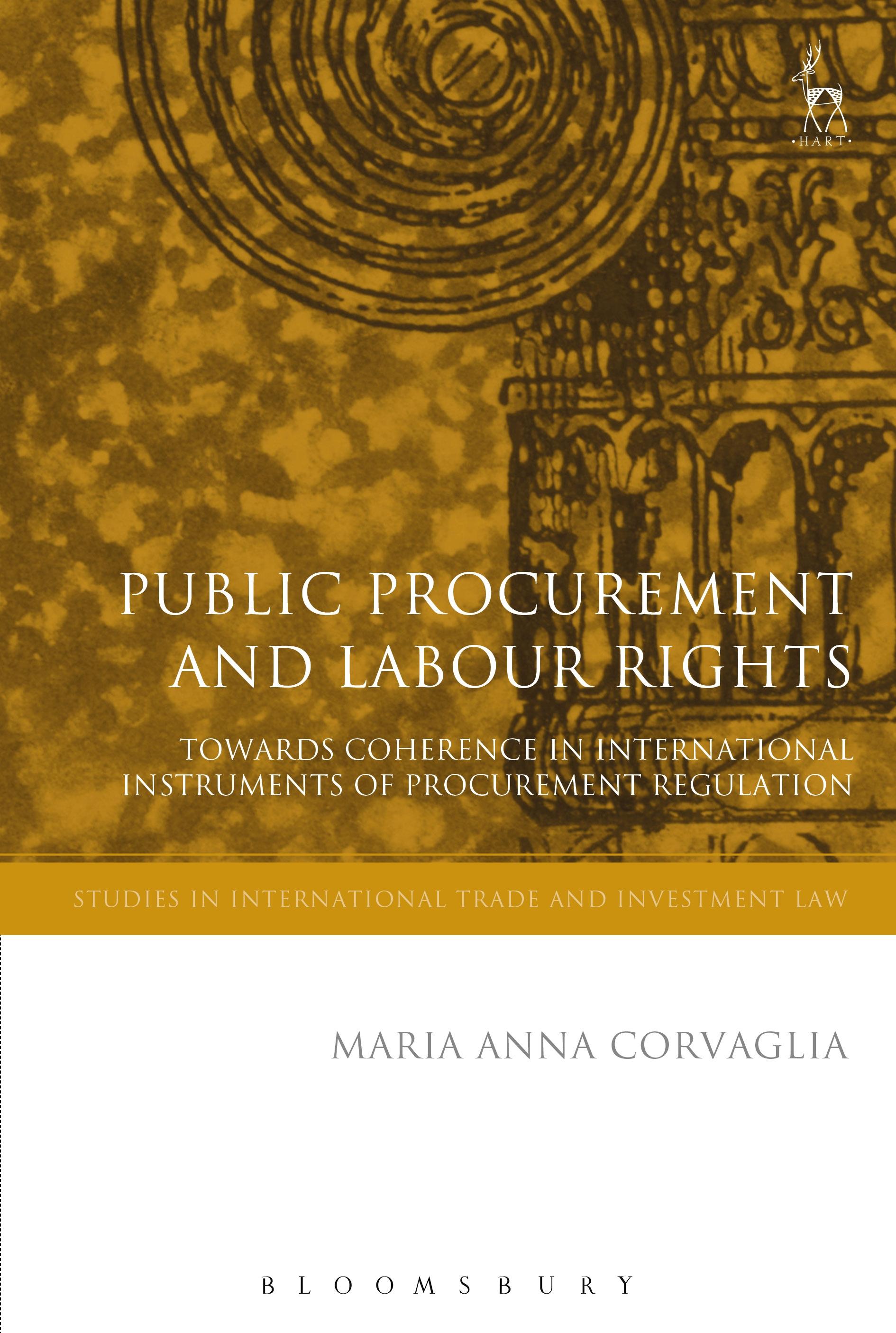
This book investigates patterns of fragmentation and coherence in the international regulatory architecture of public procurement. In the context of the major international instruments of procurement regulation, the book studies the achievement of social and labour policies, the most controversial and problematic instrumental uses of public procurement practices.
This work offers an innovative comparative approach, discussing the ways in which the different international instruments-namely the EU Procurement Directives, the WTO Agreement on Government Procurement, the UNCITRAL Model Law and the World Bank's Procurement Framework-are able to implement labour and social purposes and, at the same time, ensure a regulatory balance with the principles of efficiency and non-discrimination.
Scholarly, rigorous and timely, this will be important reading for international trade lawyers and procurement practitioners.
This work offers an innovative comparative approach, discussing the ways in which the different international instruments-namely the EU Procurement Directives, the WTO Agreement on Government Procurement, the UNCITRAL Model Law and the World Bank's Procurement Framework-are able to implement labour and social purposes and, at the same time, ensure a regulatory balance with the principles of efficiency and non-discrimination.
Scholarly, rigorous and timely, this will be important reading for international trade lawyers and procurement practitioners.
Pay easily by card, Klarna, Apple Pay or Google Pay. Not happy? You always have a 14-day money-back guarantee. Read more in our terms. If you have any questions, email us at hello@memmo.org.
Memmo makes studying easier – wherever you are in the world. We bring your course books and smart study tools together in one place: summaries, quizzes, podcasts and flashcards. Plus Ted, your study buddy who answers anything you wonder. Over 50,000 students already study here – built to help you learn faster and stress less.