
My interest in site-specific research is not random. My mother escaped through the sewers of Breslau, Germany in 1945 (today known as Wroclaw, Poland). My father was born in a country that no longer exists. Their final destination was Johannesburg, South Africa. This is where I enter the narrative. I was born during apartheid and my interest in memory and identity is a result of my historical and political context.’
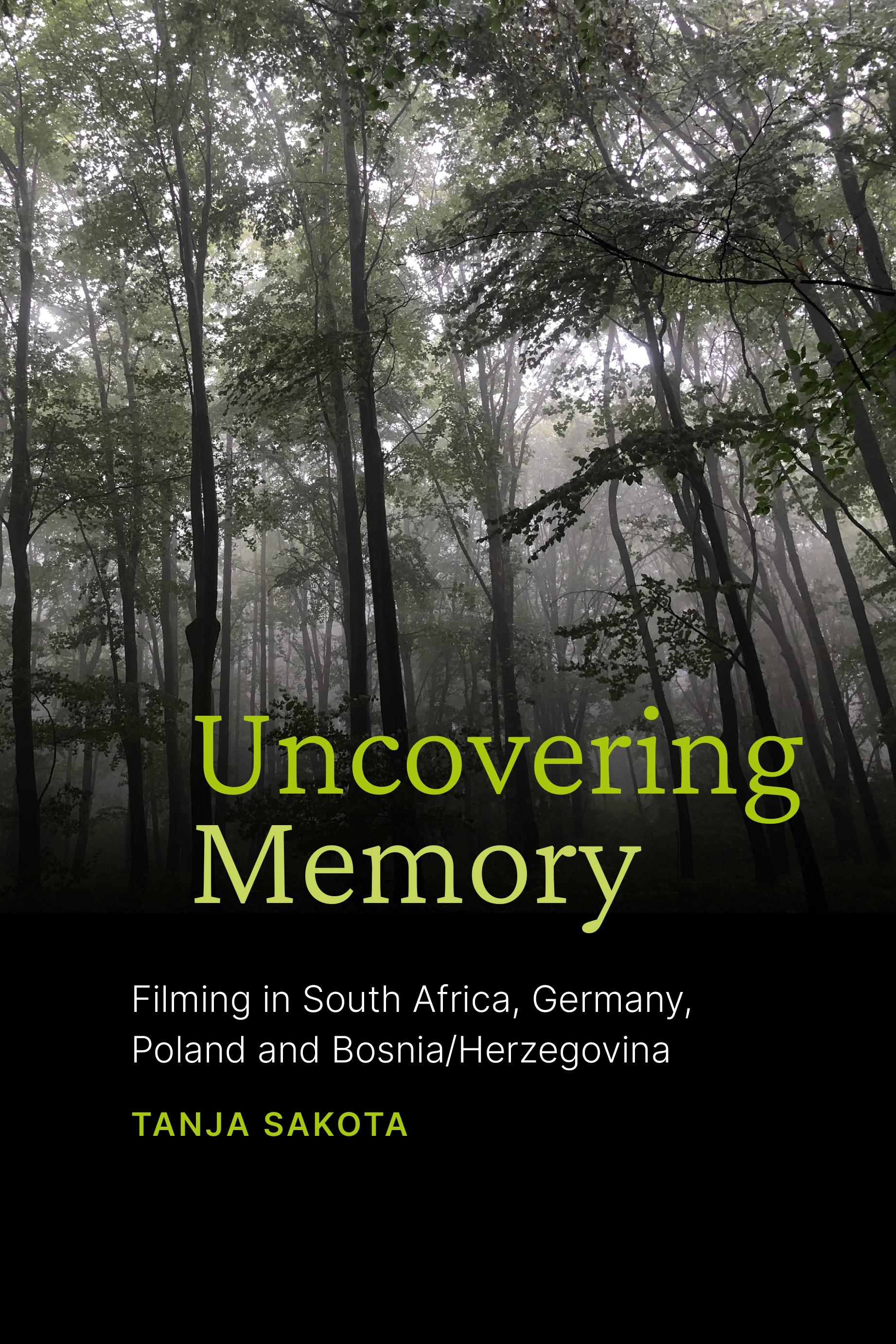
Each one of us comes with a history, a complex web of DNA and a library of information that shapes who we are and how we view the world. How can we use our own complexities not only to engage with one another but to build it for story content? As an artistic researcher, filmmaker and educator, Tanja Sakota has often thought how to bring this subjective experience into pedagogical practice. Using paired themes of memory and forgetting, segregation and migration, perpetrators and victims, Sakota travels along a timeline of memory as she takes us on a journey through South Africa, Germany, Poland and Bosnia/Herzegovina. Using a camera and short film techniques, she hosts several workshops focused on interacting and engaging with remembering through different memory sites. The author sits at the core but the book is an interdisciplinary work shaped around films made by different participants using the camera to access and unveil personal interpretations of space and place. Questions that underpin the uncovering of memories are: How does one use a camera to unmask invisible memories hidden within sites? How does one remember events that one hasn’t necessarily experienced? How does one use film to interrogate the past from the future present? As the journey evolves, workshop participants and readers alike enter into a conversation around practice-based research, autoethnography and film.
Uncovering Memory is not a handbook offering a prescriptive method. Instead, it is a pedagogical text that offers an interactive approach for students and peers to consider, adapt or react to in their own teaching and learning practices. The narrative encourages readers to self-reflect as they explore their own memory using the camera and short film format as an engaging tool for research and knowledge production.
Pay easily by card, Klarna, Apple Pay or Google Pay. Not happy? You always have a 14-day money-back guarantee. Read more in our terms. If you have any questions, email us at hello@memmo.org.
Memmo makes studying easier – wherever you are in the world. We bring your course books and smart study tools together in one place: summaries, quizzes, podcasts and flashcards. Plus Ted, your study buddy who answers anything you wonder. Over 50,000 students already study here – built to help you learn faster and stress less.