
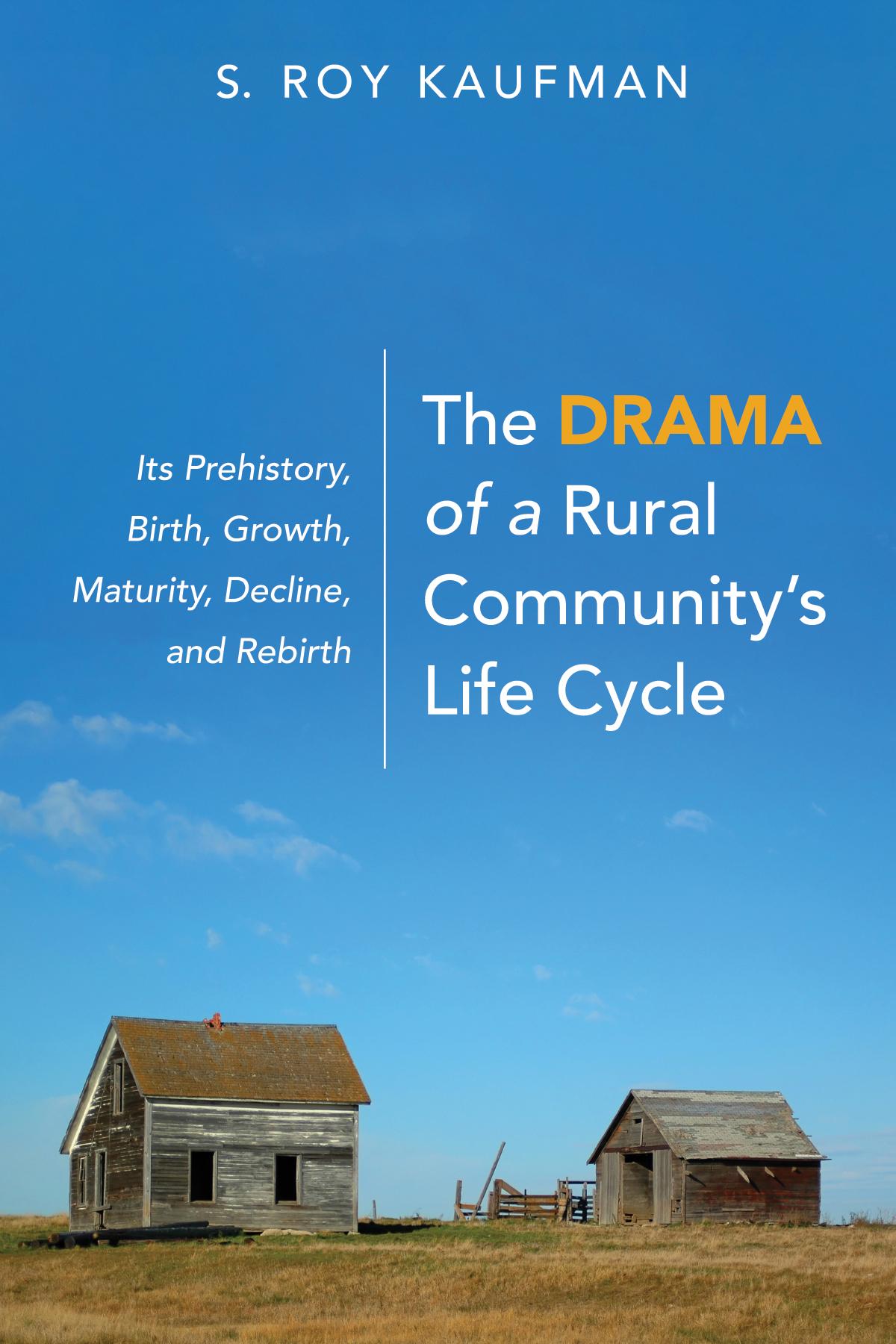
Rural communities depend on the health of the agrarian cultures that compose them. These cultures grow out of the symbiotic relationship between a particular landscape and the human community that lives on and uses the land.
Agrarian cultures had their origin in the development of agriculture and gave birth to the civilizations and empires of history. Based on the exercise of hierarchical power characteristic of their nature, empires and civilizations are always a threat to the welfare of their agrarian cultures, that by nature tend to be local, relational, reciprocal, and ecological.
This is the story of the three Anabaptist agrarian cultures--Swiss German, Low German, and Hutterian--of the Freeman, South Dakota, rural community, and their sojourn within the empires of civilization through the centuries. More specifically, this is the story of their birth, growth, maturation, and death (or rebirth?) in the particular landscape of the Great Plains to which they came from Russia in the 1870s. Here we see the agrarian cultures' struggle to adapt to the new environment of the Great Plains and to maintain their unique identity while living within American society. This is the drama of a rural community's life cycle!
Pay easily by card, Klarna, Apple Pay or Google Pay. Not happy? You always have a 14-day money-back guarantee. Read more in our terms. If you have any questions, email us at hello@memmo.org.
Memmo makes studying easier – wherever you are in the world. We bring your course books and smart study tools together in one place: summaries, quizzes, podcasts and flashcards. Plus Ted, your study buddy who answers anything you wonder. Over 50,000 students already study here – built to help you learn faster and stress less.
You might also like
Buy the book0