
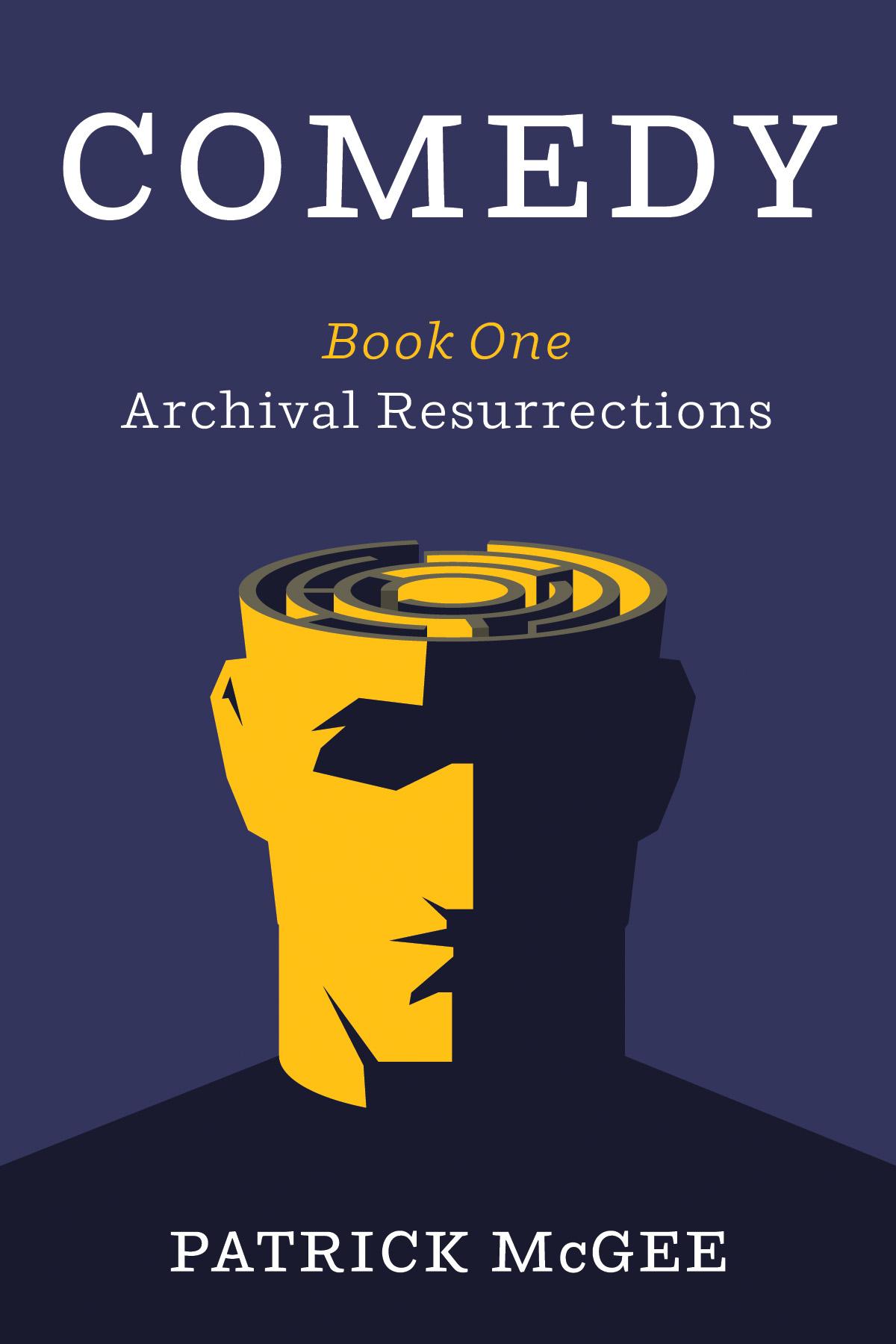
Comedy is a philosophical poem for the twenty-first century inspired by Dante's Commedia. It can be read as an ironic dream or fantasy that addresses the democratic idea. Book One, Archival Resurrections, explores the transindividual nature of human thought, which autonomously expands while it passes through different minds in historical time. On a walk in Seattle, the Narrator encounters his dead teacher, who becomes his guide through a world inside his own head where he encounters people from his personal past and past philosophers, poets, and statesmen, including Dante, Christine de Pizan, Spinoza, William Blake, Jefferson, Hamilton, Sally Hemings, Frederick Douglass, Lincoln, Marx, Oscar Wilde, James Joyce, and others. Part of the poem takes place in a library in the shape of an inverted cone, the antithesis of Dante's purgatory. Later, under the assumption that imagination is topological or plastic, there are visitations to Blake's cottage in Felpham, Lincoln's White House, Marx's London, and Wilde's and Joyce's Dublin. Joyce's Volta cinema is the gateway to Book Two, entitled Cinematic Revolutions, which will envision the twentieth century through its signature aesthetic form. Book Three, as yet untitled, will explore lived cityscapes as forms of life that gestate in themselves different possibilities for the future.
Pay easily by card, Klarna, Apple Pay or Google Pay. Not happy? You always have a 14-day money-back guarantee. Read more in our terms. If you have any questions, email us at hello@memmo.org.
Memmo makes studying easier – wherever you are in the world. We bring your course books and smart study tools together in one place: summaries, quizzes, podcasts and flashcards. Plus Ted, your study buddy who answers anything you wonder. Over 50,000 students already study here – built to help you learn faster and stress less.
You might also like
Buy the book0