
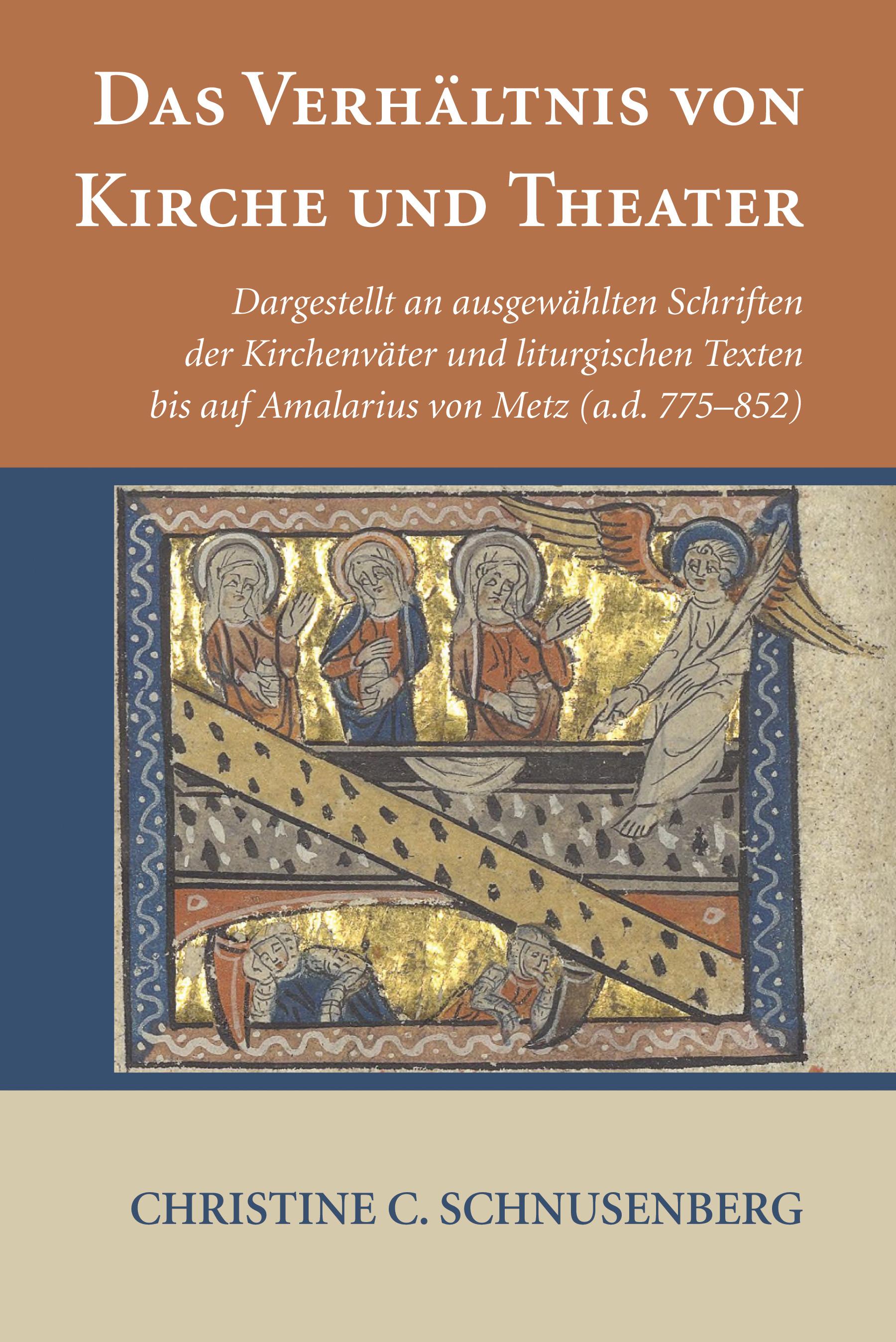
This work has grown out of the question regarding the negative relationship of the Church Fathers toward the Roman theatre and the apparent subsequent theatre vacuum of over 400 years (ca. 530 AD to 930 AD). This is considered to be the time which lies between the end of the Roman theatre and the appearance of the quem quaeritis tropes. This work moves between these two poles: on the one hand, between the polemics against the pagan Roman theatre which the Church Fathers described as a theatrum daemonicum and on the other hand, the appearances of dramatic-liturgical configurations in the Christian Church. This work attempts to connect these two opposite poles instead of separating them. This study begins with an examination of documents dealing with the patristic polemic. This is followed by an examination in chronological sequence of the development of the liturgical dramatic manifestations from Jerusalem to Amalarius of Metz. It also examines the allegorical method connected with this development. In conclusion the argument is maintained that aside the theatrum daemonicum, a theatrum infictitium et sapirituale is beginning to develop.
Pay easily by card, Klarna, Apple Pay or Google Pay. Not happy? You always have a 14-day money-back guarantee. Read more in our terms. If you have any questions, email us at hello@memmo.org.
Memmo makes studying easier – wherever you are in the world. We bring your course books and smart study tools together in one place: summaries, quizzes, podcasts and flashcards. Plus Ted, your study buddy who answers anything you wonder. Over 75,000 students already study here – built to help you learn faster and stress less.
You might also like
Buy the book0