
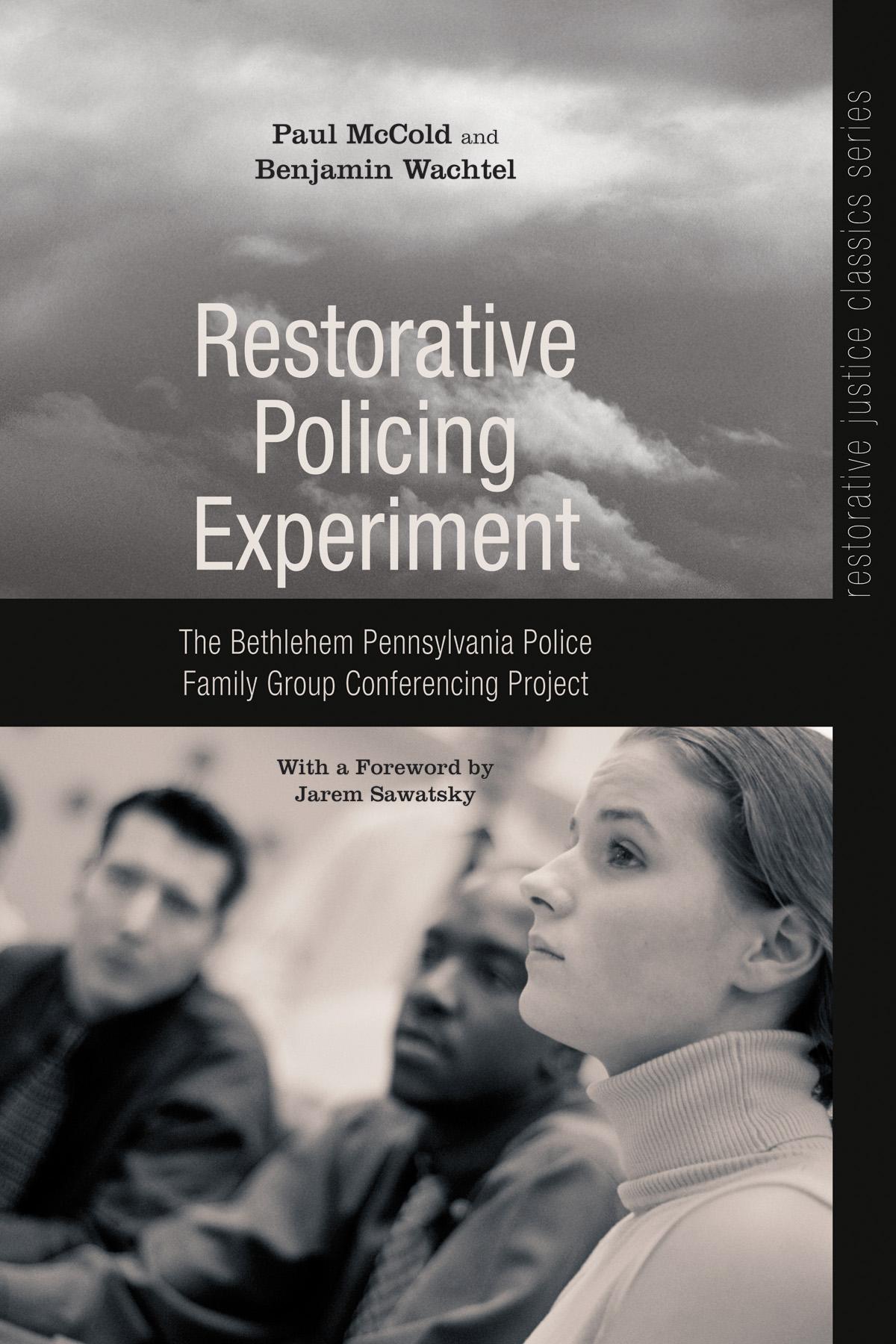
The Bethlehem Police Family Group Conferencing Experiment was the first randomized trial of restorative justice in the United States. Moderately serious juvenile offenses were randomly assigned either to court or to a diversionary "restorative policing" process called family group conferencing. Police-based family group conferencing used trained police officers to facilitate a meeting attended by juvenile offenders, their victims, and their respective family and friends. This group would discuss the harm caused by the offender's actions and develop an agreement to repair the harm.
The effect of the program was measured through surveys of victims, offenders, offender's parents, and police officers, and also by examining the outcomes of conferences and formal adjudication. The book contains an extended appendix that presents these outcome-based statistics for this seminal program. At a time when research for new restorative justice programs in the 1990s was just beginning to surface, this study provides a valuable picture of the successes of the family conferencing model in its early formation.
Pay easily by card, Klarna, Apple Pay or Google Pay. Not happy? You always have a 14-day money-back guarantee. Read more in our terms. If you have any questions, email us at hello@memmo.org.
Memmo makes studying easier – wherever you are in the world. We bring your course books and smart study tools together in one place: summaries, quizzes, podcasts and flashcards. Plus Ted, your study buddy who answers anything you wonder. Over 50,000 students already study here – built to help you learn faster and stress less.
You might also like
Buy the book0